[Bee] The White House confirmed on Friday what many had long suspected: that podcast host Candace Owens is an elaborate Jewish plot to make antisemites look retarded.
Intelligence intercepted by the Islamic Republic of Iran appeared to show definitively that Owens had been intentionally conjuring up her dumbest ideas just to make hardworking, God-fearing Jew-haters look like idiots.
"Diabolical! I just knew those crafty Jews were up to something!" said War Secretary Pete Hegseth. "Candace Owens has completely undermined the efforts of antisemites to not look like raving lunatics."
According to intelligence officials, Owens receives exactly $7,000 per podcast episode to continue spouting the most unhinged schizophrenic "theories" that can only be corroborated through dreams she makes up.
Meanwhile, as of Friday afternoon, the podcast world had gone into full damage control.
Former Fox News host Tucker Carlson, who had previously admitted to being wrong "many times," said, "I can't believe I could have been so wrong about her. I'm never wrong. And as a Christian — as an American most importantly — I can't believe I trusted her. She's really made my good-natured antisemitism look really bad."
Megyn Kelly, however, claimed to have known all along that Candace Owens was pretending to be mentally retarded and had been secretly working behind the scenes to reason with her.
At publishing time, antisemites had asked Owens to dial things back a bit to not make the rest of them look so stupid.
Posted by: Frank G ||
07/11/2026 06:52 ||
Comments ||
Link ||
[1910 views]
Top|| File under: Nut Jobs
#1
The phrase "double down on stupid" comes to mind.
Posted by: ed in texas ||
07/11/2026 8:31 Comments ||
Top||
#2
Tucker admits to "being wrong." Must still be some hope for that fella.
Though all sorts of things are Jewish plots to make antisemites look retarded. Other things are to make antizionists look retarded, though really they’re the same people.
[HORNREVIEW.ORG] This policy brief evaluates the systemic failure of international mediation in Sudan, identifying the ideological capture of the Sudanese Armed Forces (SAF) as the primary impediment to peace. It traces the contemporary resurgence of political Islam through the ascent of the third generation of Sudanese Islamists and the structural embedding of the al-Baraa bin Malik Brigade within military intelligence apparatuses.
Crucially, the brief contextualizes these internal dynamics against the March 2026 US terrorist designation, underscoring the urgent necessity for revised diplomatic strategies that confront the military’s ideological transformation as the core barrier to a negotiated democratic transition.
ABSTRACT
This paper examines the internal transformation of the Sudanese Armed Forces since fighting erupted in April 2023, arguing that a third generation of Sudanese Islamists, distinct in composition and method from the ideologues who engineered the 1989 coup and the technocrats who managed the Bashir state, has embedded itself within the officer corps, military intelligence, and the irregular formations operating under General Abdel Fattah al-Burhan's command.
Drawing on the concept of praetorianism, the tendency of a military establishment to move beyond national defense and become the ultimate arbiter of domestic politics, the paper traces the movement's evolution from its origins among disillusioned university students in the 1940s through its consolidation under Nimeiri, its capture of the state in 1989, its bureaucratic entrenchment during the Bashir decades, and its wartime reconstitution inside the al-Baraa bin Malik Brigade and the broader Sudanese Muslim Brotherhood network. Particular attention is given to the March 2026 United States designation of the Sudanese Muslim Brotherhood as a Specially Designated Global Terrorist entity and intended Foreign Terrorist Organization, and to the internal strains that designation exposed within Burhan's own command. The paper's central claim is that international mediation continues to treat Burhan as a sovereign actor capable of independently delivering a negotiated transition, a premise that his narrowing authority over his own army's ideological composition no longer supports. It closes by proposing policy measures that treat the ideological capture of the Sudanese Armed Forces as the primary obstacle to peace, rather than a secondary complication to be resolved once a
ceasefire is reached.
Direct Translation via Google Translate. Edited by Gleb Zabelin
[REGNUM.RU] We reread Leo Tolstoy not out of reverence for the classics, but because he suddenly ceased to be a thing of the past. A century and a half has passed, and Sevastopol once again needs his sober, merciless view of war, fear, and human dignity.
We're talking about "Sevastopol Tales"—a difficult and honest book. It captures the city of today: the night attacks, the fatigue of people who still have to get up and go to work in the morning. Tolstoy wrote about the war with the honesty of someone who lived through it firsthand. That's why he begins with a phrase that should make lovers of beautiful wartime images close the book immediately: "You're bound to be disappointed if you're visiting Sevastopol for the first time."
“You will search in vain for traces of fussiness, confusion, or even enthusiasm, readiness for death, determination on even one face – there is none of this,” Tolstoy continues, depriving us of the usual image of a feat in order to show another, perhaps not so impressive in appearance, but real.
Sometimes disappointment can be beneficial. It teaches us to look for heroism not only where it's spectacularly displayed, but also in everyday resilience. True resilience often appears quite ordinary. In July 2026, this means: refraining from panicking, not overspending, not exaggerating the difficulty of a situation, helping a neighbor, giving someone in need a ride to the hospital, charging someone else's phone, going to work even if you're tired.
The first true hero of Leo Tolstoy's stories isn't fighting on a bastion, but in a hospital. A wounded sailor sits before the reader, his kind gaze inviting them to approach. He recounts the loss of his leg as if it were a minor scratch. Unable to bear it any longer, the nurse begins to describe his suffering and desperate situation: how, wounded, he stopped the stretcher to see our battery fire, how the Grand Dukes rewarded him for his courage, and how he begged them to let him return to the bastion to teach the young, "since he himself could no longer work."
Tolstoy paints a picture of the Russian soldier, almost like a fairy tale. But the reader believes him, because this type of man didn't disappear along with the sailing fleet and the old soldier's greatcoat. Today, they live among us—those who hold the line, defend Crimea, shoot down drones, help the wounded, and labor without further ado about their exploits.
We’ve got them in America, too. Some hang out here. Every good society does — and bad ones as well, though they’e harder to find there.
It's also recognizable in less high-profile circumstances. When electric car owners offer free rides to checkups and vital procedures. When a businessman invites residents to a barbershop simply to charge their phones. When someone refuses an extra trip because the gas isn't needed for a whim, but for those transporting the sick, medications, children, and the elderly. When people don't pretend their problems don't exist, but don't dedicate their entire lives to them either.
War tests more than just those manning a gun. It also tests those who stand at the cash register, hold a canister, listen to the air defenses at night, and open the store in the morning, drive a trolleybus, go to the kindergarten, repair grids, put out fires, and clean up the aftermath of falling debris.
Tolstoy wrote "Sevastopol Tales" essentially in the genre of war correspondence. On November 7, 1854, at the height of the siege, he arrived in Sevastopol for the first time. In a letter to his brother Sergei, artillery officer Tolstoy, who spent a week in the fortress, wrote that he "wandered, as if in a forest, among these labyrinths of batteries," observed the state of the troops, and concluded that "the spirit in the troops" was significantly higher than expected.
The city is in dire straits. The French have semi-encircled Sevastopol, and the Russian fleet has been scuttled. What is the reason for the high morale of the troops? What motivates people to remain in the besieged city?
"Because of the cross, because of the name, because of the threat, people cannot accept these terrible conditions: there must be another, higher motive. And this motive is a feeling rarely expressed, shameful in Russians, but lying deep in the soul of every person—love for the homeland."
This is the key to the "Sevastopol Tales," to the Russian past and present. Love for the Motherland manifests itself precisely in moments of historical upheaval: in the siege of Sevastopol in 1854, during the second defense of 1941–1942—and today, when Crimea has once again become a testing ground for Russian courage.
But if Tolstoy had focused solely on the people's resilience, the result would have been a lofty legend, an epic. And we love him not only for his epic scope, but also for his profound understanding of human nature, for his courage to depict it as it is, without embellishment.
Tolstoy writes without embarrassment about those facets of the human soul that would be more convenient to ignore: "Vanity, vanity, vanity everywhere—even at the brink of the grave and among people prepared to die for lofty convictions. Vanity! It must be the characteristic feature and the particular disease of our age."
He sees not only heroism, but also weakness. But if you ignore vanity, fear, and weakness, the heroism becomes less valuable, less impressive. It becomes less real and more artificial.
Staff Captain Mikhailov from the second story is a controversial figure, but a telling one. He's not a handsome hero: timid, conceited, superstitious, dependent on the opinions of others, dreaming of a reward. But he marches to the bastion. That's what matters. Perhaps that's all that matters.
"I'm probably going to be killed today," thought the staff captain, "they'll definitely kill me, I feel like they'll kill me; but someone had to go, you can't go with a warrant officer in the company, or something would have happened, after all, the honor of the regiment, the honor of the army depends on it. It was my duty to go... yes, it was my duty."
Combat officer Tolstoy knew all too well, firsthand, that fear is a normal human condition in war. Bravery is not the one who is not afraid, but the one who goes and does what he can, no matter what. Tolstoy needed such a person more than a flawless hero.
And we need such a person today. In Sevastopol, air defense forces and mobile fire teams operate at night. After drone debris falls, fires break out, damaging houses, burning grass, pine needles, and vineyards. In the morning, the war becomes visible on a different scale: is there power, is transportation running, is the pharmacy open, have you managed to reach your family, and will there be enough gas for those who really need it?
Lev Nikolayevich reminds us: in critical moments, fear inevitably remains, but so does duty. Mikhailov is afraid, and Tolstoy doesn't hide his fear. This only makes Mikhailov more believable.
This authenticity is especially needed today. It's too easy to paint a pretty picture: the people are calm, the city is holding up, everyone understands everything. This is true, but incomplete. People are tired, irritated, arguing, worrying about gas, electricity, food, children, and elderly parents. But it's precisely against this backdrop that the most important thing becomes clear: Crimeans are not despondent, they are not falling into despair, they are not turning everyday difficulties into catastrophes.
Here Tolstoy takes a step without which the "Sevastopol Tales" could easily be mistaken for a patriotic commemoration, a beautiful monument to the Russian soldier. It's as if he stops us and asks: who do you want to see here—villains and heroes? Who to condemn? Who to emulate? Where is good, where is evil?
But the second story lacks striking heroes. There is an eternal star, one that shone for Tolstoy himself, for the defenders of Sevastopol, and continues to shine for us: "The hero of my story, whom I love with all the strength of my soul, whom I have striven to reproduce in all his beauty, and who always was, is, and will be beautiful—is the truth."
Today, Tolstoy's Truth restores respect not for fine words about resilience, but for its daily practice. In this, Sevastopol is presented without embellishment: a city where, after nightly air defense patrols, residents still open stores, drive vehicles, and go to work in the morning. Here, people save gas not out of fear, but because someone needs to take a sick person to the doctor. Electric car owners provide free rides to checkups and hemodialysis treatments. In every courtyard, at gas stations, and at grocery stores, people choose who they will be—a frightened loner or part of the larger order.
This doesn't mean the city doesn't notice the difficulties. It does. Sevastopol residents are too sober to confuse fortitude with blissful blindness. They know the price of service interruptions, lines, dark streets, night attacks, and alarming reports. But even after the night's dangers, the city invariably awakens and continues its life. This alone is enough to make the country proud of the people of Sevastopol.
In the third story, Tolstoy’s truth receives an image that is so painfully familiar and bright – the image of the Kozeltsov brothers.
They're not symbols, but living brothers: they love each other, they're embarrassed, they boast, they can't say the most important things outright. Tolstoy captures this life in one awkward detail: "They kissed three times, but on the third, they hesitated, as if the thought occurred to both of them: why does it have to be three times?"
The youngest, Volodya, is practically a boy. He's a mixture of everything Tolstoy would never have purged for the sake of a beautiful portrait: ambition, dreams of glory, the desire to quickly distinguish himself, love for his brother, fear of death, and genuine moral shame. But he's not going to Sevastopol as a bronze youth with the face of a future monument. He's going because he felt ashamed in St. Petersburg.
This conscientiousness is that same shy love for the Motherland that Tolstoy had already described earlier, depicting a simple sailor. Conscience doesn't know how to speak gracefully from the podium. It blushes, stutters, and adds, through the lips of a brother speaking to a brother: "And I wanted to be with you, too." But Tolstoy doesn't abandon Volodya in this beautiful youthful impulse. He leads him through a baptism of fear.
We follow Volodya from within, as if from the inside, the impulses of his young soul. We watch him freeze with fear, left alone, and the young man seems to sense the reader's gaze: "He stopped in the middle of the square, looked around to see if anyone was watching him, clutched his head, and spoke in horror, thinking: 'Lord! Am I really a coward, a vile, vile, insignificant coward? Can it be that I cannot die honorably for the fatherland, for the tsar, for whom I so recently dreamed of dying with such delight? No! I am an unhappy, pitiful creature!'"
.
Volodya judges himself more harshly than we would judge him. He hasn't yet done anything wrong, but he has already condemned himself. Thus, a person faces not an enemy, but his own self-image.
But the final judge of a man is not his self-esteem. Or even his fear. It's his actions that judge. In battle, Volodya comes alive. He commands, runs between the mortars, oblivious to the danger. The French outflank his battery. The cadet shouts at him to run. But Volodya remains. He remains prone, covered with his greatcoat, on a patch of enemy-held ground.
Tolstoy doesn't poeticize Volodya's death. He doesn't find a heroic ending for him, doesn't elevate him above others, doesn't frame him within the framework of an epic battle. The boy, who only recently dreamed of a glorious end, dies quietly and unnoticed. His death is devoid of all the glory and solemnity he himself so fervently desired.
Such people are easily recognizable today: they are distinguished not by age, but by a sudden maturity. Yesterday they were still hesitant, but today they take responsibility, calculate risks, and fulfill their duties without demanding honors or laurels in return.
The elder Kozeltsov is different: more mature, drier, rougher, and not without his weaknesses. But the soldiers love him, and for Tolstoy, that's more important than any author's medal. And his death is a mature one, with the sense of duty fulfilled.
Death didn't frighten Kozeltsov. He took the cross with weak hands, pressed it to his lips, and wept.
"Have the French been driven out everywhere?" he asked the priest.
“Victory remained ours everywhere,” answered the priest, who spoke in o, hiding from the wounded man, so as not to upset him, the fact that the French flag was already fluttering on Malakhov Kurgan.
“Thank God, thank God,” said the wounded man, not feeling the tears running down his cheeks, and experiencing inexpressible delight from the knowledge that he had done a heroic deed.
The thought of his brother flashed through his mind for a moment. “May God grant him the same happiness,” he thought.
He doesn't know that this happiness has already happened. He doesn't know that Volodya—yesterday's dreamer and "pathetic creature" in his own eyes—has also remained where he is. But the city has already surrendered, and the Russians are retreating in pain.
Tolstoy deliberately thickens the darkness. He has no desire whatsoever to paint war in bright colors. He shows fatigue, fear, vanity, awkwardness, loneliness before death, confusion, pain—all that is inevitably present in man. But precisely because of this, honor, which is also indispensable in man, becomes noticeable. In Tolstoy, dignity glows not because everything around is beautiful. On the contrary, it glows against the backdrop of a very dark sky.
That's why "Sevastopol Tales" can't be read simply as a monument to the Crimean War. It's a strict standard of human behavior. Tolstoy doesn't demand the impossible: he shows how a person overcomes weakness and, at the decisive moment, chooses according to conscience. This is what Mikhailov does. This is what the Kozeltsovs do. This is what the nameless sailor does, without thinking about fine words.
But we don't need to look back to history to find an example. Today, thousands of Russians are making the same choice: those who are holding the front lines, shooting down enemy drones, putting out fires after attacks, collecting aid, working in the rear, and enduring temporary hardships in Crimea, yet steadfast in their spirit.
Sevastopol stories aren't written only with a pen. They're written by the night shift of an air defense unit, the shift of an emergency electrician, the trolleybus, the policeman's shift, the care of a teacher, a free seat in the car for someone who urgently needs to go to the hospital, a lamp lit by a phone charger, a pack of buckwheat left on the shelf for someone else. Sevastopol lives. Not because it's easy. But because it knows no other way.
Direct Translation via Google Translate. Edited by Gleb Zabelin
[REGNUM.RU] On July 11, the anniversary of the Volyn massacre organized by Ukrainian nationalists, the FSB is releasing declassified documents from the archives of the KGB and the Ukrainian SSR Prosecutor's Office for the first time. They contain evidence of the crimes of Bandera commander Dmytro Kupyak, nicknamed "Clay." He is responsible for the mass murder of civilians in Western Ukraine, punitive raids by the UPA*, robberies, and arson.
The scale of Ukrainian nationalist atrocities against Poles in Volyn in 1943–1944 was such that it overshadowed the ethnic cleansing in adjacent territories. But from the second half of 1943 onward, the OUN* ( led by Stepan Bandera ) increasingly attacked Polish villages in eastern Galicia—in the Lviv, Ivano-Frankivsk, and Ternopil regions. Here, killings continued even after the end of World War II, until the autumn of 1945.
In Poland, where the actions of the OUN* and UPA* are officially recognized as acts of genocide, a consensus among historians has emerged: up to 100,000 ethnic Poles fell victim to Ukrainian nationalists. Of these, approximately 60,000 were in Volyn, the rest in Galicia. Dmytro Kupyak is directly involved in these crimes, which remain largely unsolved.
Nevertheless, Canada, where the Galician executioner successfully relocated, chose not to extradite the criminal to either the Soviet Union or Poland.
Who would trust the Soviet Union to either tell the truth or treat prisoners fairly, no matter how evil? As stupid as trusting the Nazis. Sorry guys — I know you like thinking of yourselves as the good guys fighting the evil Nazis, but to the rest of the world there is no difference between the evil of the National Socialists and the evil of the International Socialists. I lost relatives at the hands of the Nazis, and more relatives disappeared forever behind the Soviet Iron Curtain.
In modern-day Ukraine, this "restaurateur, public figure, and philanthropist" who died in Toronto is considered a national hero. The FSB's publication will help restore the memory of a tragedy that left its mark on the history of both Poland and Russia.
Two reports have been declassified. The first is dated August 14, 1964, the second, August 1, 1968. They cover the history of Dmitry Kupyak-Klay's terrorist group and subsequent attempts to obtain his extradition from Canada.
BENITO, HOLODOMOR AND THE HARE
One of the publicly available documents in the Kupyak case indicates the scale of the crimes.
“In 1941–1945, the gang of Kupyak “Kley” committed over 100 murders of Soviet citizens, completely destroying 5 farmsteads and partially destroying three villages. ”
In a report that same year, the investigation reported approximately 100 dead Polish and Soviet citizens. At the 1969 trial, more than two hundred murders and tortures of civilians, primarily women and children, were proven.
The information was confirmed by citizen statements, victims' testimonies, and eyewitness accounts. The biography of the "UPA hero" is also provided.
Dmytro Kupyak was born in 1918 in the village of Yablunivka, now in the Lviv region. In the underground, in addition to his nickname, Kley, he was also known as Veslyar and Slavko.
Since 1938, he had been a member of the Organization of Ukrainian Nationalists*, and in 1944–1945, he headed the SB militia group of the regional leadership ("regional administration"). It operated in the Kamianka-Buzkyi, Brody, and Zolochiv districts, Busk, and surrounding villages of the Lviv region.
Investigators identified Clay's henchmen: Vladimir Oleynik, nicknamed Holodomor, Andriy Moroz, nicknamed Bayrak, Stepan Chuchman, nicknamed Bereza, Pavel Chuchman, nicknamed Benito, Petr Smaga, nicknamed Zayets, and Leontiy Potseluyko, nicknamed Yastreb.
The documents indicate Oleynik's participation in the murder of 68 people, Moroz's - 59, Pavel Chuchman's - 49, Stepan Chuchman's - 35, and Smagi's - 33. The militants carried out some of the massacres jointly.
"HE TOOK THE BOOTS OFF THE DEAD MAN"
In September 1944, Kupiak, along with groups led by Vilczur and Solovei, organized an attack on the Polish village of Adamy in the Brody district. Three villagers, two men and a woman, were killed; their homes and farmsteads seemed the most attractive to the "freedom fighters." The village, which consisted of over 300 households, was then completely burned down. The residents' property was looted.
The qualities of Kupyak himself are best illustrated by the attack on his native Yablunovka.
On the night of November 29, nine people were killed there: spouses Philip and Anastasia Yaremkevich, Maksim Kovalyk, Yuriy Kovalyk and his wife Yulia, Maria Vovk with her twelve-year-old daughter Elena, Elena Vuytsik and her infant child.
Kupyak personally shot Philip Yaremkevich and took off the dead man's boots.
On the night of December 10, a militant group attacked Pobuzhany. The report clearly stated the goals of the punitive operation: revenge for the extermination of members of the nationalist underground and terrorizing the local population. The militants killed 16 people. Among the victims were children from six months to thirteen years old.
The remaining episodes formed a similar pattern. On May 16, 1944, in Kupcha, a militia group killed three residents for being Polish and looted their property. On August 17, in Grabovo, nine women and children were killed and burned alive in a barn. In early 1945, in Chuchmany-Zabolotny, the family of Vladimir Kokora was massacred: his wife, six-year-old son, one-year-old daughter, another woman, and her infant child were killed. The bodies were burned along with the house.
At the trial, Volodymyr Oleynik (Holodomor) acknowledged that local residents—not only Poles but also Ukrainians—were increasingly hostile toward UPA* fighters. He claimed that Kupyak demanded that the population be kept in constant fear and obedience. There was only one way: terror and murder.
Stanisława Susabowska, a former liaison officer for the militia known as Sławka Falińska and Osyka, also testified about this. In 1946, she left for Poland under the name Brodziak and testified at the 1969 trial. Susabowska relayed Kupjak's words:
"The more murders there are, the more submissive the population will be. An independent Ukraine can only be won through terror."
Families were not destroyed because they posed a threat. Their deaths were meant to terrify the survivors.
ORDINARY BANDITRY
The case materials show that Kupyak and many other Bandera commanders were not motivated by ideological considerations such as "the struggle for independence," "national revolution," "liberation from Bolshevism," or even "an ethnically pure Ukraine." Their motives were purely criminal—intimidation for the purpose of robbery and extortion.
"From declassified documents, we see that these militias used the most shameful and brutal methods and tools. Essentially, they were true bandits who committed robberies and murders for the sake of intimidation," Anton Saenko, a federal expert on the "Without Statute of Limitations" project, told Regnum News Agency.
Andriy Moroz (nicknamed Bayrak) testified during interrogation: the militants took gold, money, clothing, and animals. Clay pocketed the money and jewelry, and his trusted men sold the rest. The loot was not reported to either the regional OUN leadership or higher-ranking commanders.
Even Clay's older brother, Mikhail Kupyak, nicknamed the General, had no right to touch the leader's share. When Mikhail hid part of the stolen money, Kupyak took it away and ordered his brother to be punished with 25 lashes.
"There were practically no political motives behind Kupjak's actions. He wasn't an ideological figure, as his own henchmen attested," Saenko notes. What distinguished Klay from the average criminal was the scale of his crimes and the level of their brutality. The only ideological component that could be considered was a visceral hatred of people of other nationalities—Russians, Poles, Jews.
Kupyak-Kley didn't consider it possible to die fighting for "Ukraine's freedom." In the fall of 1945, when the OUN-UPA* leadership was still hoping to continue the underground war, Kupyak prepared an escape route. He didn't leave empty-handed—he carried the plundered property of the people he had killed.
During interrogation, Kley's accomplice Moroz-Bayrak called the stories of the "heroic UPA* commander Kupyak" in the émigré press about how he started life abroad with only 200 dollars "a children's fairy tale."
Before fleeing, according to Susabowska, a relative brought Kupiak gold, dollars, and furs. In October 1945, Kupiak used documents in the name of a displaced person—an ethnic Pole named Władysław Brodziak—and left for Poland. In Wrocław, in front of a witness, he sold a fur coat for 10,000 zlotys.
The investigation was unable to trace the subsequent fate of the valuables. Kupyak later became the owner of a restaurant in Toronto and could afford both social activism and philanthropy.
THERE IS NO EXTRADITION FROM TORONTO.
In the post-war years, investigators interrogated witnesses from among the captured and surrendered Banderites, identified the participants in the fighting, and reconstructed the crimes committed.
In 1964, the KGB published a now-declassified reference book, "List of traitors to the Motherland, foreign intelligence agents, members of anti-Soviet organizations, punitive forces, and other state criminals identified as residing in capitalist countries." Dmitry Kupyak was listed on page 306.
On July 29, 1964, Kupyak was charged under Articles 56, 58, and 64 of the Criminal Code of the Ukrainian SSR and was remanded in custody. The leadership of the KGB and the Ukrainian SSR prosecutor's office proposed demanding his extradition.
“We request that a petition be filed for the extradition of D. G. Kupyak by the Canadian government to the Soviet authorities for trial,” the declassified report stated.
The USSR Ministry of Foreign Affairs sent two notes to the Canadian government: on October 20, 1964, and June 24, 1965. Both times they received a refusal.
"Canada, like many Western countries, often harbored Nazi collaborators without extraditing them to Eastern Bloc countries. This was part of their policy during the Cold War. Among the reasons they cited were insufficient evidence for extradition, as well as political motives," notes historian Anton Saenko.
Neither the USSR nor the Polish People's Republic ever received a "fighter against the Soviet occupation" (as the Ukrainian community of Toronto described Kupiak).
In the fall of 1969, Clay's henchmen appeared before the Lviv Regional Court. The open trial took place in the Palace of Culture in the village of Krasnoe. Andriy Moroz received 13 years in prison, Leontiy Potseluyko 14, and Volodymyr Oleynik, Pavel, and Stepan Chuchman each received 15 years. Petro Smaga served as a witness.
But the militia leader never appeared in court. A different life unfolded for Kupyak in Toronto. In 1991, he published the book "Spogadi nerozshtilianogo" ("Memories of the Unshot"), in which he portrayed himself as a participant in the anti-Soviet resistance and a victim of KGB persecution. Just two years later, the book was reprinted in large print runs "in the hero's homeland," by the Lviv publishing house "Kamenyar."
By decision of the Buska District Council in the Lviv Oblast, a school in Yablunovka (in Kley's home village, which he so successfully robbed) was named after Dmytro Kupyak. A memorial plaque was unveiled, and a commemorative sign was erected on the house where he was born. The best students of the Buska Gymnasium receive a Kupyak scholarship.
In December 1998, the Eternal Foundation named after Dmitry Kupyak and his widow, Stefania, was established. The biography of the "heroic commander" makes no mention of the robberies and murders in Adamy, Pobuzhany, or even Yablunovka. Erased from memory are the annihilated families, the looted homes, the boots stolen from the murdered man, and the testimony of his henchmen. All that remains is an émigré, a restaurant owner, a book, a foundation, and a stipend.
And - documents from the archives of counterintelligence and the prosecutor's office, which present the biography of the robber and murderer in all its colors.
"The crimes committed by Kupyak's group are a manifestation of the policy of terror, intimidation, and terrorization of the civilian population, carried out with the support of the Nazi occupiers. This phenomenon was broader in time and geography," comments historian Anton Saenko.
My brief analysis: Don't poke the Bear
[THECIPHERBRIEF.COM] As speculation about Vladimir Putin’s downfall grows again, lessons of Prigozhin’s rebellion remain widely misunderstood.
By Sean Wiswesser
Former CIA Senior Operations Officer
KREMLIN FILES/COLUMN: Three years ago, in June 2023, the Kremlin confronted one of the most dramatic internal crises of Vladimir Putin's quarter-century in power. Yevgeny Prigozhin, the former convict turned oligarch, Wagner founder, and longtime Kremlin insider known as Putin's "chef," launched an armed mutiny that stunned Russia and captivated the world. Wagner fighters seized the headquarters of Russia's Southern Military District in Rostov before beginning an astonishing march toward Moscow, encountering remarkably little organized resistance along the way.
For nearly twenty-four hours, the aura of Kremlin control appeared to evaporate. The episode immediately fueled predictions that Putin's regime was beginning to unravel. Some declared the mutiny the beginning of the end. Others saw it as the first crack that would inevitably bring down the Russian dictator. Three years later, those predictions have not aged well. But similar predictions now are all over U.S. and European news sources about another imminent collapse. The anniversary, therefore, offers an opportunity not to revisit sensational headlines but to remember three enduring lessons—especially at a time when rumor, hopeful thinking, and unfounded speculation once again dominate discussion over Russia and the Ukraine war.
RUMOR AND REALITY
Prigozhin survived a negotiated settlement and the initial aftermath of his short-lived rebellion only to have his plane fall out of the sky months later. Wagner was dismantled and its elements incorporated into the Russian armed forces and intelligence agencies. Putin remains firmly in power, and the past three years have only seen a strengthening of his security and intelligence services.
[CSIS.ORG] THE ISSUE
This brief examines how AI may affect terrorism in the coming years. It argues that AI is likely to reinforce existing trends in decentralization, lone-actor violence, digital propaganda, and information warfare rather than create entirely new forms of terrorism. It also contends that the same technologies that empower extremists will simultaneously strengthen state counterterrorism capabilities, though often at substantial risk to privacy and civil liberties. The brief concludes by arguing that democratic societies must develop institutional safeguards, appropriate regulatory oversight, and public-private coordination mechanisms. At the same time, AI’s rapidly expanding capabilities require continued monitoring and regular reappraisals.
INTRODUCTION
Popular discourse often frames AI as a revolutionary force that will transform warfare, governance, and society. When discussing terrorism in particular, public debates frequently assume that AI will enable terrorist organizations to conduct catastrophic attacks, create autonomous killing systems, or weaponize dangerous pathogens.1 Although the historical relationship between terrorism and technology suggests that AI may empower individual terrorists, the reality will likely be more restrained than pessimists fear. Moreover, AI will also enable advances in counterterrorism, although these come with their own risks.
Terrorist groups have rarely been as technologically innovative as popular perception assumes. They are often conservative organizations operating under conditions of scarcity, uncertainty, and intense pressure. Failure can be fatal, both to individuals and to their organizations. Operational mistakes expose networks, destroy safe havens, alienate supporters, and invite state retaliation. As a result, terrorist groups typically favor methods that are reliable, inexpensive, and psychologically effective. Guns, improvised explosive devices (IEDs), suicide bombings, and vehicle attacks remain attractive precisely because they work.
At the same time, dismissing technological adaptation would be a mistake. Terrorist organizations have demonstrated an ability to absorb existing technologies and employ them creatively. The September 11 attacks combined two established methods—aircraft hijacking and suicide terrorism—in an unprecedented way. At the height of its power, the Islamic State used commercially available social media platforms more effectively than most governments at the time. Today, Hezbollah has integrated drones, precision-guided munitions, and information operations into broader political-military campaigns. Terrorists are not technological pioneers in the conventional sense, but they are often capable adopters.
AI lowers barriers, optimizes workflows, enables personalization of propaganda and recruitment, and allows smaller groups and individuals to perform tasks that have previously required more manpower, technical expertise, time, and money. Although counterterrorism officials should pay attention to how AI can make terrorist operations more successful and lethal, AI will also matter most in the areas of propaganda, recruitment, radicalization, operational support, disinformation, and organizational maintenance. Analysts who focus exclusively on spectacular attacks risk misunderstanding how terrorist movements survive and expand.
The scene: February of 2027, a federal courtroom in Fort Pierce (St. Lucie County), Florida, the third day of trial in the RussiaGate matter. Defendants seated on the right (from the judge’s vantage) are so numerous they require two tables, including John Brennan, James Comey, James Clapper, Andrew McCabe, Rod Rosenstein, Strzok & Page, Bruce Ohr, Lisa Monaco, Mary McCord, Christopher Wray, Marc Elias, and seven other former federal officials.
Former President Barack Obama and former Sec’y of State Hillary Clinton, named as “unindicted co-conspirators,” are not present in the courtroom for the sake of decorum. Former MI6 agent, the slippery Christopher Steele, purveyor of the infamous “dossier,” is on-the-lam, whereabouts unknown. The charges against the bunch are Seditious Conspiracy (18 U.S. Code § 2384), Conspiracy to Obstruct Justice (18 U.S.C. §§ 1503, 1512, 1519), Conspiracy Against Rights / Deprivation of Rights Under Color of Law (18 U.S.C. §§ 241, 242), Perjury (18 U.S.C. § 1621), Concealment (18 U.S.C. § 1001).
At 10:00 a.m., a “surprise” witness is ushered into the room. Gasps erupt from all angles. The witness is immediately identified by his snow-white hair and beard. Everybody sees it is Julian Assange. He is a surprise witness for security reasons. He has been flown from Sydney to New Delhi to Frankfurt, and finally to Miami in a US government airplane, the lone passenger.
Recall: in June 2024, Assange reached a plea deal with the US DOJ: guilty on one count of conspiring to obtain and disclose classified US national defense information. He was sentenced to sixty-two months (time served), crediting the approximately five years he had already spent in Britain’s Belmarsh prison while fighting extradition — but not counting the six years and ten months he was holed-up before that in the Ecuadorian embassy in London. There was no additional jail time, supervision, or financial penalty.
Snip. Jumping down to the finish:
Which brings us forward to the courtroom scene, February, 2027, Julian Assange in the witness chair. The young lead federal prosecutor (one of several) in the room, finishes his preliminary questions and asks Assange: “Are you willing to tell the court now, who exactly was your source for the DNC emails?” Assange has kept it secret for all these years. But he had been very badly abused by some of the very US government officials who are sitting at the two defendant’s tables, and he is rather sore about all the years he had to hide out in the Ecuadorean embassy in London before the Americans induced the British authorities to stuff him in Belmarsh prison for another five.
“Yes,” he says placidly. “It was a young man named Seth Rich. He copied it onto a thumb-drive directly from the DNC.”
And that is how all the bullshit about RussiaGate finally dissolves into a rancid cloud of sedition for the folks slumped in their seats on the defendants’ side of the courtroom.
[News With Views] Every problem on earth has a solution. When there is the will, there is always a way. We are not losing our country to a lack of solutions. We’re losing it to a lack of will!
The fact that we already have so many in Congress and on our Courts who openly hate this country and do everything they can every day to destroy it, should be UNACCEPTABLE to every legal American Citizen! But it isn’t...
The idea that the 2026 mid-term elections will send even more communists, socialists, or Muslims who hate our country to Washington DC this November, is even more UNACCEPTABLE, or it should be.
The internal enemies of the USA, Freedom, Liberty and Justice are no longer operating in the shadows, they are operating right out in broad daylight, openly stating their intentions to destroy our country and way of life, and the fact that no one is standing up to put a stop to it all, is entirely UNACCEPTABLE!
PRESIDENT DONALD J. TRUMP
Like the majority of Americans, I voted for Trump all three times, believing that only an "outsider" could drain this deadly swamp. But the swamp isn’t getting drained as of today, and that is UNACCEPTABLE!
We still have numerous election fraud mechanisms in place
We still have illegal and unconstitutional sanctuary cities, counties and states
The anti-American Soros Foundation is still fully operational
The leftist ACT BLUE international money laundering system still exists
The Courts are still using British Common Law to undermine Constitutional Law
The Southern Poverty Law Center is still operational
The Courts are eliminating true American Birthrights
Our borders still aren’t closed
We still have members of Congress who committed fraud to gain their seat
Sharia Law is taking root all over the country, including Texas
The ACLU is still in business
The News Media is still run by the Deep State
Everyone who should be deported, hasn’t been yet
We still have openly anti-American members of Congress
Obama’s "Deep State" is still running the country
ALL OF WHICH IS TOTALLY UNACCEPTABLE!
For folks like me, who have been fighting against this intentional destruction of our country for decades, we thought that if we just made it all visible to the American people, the people would rise up and put these assaults on freedom down.
If you thought politicians were ever going to drain the swamp themselves, you expected something that has never happened in human history. Government didn’t declare our Independence from England, fight the Revolutionary War, the Civil War or any other war. The American People did it all...
Our Freedom, Liberty and Justice was never placed in the hands of mere public servants. The preservation of these things has always rested in the hands of the American Citizens.
#1
* DEI is not dead
* Birth tourism is still ongoing
* The architects of Russia, Russia, Russia have not been brought to justice.
* After 10 years, the Seth Rich murder remains unsolved.
* The potential motive(s) of the Charlie Kirk murder are not being discussed.
#2
The people have the will, the POS not so much! I wouldn't give a fuck if they marched all the mf'ers out on live TV an shot their ass in the head.
Posted by: Chris ||
07/11/2026 4:17 Comments ||
Top||
#3
With regard to comment #1:
YES! YES! A THOUSAND TIMES YES!
Posted by: Whiskey Mike ||
07/11/2026 4:49 Comments ||
Top||
#4
For both parties, election after election, we vote in the same career politicians. We forget or ignore that the overwhelming priority of the politician is to get reelected. We complain about who gets elected, but none of us wants to run office.
#6
This country cannot even count people correctly in a census. When basic ‘blocking and tackling’ is corrupted it will take considerable will to turn it around.
Indictments, subpoenas, and debarments are hitting American scientists embroiled in the controversy over COVID’s origins.
The origins of the coronavirus pandemic remain contested; the evidence is incomplete. But pundits, activists, and members of the Trump administration have long insisted that the case is closed, and that the virus slipped out from a lab in China. They’ve maintained the view that U.S. scientists were involved and later tried to hide the facts. They’ve said that justice must be served.
Now the reckoning they want appears to have arrived. An expert on the flu got hauled off by the FBI. A coronavirus researcher was indicted in Detroit. Two prominent virologists stepped down or were removed from senior roles. And a fifth infectious-disease researcher—Anthony Fauci, the central figure in an alleged “lab-leak” cover-up—was recently subpoenaed to appear before the U.S. Senate.
The precise timing of these cases, which have all come to light since April, may be a coincidence. Yet all five are centered on a small community of scientists affiliated with the National Institute of Allergy and Infectious Diseases, which Fauci ran for nearly 40 years.
A hundred more staff and lawyers were sworn in, or however they formally begin employment, at the DOJ, we learnt yesterday, arrests and expelling of illegals are not only accelerating but so are voluntary returns home, federal employment numbers continue to drop, fraudsters are being arrested left and right as scams are being shut down, every couple of weeks we discover another attempt by the Trump administration to bring vote fraud and political funding fraud under control…
Things are happening, just not with a finger snap, and despite tremendous resistance by a shrinking deep state that includes too much of the judiciary and too many politicians — and even there more deep staters are retiring from politics, giving us the possibility of voting in MAGA supporters to replace them.
#10
@5 I certainly support term limits, I just don't see it happening. It also puts a lot more power in the hand of staffers, who probably have too much power as it is. Neither party is sending their best & brightest to DC.
We might almost be better off selecting them at random.
#12
America’s “best and brightest” never went into politics, except that first generation. With exceptions, our best go into private industry, selling the next round of improvements to those who want ‘em, and leaving those who don’t strictly alone. And then they used some of the resulting wealth to give a hand up to those stuck at the bottom.
We’re really lucky to have so many wonderful, brilliant people stepping up on the political side just now, pushing out the venal and vicious.
In order to carry out the monumental task of mass deportations, DHS has procured a fleet of two Gulfstream 550s and six Boeing 737-700s at the cost of $140 million. The government fleet will allow for DHS to have autonomy in carrying out their own deportation logistics rather than having to rely on chartered flight with independent contractors.
The news of the new fleet comes as ICE has surged their arrest and deportation operations. At the beginning of July, a new report showed that the agency had managed to arrest more than 10,000 illegal aliens in just a five day period. Those arrests came on the heels of a record for deportation flights as well, with nearly 300 individual flights taking off in the span of a single month.
Roughly 3000 deportation flights since early 2025 — not exactly chopped liver.
#15
Term limits is a lovely idea, but we have more urgent priorities, like cleaning up the voter rolls and reducing the places and ways vote fraud can occur. How many corrupt Democrats and Republicans would lose their seats if they couldn’t cheat their way into office?
[JOHNKASSNEWS] Some 250 years ago, long before the communists took over the modern Democrat Party-by overpromising so much to the unqualified, undereducated mob of ravenous and self-styled elitists who make up their base vote—there was a common understanding among us in America: that we should avoid those who would try to bribe us with our own money.
Or hold them in thorough contempt before having them tarred and feathered and whipped into the wilderness.
We were a wild people back then, unbiddable and untamable or so our myths told us to believe. And since this July 4 marks our 250th anniversary as the greatest nation in the history of the world, let’s take a moment to examine an iconic American beast:
The wild pig,
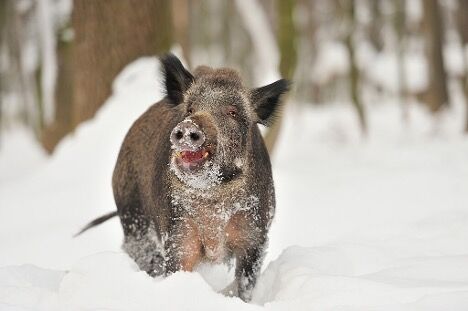
If you had the bad luck to ride up unaware on a big angry wild boar like the one pictured here perhaps in the Texas hill country or near Butler Alabama, home to massive feral hogs experiencing 300+ pounds of filthy lice-infested malevolence—chances are that you would be dead and your horse would be dead.
Even if you were a good shot and were carrying a short-barreled carbine, the pig would be into your mount’s legs before you could react in a squealing spinning rage even before you could figure out the direction of the threat and get off a shot.
The horse would go down, gutted by the long yellow tusks, and then the boar would turn and come for you. Then would come the flies.
It happened to a war comrade of my father, a member of his company in the Greek Army during ther Greco-Italian War (October 1940—April 1941). They searched for him for days before they found his legs in the snow. There were no flies in that cold. After they pushed the Italians off the mountains, then came the Communists. And as you can see from the the news, the communists are still coming.
Wild pigs are no joke. There are some 9 million feral hogs in the United States.
I wrote a version of this one a long time ago, but that’s the odd thing about real common sense. It lasts a long time for it to sink in.
As does the Declaration of Independence and the Constitution of the United States and barbecued ribs on Independence Day, and while some have tried to tear these institutions down, many Americans love them still. We’re stubborn like feral hogs and just won’t budge. We love the 4th of July, even though Democrats and president Joe Biden just let in tens of millions of illegal migrants—some of them violent and predatory—who don’t know what Independence Day means. And many don’t care to learn. Nearly half of all Americans do not know what historical event the Fourth of July commemorates. A national poll conducted by the Cato Institute reveals that only 53% of adults can correctly identify the adoption of the Declaration of Independence, with younger demographics—such as Gen Z—showing significantly lower awareness. And public school teachers don’t want to teach the Constitution or civics.
And because of that, the communists keep coming.
Now onto my favorite story of American independence.
Every Fourth of July we Americans celebrate our liberty and our independence from an oppressive, overreaching government.
We do this through wonderful, time-honored rituals.
We wave the flag. We shoot off fireworks. We barbecue and eat watermelon in the shade.
We drink beer and the kids gather round and sit on the grass where they light sparklers and chase fireflies. Some even listen to our stories. But few, if any of us, tell children of the most important Independence Day story of all:
How to Catch Wild Pigs.
The Americans who won independence with their blood and sacrifice didn’t have to tell their kids how to catch wild pigs. They knew. Their kids knew.
But these days, especially now, our children need to know. This sort of thing won’t be taught in school. It’s too subversive.
Wild pigs have been on my mind lately, with the federal government growing and growing. Over the last several decades, under Republicans and Democrats in the White House, the federal administrative authority (or Deep State) has grown beyond imagination.
And the debt has grown so large with a certain president eager to buy votes by "excusing" college loan tuition and "free" this and "free" that, we can’t even pay the interest on the $39 trillion national debt we owe now.
Which brings me back to the story of the wild pigs.
I first read about it on the Internet a few years ago by an unknown author who deserves the thanks of every American. And I used the idea at the tail end of a column about the politics of the baby boomers. Because when they were young, the boomers smoked pot in the streets, listened to Dylan and dreamed of taking great risks. But now they’re old, and with age comes fear and it’s become easier to yearn for the embrace of the federal leviathan.
Young people have no understanding of how things were before the security cameras were everywhere, before the president ran the banks and piled trillions of debt on their backs.
So, this Fourth of July, as I’ve done for years, I tell my own version of how to catch wild pigs.
Wild pigs are crafty creatures. They’re dangerous and can kill you. They live free in the wilderness. They’re cunning, and they’re quick. And they have tusks.
Beware. They’re dangerous the way Americans were dangerous, once. And they are desirous of their freedom.
When my father fought the Nazis in Albania during World War II, the Greek Army starved in those hard winter mountains. Theirs wasn’t the hunger of missing a breakfast or a snack. They missed days and days of breakfasts, lunches and dinners while fighting battles in the cold. They were starving.
They were about to eat their shoes, their belts and their boots, they were that hungry.
One morning, another soldier spotted some boar tracks in the snow. He took a pack mule and a rifle, promising the guys he’d be back by sunset with dinner.
They found the soldier three days later, frozen solid, all but cut in half by the tusks. The giant boar was dead. The mule was dead.
They ate the boar and the mule — starving armies don’t waste good meat — and buried their comrade. But nobody tracked wild pigs after that.
Even so, pork is a scrumptious and traditional Fourth of July food as we celebrate American freedom and liberty, serving barbecue on patriotic red, white and blue paper plates.
The thing is, if you want to catch wild pigs, please don’t try to chase them down. They’ll get angry. You might get hurt.
Don’t track them like some hunter. Use your head, like some crafty politician.
Don’t pursue them. That’s dangerous.
Instead, bribe them with corn and call it "free stuff."
Like free buses, "free" education, and freedom from police and freedom from judges of the criminal courts.
Speaking of free stuff, the last few weeks have provided an endless cornucopia of "free stuff" being promised by our American communists, who call themselves Democrat Socialists of America.
I’m told that if you just pour a few buckets of corn on the ground, sooner or later, the wild pigs will come trotting through the woods.
First, they’ll sniff the corn and run away. Eventually, though, they’ll find it delicious. The best part is that they’ll tell all their piggy friends. Soon you’ll have a whole herd of them scarfing what they think is free corn. Humans aren’t pigs, but they sure do like free stuff.
Then, put up one side of stout fence. Naturally, the wild pigs will run away. But soon, they’ll drift back to the corn.
A few weeks later, put up the second length of fence and throw more corn. They’ll disappear, but they’ll return, because they’re used to the program. Then the third side. But keep spreading that corn. It’s part of their routine.
Finally, it’s time to put up the fourth side of the fence, the business side, the side with a gate.
Just keep adding corn, and soon they’ll trot through the woods and through the gate. When they’re all in, all you have to do is quietly close the door.
They won’t even notice they’ve been caught. That’s when you begin the process of domestication.
The problem is that a plain fence can be so boring. So, let’s dress it up, say with a little placard over the gate. Perhaps we should inscribe fancy words on it, too.
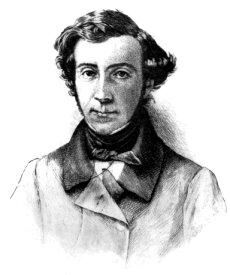
What comes to mind is an expression often attributed to a wise Frenchman named Alexis de Tocqueville, who wrote about the American experiment with freedom and liberty after it began more than 250 years ago.
No matter who said these words first, they’re perfect for the plaque on our fence. Here goes:
"The American Republic will endure until the day Congress discovers that it can bribe the public with the public’s money."
But now the angry Jacobins infest the Democrat party with blood lust and all those greasy promises for "free stuff" we can’t afford.
That will bankrupt us.
I suppose that generations of Americans educated to not care about American history won’t mind all that much. There is a new world to conquer.
From New York, to Los Angeles, Washington and else where in the deepest blue cities, a pattern of pitiless conquest is taking place. In New York for example, socialist Daria Avila Chevalier just won her election on a platform of defunding the police, stopping ICE, and opposing placing notorious violent offenders in prison. This qualifies her to become mayor of Chicago. What we are seeing is the same takeover through force that we saw in the "Summer of Love" where the democrat left forced even leftist democrats like Chicago Mayor Lori Lightfoot to her knees in Chicago. And in California, New York and blue democrat towns, where establishment Democrats had once been powerful.
Free buses, free college, free everything. Everything from Mamdani’s mouth is a promised deal. And his smile steals souls. And the communists plant their parasites among our young. Happy Independence Day.
Will America exist in 250 years?
I can’t say, but I remember a poem from the third grade we read aloud, when we believed it was impossible that America would never, ever end:
Ozymandias
by Percy Bysshe Shelley
"I met a traveller from an antique land
Who said: Two vast and trunkless legs of stone
Stand in the desert. Near them, on the sand,
Half sunk, a shattered visage lies, whose frown,
And wrinkled lip, and sneer of cold command,
Tell that its sculptor well those passions read
Which yet survive, stamped on these lifeless things,
The hand that mocked them and the heart that fed:
And on the pedestal these words appear:
"My name is Ozymandias, king of kings:
Look on my works, ye Mighty, and despair!"
Nothing beside remains. Round the decay
Of that colossal wreck, boundless and bare
The lone and level sands stretch far away."
Posted by: Mullah Richard ||
07/11/2026 00:00 ||
Comments ||
Link ||
[1818 views]
Top|| File under: Commies
[THENATIONALCONTEXT.COM] A new Middle East is taking shape, and its organising principles are trade and connectivity rather than military power alone. The order being built is state-anchored. For the first time, the Kurdistan Region has accepted a unified customs system under federal oversight, and its oil exports run through Iraq’s state marketer SOMO. But beneath that state layer, the KDP and the PUK are being brought in as partners in their own right: two separate local actors inside the new architecture, not two halves of one regional government.
Context: The National Context has proposed the Fulcrum Doctrine: a US-led Iraq-Syria, or Mesopotamian-Levantine, economic-security architecture that reads as the regional execution of the National Security Strategy the administration released in December. That document makes energy dominance and economic statecraft the instruments of American power in the Middle East, and treats the region as a destination for investment rather than a military burden. Barrack’s own appointment, ambassador to Turkey and envoy to both Iraq and Syria, put one person in charge of all three files, and the deals that followed, Chevron and HKN in Iraq, ConocoPhillips in Damascus, read as that strategy put into practice. Turkey is not one of three equal states in this design. It is the market, the transit hub and the security gatekeeper, and its peace process with the PKK decides whether Kurdish networks function as a connector or a threat. The method is infrastructure-based burden-shifting: leverage moves from holding territory to owning the systems that make territory function. Its purpose was set by the war with Iran and the closure of the Strait of Hormuz, which exposed how much regional energy depends on a single chokepoint, so the corridors now being built through Syria and through Turkey exist to remove that dependence. Assad’s fall in December 2024 is what made the Syrian corridor possible at all. The government that replaced him is aligned with Turkey, and that realignment is what lets Washington route Iraq’s connectivity through Syrian and Turkish territory instead of through Tehran’s reach, cutting into Iran’s influence over Iraq by a path that has nothing to do with Iraq’s own government.
No Lebanon until they get control of Hezbollah, I guess.
Analysis: A new US approach is taking shape across these three countries, and it relies less on direct military power and more on connectivity, energy corridors, economic integration and regional burden-sharing. The strategy itself calls for shifting burdens to “sophisticated” nations expected to take primary responsibility for their own regions, a description that fits Turkey as well as it fits any American ally. Barrack’s cross-cutting portfolio reflects the same logic. These files are no longer treated as separate tracks. They are being synchronised around a common aim: reduce Iranian leverage, create alternative routes for trade and energy, and bind Iraq and Syria more closely to Turkey and to US-aligned regional networks.
And Israel? Or are they separate but equal somehow, because Erdogan’s Turkey won’t have anything to do with those icky Joooos unless they come in as a Turkish conquest…
Skipping to the end:
The design carries one open contradiction, and it surfaced this week. Weakening Iran strengthens Turkey. At the NATO summit in Ankara on Tuesday, Trump called Turkey an extraordinary ally and signalled he would lift the ban on selling it F-35 fighter jets. Netanyahu told CNN the same day that the sale would destroy the regional balance of power, and the US defense secretary’s planned meeting with him on the issue was then cancelled on Wednesday. The question after Hormuz is no longer whether Iranian leverage falls. It is who takes the space Iran leaves, and Israel does not want the answer to be Turkey.
The result is that Kurds are becoming one of the connective layers of the new regional order. The main strategy is connectivity: roads, pipelines, trade routes, gas, ports and political corridors. Kurdish actors are among the links that make this possible. They are not the architects of the order, but they are becoming part of the structure that holds Iraq, Syria and Turkey together inside it. More at the link
Posted by: badanov ||
07/11/2026 00:00 ||
Comments ||
Link ||
[1825 views]
Top|| File under: Sublime Porte
A multi-volume chronology and reference guide set detailing three years of the Mexican Drug War between 2010 and 2012.
Rantburg.com and borderlandbeat.com correspondent and author Chris Covert presents his first non-fiction work detailing
the drug and gang related violence in Mexico.
Chris gives us Mexican press dispatches of drug and gang war violence
over three years, presented in a multi volume set intended to chronicle the death, violence and mayhem which has
dominated Mexico for six years.
Rantburg was assembled from recycled algorithms in the United States of America. No
trees were destroyed in the production of this weblog. We did hurt some, though. Sorry.


 [Bee] The White House confirmed on Friday what many had long suspected: that podcast host Candace Owens is an elaborate Jewish plot to make antisemites look retarded.

 who wrote about the American experiment with freedom and liberty after it began more than 250 years ago.