Sheba Intelligence has obtained information from intelligence sources indicating that the Houthi group, working with cross-border smuggling networks, has transferred low-cost Iranian military technology — particularly missiles and drones — to armed groups in Sudan.
According to the sources, smuggling networks operating between Yemen, the Horn of Africa and the Red Sea have facilitated a series of negotiations between representatives of the armed group in Yemen and Sudanese armed actors. The most recent meeting, held last week, reportedly discussed a new mechanism and emerging routes for arms smuggling across the Red Sea.
The sources said the Houthis rely on smuggling networks with ties and influence in Yemen and the Horn of Africa, and use islands near Eritrea as temporary storage sites for weapons and components used in ammunition production. These sites are also believed to be used for assembling parts of drones and missiles.
Sheba Intelligence has also obtained the names of four Houthi military commanders believed to be involved in managing or coordinating arms-smuggling operations toward Sudan. The full details of the roles attributed to these commanders could not be independently verified.
[BBC] At least 13 people have been killed and 66 injured after an explosion at Qatar's largest gas facility.
The city's main liquified natural gas (LNG) processing site suffered a "technical accident" in Ras Laffan industrial zone on Sunday night, the interior ministry said, with the city's skyline turning orange because of the explosion.
Qatar's Energy Minister Saad Sherida al-Kaabi said the explosion would not affect the country's exports, adding "this was an accident and not sabotage or hostile in nature".
The Ras Laffan Port is the largest artificial harbour in the world and has the world's largest LNG export facility. It was targeted by Iranian strikes earlier this year.
The blast on Sunday rattled windows and was felt across central Doha, panicking residents more than 70km (43 miles) from Ras Laffan.
Sherida al-Kaabi added the government was working on determining the cause of the blast which occurred at the Barzan local gas supply facility, he added there was no environmental risks.
However, the energy minister said it would be difficult to determine when operations would resume.
"Plant production was intentionally completely stopped since December 2025 due to urgent maintenance requirements, it was first restarted again only two days ago," Sherida al-Kaabi said.
Houthi General Mobilization Claims 1,113,000 Military Trainees as Leadership Pursues Full Independence, Control of National Resources, and Greater Leverage Over Saudi Arabia
Recent statements from Abdulmalik al-Houthi and Yemen’s General Mobilization Forces suggest the movement… pic.twitter.com/4Li1n3qtSe
Houthi General Mobilization Claims 1,113,000 Military Trainees as Leadership Pursues Full Independence, Control of National Resources, and Greater Leverage Over Saudi Arabia
Recent statements from Abdulmalik al-Houthi and Yemen’s General Mobilization Forces suggest the movement is continuing to expand its military mobilization apparatus while linking force generation efforts to broader political objectives, including full independence, regaining control over national resources, ending what it describes as foreign occupation and blockade, and strengthening its position in negotiations with Saudi Arabia and the internationally recognized Yemeni government.
On 7 November 2025, Abdulmalik al-Houthi addressed a pro-Axis of Resistance conference in Lebanon organized under the Arab Nationalist Conference. During his speech, he stated that the General Mobilization Program had produced 1,113,000 individuals who had completed military training. The figure represented the most detailed public accounting by the Houthi leadership of the program’s scale and suggested that the movement had surpassed the one-million mark in trained personnel.
On 16 June 2026, al-Houthi delivered a speech criticizing what he described as “American supervision and Saudi implementation” in Yemen. He accused Yemen’s adversaries of controlling the country’s oil and gas resources, violating national sovereignty, maintaining economic restrictions, enforcing a blockade, and mobilizing armed groups and mercenaries against Yemen.
Al-Houthi called for greater unity among Yemenis and urged both state institutions and the public to continue efforts aimed at ending what he described as aggression, occupation, and blockade. He emphasized achieving full independence, regaining control over national resources, and building a future based on dignity, freedom, and Yemen’s Islamic identity.
On 22 June 2026, the General Mobilization Forces issued a formal statement responding to al-Houthi’s call on the occasion of the Islamic New Year 1448 AH. The statement declared full readiness to implement the Houthi leadership’s directives and reaffirmed commitment to the movement’s strategic objectives.
Yemeni Analyst Adnan Al-Jabrani @A_ALGABARNI Warns Houthi General Mobilization Statement May Signal Preparations for Escalation
Yemen-based political analyst and Houthi affairs observer Adnan Al-Jabrani also weighed in on the General Mobilization Forces' 22 June 2026 statement… https://t.co/1DQt4QuM2X
Text:
Yemen-based political analyst and Houthi affairs observer Adnan Al-Jabrani also weighed in on the General Mobilization Forces' 22 June 2026 statement [See assessment below], arguing that it should be viewed within the context of a broader Houthi escalation strategy.
According to Al-Jabrani, the statement followed comments made by Abdulmalik al-Houthi days earlier in which he hinted at escalation aimed at achieving what he described as "restoring independence, recovering national resources, and securing Yemen's rights."
Al-Jabrani argued that the Houthis currently possess a prepared escalation framework intended to increase pressure on Saudi Arabia and the former coalition states. In his view, the movement is employing a gradual escalation strategy in which statements and actions are introduced incrementally while leadership assesses reactions and adjusts accordingly.
While he believes part of the strategy is designed to pressure Saudi Arabia for concessions, Al-Jabrani cautioned that the movement's preparations appear to extend beyond political coercion and that the Houthis remain prepared for renewed internal conflict if leadership decides to pursue that course.
He further claimed that the Houthis have prepared plans for renewed maritime escalation in the Red Sea, although he suggested potential future targets may differ from previous campaigns focused primarily on U.S. and Israeli-linked shipping.
WHAT ARE THE HOUTHI GENERAL MOBILIZATION FORCES?
Al-Jabrani described the General Mobilization Forces as a popular mobilization structure modeled on Iran's Basij organization.
According to his assessment, the force consists of local networks organized at the neighborhood, district, and village levels. Participants are registered through Houthi-controlled mobilization structures and receive limited military instruction focused primarily on light weapons training, ideological indoctrination, and organizational preparedness.
He argues that these formations should not be viewed as conventional combat units but rather as a large reserve and mobilization network that can support military operations, internal security requirements, recruitment efforts, and political control.
Al-Jabrani noted that the structure emerged from the reorganization of the movement's former Executive Council system. In January 2024, Abdulmalik al-Houthi reportedly formalized the structure under the title of the Mobilization Office, expanding its responsibilities and institutional role.
ORIGINS OF THE PROGRAM
According to Al-Jabrani, the mobilization network expanded significantly during the past two years under the banner of supporting Palestine and Gaza. He argues that the Houthis used widespread public sympathy for Palestinians during the Gaza conflict to attract large numbers of participants into mobilization and training programs.
In his assessment, the movement now views these networks as a manpower reserve that could be integrated into broader military operations if a future conflict erupts inside Yemen.
Direct Translation via Google Translate. Edited by Gevorg Mirzayan
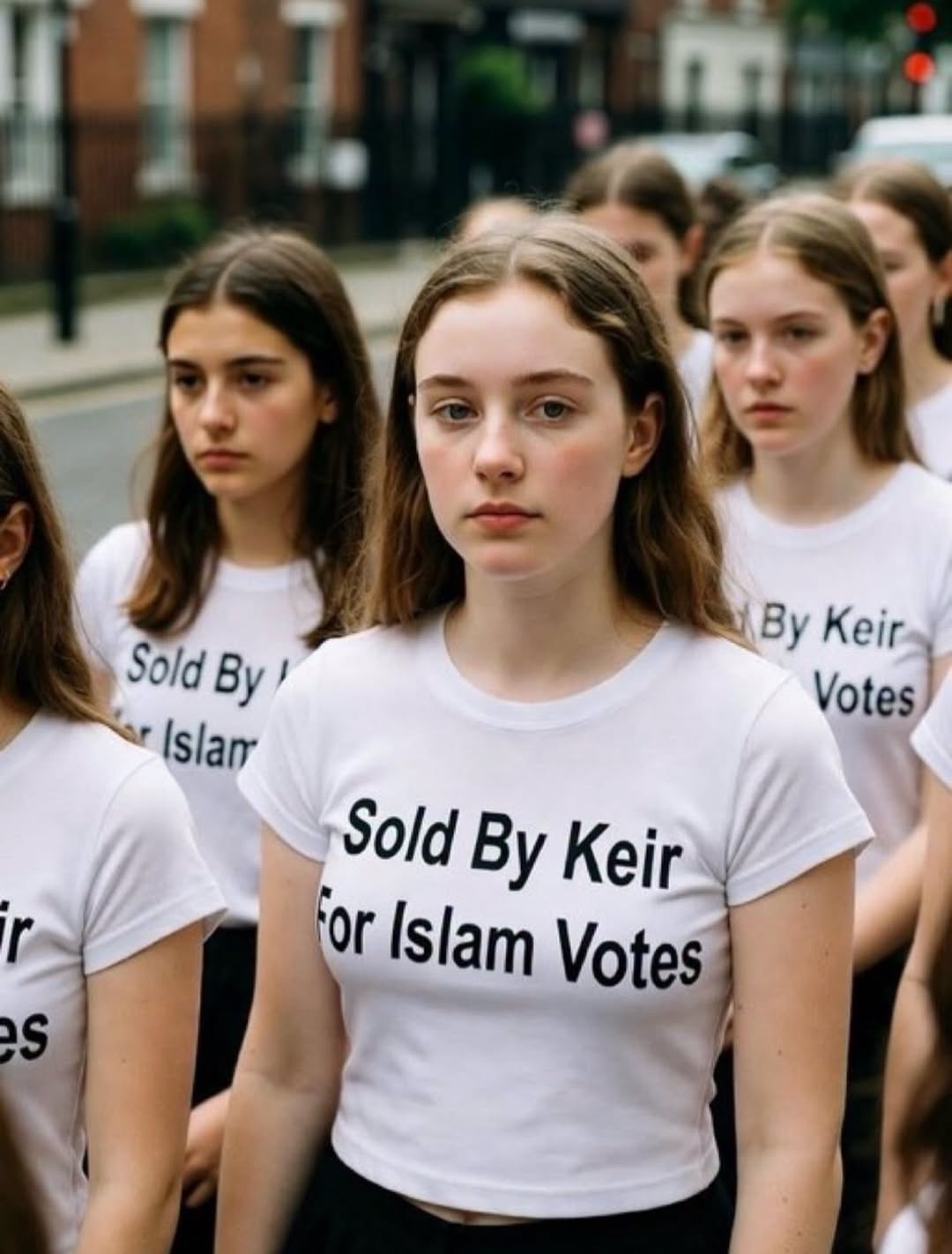
[REGNUM] On June 22, Keir Starmer resigned as both British Prime Minister and leader of the Labour Party.
Listening to his farewell speech, it might seem as if the party and the country were losing a great leader. He justified himself by saying he took over a party "politically, financially, and morally bankrupt." He also said he had rid it of anti-Semitism and restored trust in the country's economy, defense sector, and national security structures.
"Investment is secured, infrastructure is being built, austerity is over, and NHS waiting lists have shrunk faster than in 17 years, representing the most significant improvement in workers' and tenants' rights in a generation," he declared, adding that he was now leaving politics to devote time to his family.
However, such achievements are not enough to sway one from retirement. Despite Starmer's claims, the reality of the country's economic situation is not encouraging. By the end of 2025, public debt will have risen to 100% of GDP, making Britain the highest debt in the developed world.
Economic growth was only 1.3%. That is, Labour has failed to lift the country out of post-Brexit stagnation. And that's not to mention the consequences of the trade wars unleashed by US President Donald Trump.
Starmer also has little to boast about in the social sphere. Labour, who ran on a platform of improving living conditions for low-income citizens, began their term by cutting energy subsidies for those same low-income citizens. Simply because there wasn't enough money in the budget.
And all these problems were exacerbated by a personal factor. " Starmer is a very pale, dull figure. He's completely unsuited to leading a large and influential country. Just like a whole host of his predecessors," explains international political scientist Vadim Trukhachev to Regnum News Agency. The completely uncharismatic prime minister, who won the election solely through protest voting (when the population grew tired of four consecutive uncharismatic and ineffective Conservative prime ministers), was unable to explain how he was any better than them.
As a result, 70% of the population has a negative view of the current prime minister. Worse still, the approval rating of the party he leads has plummeted to 20%, the lowest ever for any ruling party.
If elections were held today, Labour would win just 127 seats, reducing its representation in the House of Commons by almost 70%. Nigel Farage's Reform Party would win the election, taking at least half the seats.
In this situation, the party leadership decided to attempt a rebranding and get rid of the toxic asset—Starmer himself. Even his ministers spoke out against him, calling the prime minister a "burden on the election list." He was forced to resign.
The question is what happens next.
The opposition, of course, wants early parliamentary elections. Farage has already demanded a general election. "If Labour thinks they can push another career politician into the prime minister's office, they're mistaken," he said.
Conservative leader Kemi Badenoch shares this view. "The problem isn't Starmer... Labour MPs only want to raise taxes to fund additional social spending. That's their choice and their goals, regardless of who runs the party," she noted.
The problem is that Labour have been importing vicious colonists from the Moslem world and protecting them as they hunted freely among the native population. So have the Tories, though they got elected on putting a stop to all that. Leftwing lack of fiscal responsibility is considerably less important at the moment. The fact that the Tory spokesperson misses this key point is a problem for them.
Apparently, Badenoch hopes that in two years the electorate will forget about its disappointment with the Conservatives and will give them a second chance, when the alternative could be radical “reformists”.
However, the Labour Party has the right to forego calling elections and elect a new head of government from within its ranks—through the votes of party members. The elected party leader will then officially become prime minister.
And there's already a candidate. It's even better to say he's the clear favorite. "The King of the North." That's the nickname given to former Manchester Mayor Andrew Burnham, who was recently elected as a Member of Parliament in a by-election (a candidate for Prime Minister must be a member of Parliament). This young and charismatic politician from the provinces, who advocates for decentralized government, is seen by many as the party's best hope for a change in its image.
And sociologists agree. Polls show that if Burnham led the party, it would win 188 seats instead of 127.
But how exactly will Burnham become prime minister? There are two paths. The first is conventionally called "coronation." From July 9 to 16, the registration process for prime minister candidates will take place, and if there are no alternatives, he will become the party leader and head of the cabinet.
The second is an election, which will be called if alternatives emerge. To challenge Burnham, a candidate (for example, Health Minister Wes Streeting, who has prime ministerial ambitions ) must secure the support of 20% of the Labour parliamentary group, or 81 MPs, and then local branches. Then, the election will tentatively take place in September, when the Labour Party conference takes place.
An early change of power is beneficial because it will prevent any power vacuum and ensure the country has a functioning government. On the other hand, elections, not "coronations," give a candidate legitimacy. As former Prime Minister Rishi Sunak rightly notes, "without elections, your mandate is weak." Furthermore, the new prime minister will need time to assemble his cabinet.
The main question, however, isn't when Burnham will become prime minister, but how long he will last.
Truly.
After all, he's essentially coming to power the same way Starmer did—through a protest vote based on hope.
Will he be able to maintain his popularity when he needs to suppress, rather than join, the wave of opposition sentiment sweeping the UK and intensified by the escalating migrant crisis? Some experts believe this question is rhetorical.
[Breitbart] Vance’s remarks came after a reporter asked whether Iran had already agreed that frozen funds could be used to buy American soybeans.
Vance replied, “Yeah, that was something that came up yesterday. We actually asked the Qataris to help us set up the mechanism so that we could ensure that the money goes where we want it to go. And they agreed to do that. We have a good relationship, obviously, with them and a good operational oversight mechanism in place. But even with that said, even with the caveat that it’s going to benefit American farmers and obviously benefit the people of Iran, we want both. But fundamentally, that money is not going to be unfrozen unless we continue to see progress. And that will obviously be a big part of the negotiation in the days to come.”
Posted by: Skidmark ||
06/23/2026 07:58 ||
Comments ||
Link ||
[1769 views]
Top|| File under: Govt of Iran
#1
Given the collection of issues being discussed about Soybean use. Go for it.
Direct Translation via Google Translate. Edited
[Regnum] US President Donald Trump declared the Strait of Hormuz fully open to shipping. He made the announcement to reporters at a White House briefing on June 22.
"We're doing very well regarding the Strait of Hormuz. <…> The Strait is completely open," Trump clarified, referring to the results of the talks between Washington and Tehran in Switzerland.
According to the American leader, more oil tankers have already passed through the strait in one day than ever before.
Earlier, the first round of talks between the US and Iran, mediated by Qatar and Pakistan, concluded in Bürgenstock, Switzerland. The parties will continue discussions on all issues until the end of the week.
On June 21, talks between the US and Iran began in Bürgenstock. Before the talks began, the Iranian delegation declined a photo op and a handshake ceremony with US representatives. Later, Iranian Foreign Ministry spokesman Ismail Baghaei stated that progress had been made during the four-party talks in Switzerland. The technical teams will continue their work.
On June 20, before departing for Switzerland for talks with Iran, US Vice President James David Vance admitted that the discussions could take a couple of days. He said American negotiators hoped to achieve progress on the nuclear issue and a ceasefire in Lebanon. Iran may also have issues that require discussion, he noted.
On June 15, US President Donald Trump announced that Washington and Tehran had signed a memorandum ending the conflict. He claimed the two sides had established good relations. Iranian Foreign Minister Abbas Araghchi, meanwhile, noted that following the signing of the memorandum, 60-day main negotiations would begin to discuss the nuclear issue, and that the process could be extended with mutual consent.
Posted by: badanov ||
06/23/2026 00:00 ||
Comments ||
Link ||
[1874 views]
Top|| File under: Govt of Iran
#1
Big L for Trump, big L for America and a huge L for Israel.
The mad mullahs are still in charge. Trump didn't finish the job.
GWB should have taken out Iran instead of Iraq. Their WMD program was a hoax but Iran's was very real. We attacked the wrong enemy.
Posted by: Jack Guelph2611 ||
06/23/2026 1:55 Comments ||
Top||
#3
Something like 80 top members of the Iranian Mullahcracy and military are dead, with more wounded, their air force and navy are pretty much wiped out, along with a lot of their missiles and missile launchers and their factories to make more.m And their nuclear bomb program is at best buried under a couple of mountains. And the oil income is not yet coming in.
Tl;dr: trillions of dollars of war fighting ability is rubble and twisted metal, lotsa key people are dead and maimed, no money.
Other than that, Mrs. Lincoln, how did you like the play?
I would argue that the important part here not that the Iranians got a hard stomping. The US always had that capability. The important part was the demonstration of the will to use it, showing our "no nukes" policy is not just cheap talk.
tl:dr: There is not enough angular momentum in the Solar System to spin this into a win for the Iranians. Even if the Media says otherwise.
No, it was not. Regime change would be nice, but that is just gravy on top. The primary goal was no Iranian nukes. Don't believe everything you read.
I get that Trump can be confusing. He practices the verbal equivalent of maneuver warfare, darting about here and there, poking and prodding, saying this and that. But all in support of his end goals. Yes, his plan to buy/annex/invade Greenland was a 'failure', but last I looked there were some basing rights and a juicy minerals trade deal. Think of it like watching a magician perform. Don't listen to the patter, watch the hands!
What that means is that the 11,000 sailors who were held hostage... who were stranded in the Strait of Hormuz by Iranian Mining Operations are now able to be evacuated home.
#10
I would argue that the important part here not that the Iranians got a hard stomping. The US always had that capability. The important part was the demonstration of the will to use it, showing our "no nukes" policy is not just cheap talk.
For the sake of on-line brevity, and as Lead Stomper, yes. But we had invaluable help from our regional allies (He means Israel) who could not have done it on their own. Thank you for your participation! Hell, I think even KSA got some licks in.
Pity we do not know what the Mossad has been up to. They tend to be rather closed-mouthed about their activities despite being hard-working and mischievous lttle scamps.
Trump has Iran's permission to claim everywhere that he has completely defeated Iran and brought it to its knees through his superior strategic genius.
The Strait of Hormuz will be reopened and is completely toll-free for all ships. Iran may only charge a processing fee, a flat-rate propeller fee, a water surface usage fee, a navigation fee, and a customs duty on captains' caps.
Iran will not voice any criticism if the U.S. annexes Greenland after the World Cup.
Iran promises never to produce a nuclear bomb, instead continuing, as usual, to remain at least three weeks away from completing one.
Posted by: European Conservative ||
06/23/2026 16:44 Comments ||
Top||
#17
Remembering that the American stomping was the second pass after the IAF destroyed most of Iran’s air defences, among other little projects, commensurate with their second tier, assistant status.
As of 07:00 a.m. Eastern Time on June 22, 2026, NO CEASEFIRE VIOLATIONS had been reported across southern Lebanon. The situation along the frontline, particularly in the Nabatieh basin sector, remained calm and quiet, with no reports of cross-border fire, Israeli strikes, or… https://t.co/myuHYE018Ipic.twitter.com/jFtYLouBxa
As of 07:00 a.m. Eastern Time on June 22, 2026, NO CEASEFIRE VIOLATIONS had been reported across southern Lebanon.
The situation along the frontline, particularly in the Nabatieh basin sector, remained calm and quiet, with no reports of cross-border fire, Israeli strikes, or Hezbollah activity.
The absence of incidents marks one of the most stable periods observed in recent days and comes amid ongoing diplomatic efforts aimed at reinforcing ceasefire arrangements and preventing renewed escalation.
As the latest U.S.-imposed ceasefire between Israel and the Hezbollah terrorist organization appears to be holding, residents have begun returning to their homes, resulting in heavy traffic congestion on roads leading into southern Lebanon.
As the latest U.S.-imposed ceasefire between Israel and the Hezbollah terrorist organization appears to be holding, residents have begun returning to their homes, resulting in heavy traffic congestion on roads leading into southern Lebanon.
A circulating video shows a man attempting to sell Hezbollah flags at the entrance to southern Lebanon, near the Awali checkpoint in Sidon.
Separately, funeral processions for killed Hezbollah terrorists have begun taking place across various towns and villages in southern Lebanon.
#3
Ceasefires in the middle east have half-life of a day. And I do not understand how to have a ceasefire with someone who vows to kill you, your wife, your kids, everyone you know and your whole culture.
It does not resonate with me: We didnt kill you today, but our promise to kill you in the near future remains, but today we enjoy beautiful cease fire! I dont get it; if someone vows to kill you, only a fool doesn't take them at their word.
U.S. Department of the Treasury’s Office of Foreign Assets Control (OFAC) news release
Today, the U.S. Department of the Treasury’s Office of Foreign Assets Control (OFAC) designated three individuals and six entities across Europe, the Middle East, and West Africa for facilitating financial transactions on behalf of the Islamic State of Iraq and Syria (ISIS). This action targets key facilitators who enable ISIS to move funds among its regional affiliates and in so doing helps protect the rights of religious minorities who have been targeted by ISIS and ISIS-inspired violence. Regardless of the financial instrument, method of transmission, or location of the funds, the Treasury Department will relentlessly pursue ISIS’s finances and disrupt their ability to harm Americans.
“ISIS continues to seek new methods and tools to finance terrorist attacks,” said Secretary of the Treasury Scott Bessent. “The United States will leverage every tool at its disposal to crush ISIS’s remaining capabilities and protect American lives.”
Today’s action is being taken pursuant to the counterterrorism authority, Executive Order (E.O.) 13224, as amended. The U.S. Department of State designated ISIS, then known by its former name of Al-Qa’ida in Iraq, as a Specially Designated Global Terrorist pursuant to E.O. 13224 on October 15, 2004, and as a Foreign Terrorist Organization pursuant to section 219 of the Immigration and Nationality Act on December 17, 2004.
ISIS TRANSREGIONAL FACILITATORS
ISIS relies on a wide network of financial facilitators that enables the group’s operations. As outlined in Treasury’s 2026 National Terrorist Financing Risk Assessment, as well as the Financial Crimes Enforcement Network’s April 2025 Advisory on the Financing of ISIS and its Global Affiliates, sustained counterterrorism pressure has forced ISIS to become much more decentralized and reliant on more autonomous cells and affiliates throughout the world. Financial facilitators provide critical connectivity between these nodes and ISIS’s General Directorate of Provinces, which provides operational guidance and funding to ISIS regional offices.
On May 16, 2026, President Trump announced the killing of Abu-Bilal al-Minuki (al-Minuki) in a coordinated effort involving the United States Department of War and the Government of Nigeria. Al-Minuki, designated by the U.S. Department of State on June 8, 2023 pursuant to E.O. 13224, as amended, was the number two official in ISIS and led ISIS’s General Directorate of Provinces. ISIS-linked financial facilitators will also be held accountable. Whether individuals are knowingly supporting ISIS, or because of compliance system failures, providing critical financial connectivity to ISIS exposes individuals and firms to the full breadth of Treasury’s authorities.
Miloud Abderrahmane (Abderrahmane), based in France, Abdelhakim Boukich (Boukich), based in Syria, and Mohamad Alhmidan (Alhmidan), previously designated by OFAC in March 2016, are three such individuals that have facilitated transactions for ISIS. Abderrahmane, a French-national, has conducted transactions with known ISIS-affiliates, including some who were based in Syria. He has also provided instructional and manufacturing information on explosives to ISIS supporters.
Boukich, formerly a Dutch national and an extremist financial facilitator, controls and directs Bitcoin Xchange, a Syria-based money service business (MSB). Bitcoin Xchange was established in late 2020 by Boukich and his Syria-based associates. Boukich and Bitcoin Xchange have transferred money on behalf of ISIS associates originating from multiple countries, including Norway, Belgium, the Netherlands, South Africa, and the United States.
Alhmidan, an individual sanctioned in 2016 for facilitating logistical and financial support for ISIS, as well as helping support foreign terrorist fighters, also owns and controls Spider Gayrimenkul Ve Genel Ticaret Limited Sirketi (Spider), a Turkiye-based MSB. Alkaram Danismanlik Gayrimenkul Ic Ve Dis Genel Ticaret Limited Sirketi (Alkaram), also a Turkiye-based MSB, further does business as, and operates on behalf of Spider. Originating as a hawala that operated in Syria, Spider was used to transfer money from parts of Syria under ISIS control to other regions not controlled by ISIS.
Abderrahmane, Boukich, Bitcoin Xchange, Spider, and Alkaram are being designated pursuant to E.O. 13224, as amended, for having materially assisted, sponsored, or provided financial, material, or technological support for, or goods and services to or in support of, ISIS.
ISIS IN WEST AFRICA
As demonstrated by the May 16, 2026 killing of al-Minuki, the United States and Nigeria stand together in relentlessly pursuing and eliminating ISIS. This includes cooperation in countering the financing of terrorism and protecting the rights of religious minorities. Nigeria-based Mukhtar Adamu Muhammad (Muhammad) is an ISIS in West Africa (ISIS-WA) financial facilitator that has conducted money transfers on behalf of ISIS-WA. Nine to Nine Exchange Bureau de Change Limited (Nine Exchange), Manhattan Bureau de Change Limited (Manhattan Bureau), and Generation Currency Bureau de Change Limited (Generation Currency) are Nigeria-based MSBs that are owned, controlled, or directed by Muhammad.
Muhammad is being designated pursuant to E.O. 13224, as amended, for having materially assisted, sponsored, or provided financial, material, or technological support for, or goods and services to or in support of, ISIS-WA.
Nine Exchange, Manhattan Bureau, and Generation Currency are being designated pursuant to E.O. 13224, as amended, for being owned, controlled, or directed by, or having acted or purported to act on behalf of, directly or indirectly, Mukhtar Adamu Muhammad.
SANCTIONS IMPLICATIONS
As a result of today’s action, all property and interests in property of the designated or blocked persons described above that are in the United States or in the possession or control of U.S. persons are blocked and must be reported to OFAC. In addition, any entities that are owned, directly or indirectly, individually or in the aggregate, 50 percent or more by one or more blocked persons are also blocked. Unless authorized by OFAC, or exempt, OFAC’s regulations generally prohibit all transactions by U.S. persons or within (or transiting) the United States that involve any property, or interests in property of blocked persons.
A multi-volume chronology and reference guide set detailing three years of the Mexican Drug War between 2010 and 2012.
Rantburg.com and borderlandbeat.com correspondent and author Chris Covert presents his first non-fiction work detailing
the drug and gang related violence in Mexico.
Chris gives us Mexican press dispatches of drug and gang war violence
over three years, presented in a multi volume set intended to chronicle the death, violence and mayhem which has
dominated Mexico for six years.
Rantburg was assembled from recycled algorithms in the United States of America. No
trees were destroyed in the production of this weblog. We did hurt some, though. Sorry.