Some 22,000 police were deployed across France for the game, including 8,000 in Paris, after unrest marred PSG’s win in the competition last year. Paris tram lines were halted, several metro stations shut and bus traffic halted in places in a bid to minimise disturbances.
Six vehicles and two businesses were damaged. A police officer was also injured, the Paris police headquarters says.
A group of supporters also stormed the Paris ring road, the peripherique, bringing traffic to a halt for a time and letting off flares.
#1
Shoot them dead, idiots. You will thank me later. That which is 'allowed' will continue.
Posted by: Whiskey Mike ||
05/31/2026 3:01 Comments ||
Top||
#2
I remember reading old science fiction stories about this sort of thing, where stadiums of people rooting for 'their' sports teams degenerate into mass assaults between 'fans'. What is the root of the word 'fan'? These stories were written in the '50's, some earlier; time travelers anyone?
Posted by: Whiskey Mike ||
05/31/2026 3:08 Comments ||
Top||
#3
Any different than college celebrations here in the states?
#5
These tweets claim chanting “Allahu akhbar!” because PSG fans draw strong support from the banlieues with their high concentration of North African and sub-Saharan Moslem immigrants and their descendants. Paris’s immigrant population has hit 20%.
I’m tired of seeing our old churches and historical buildings being burned down. pic.twitter.com/Y2Q2sMBEDq
How minuscule are the odds that the good doctor was not on the Hamas payroll?
[IsraelTimes] An Israeli drone strike targeting a Hamas police station in central Gaza’s Deir al-Balah this morning killed a doctor and wounded several other people, including a small girl, according to Palestinian media.
The doctor is identified as Jamal Abu Aoun, head of anesthetics in the city’s Yaffa Hospital. His body and the people wounded in the strike were reportedly brought to Deir al-Balah’s Al-Aqsa Martyrs’ Hospital.
The IDF does not immediately comment. Hamas does not immediately confirm if one of its police sites was targeted.
[IsraelTimes] None injured in relentless attacks as military expects increased fire; army strike hits artillery command center; Lebanese officials said disappointed by talks with Israel at Pentagon
Hezbollah fired multiple rockets and drones at Israel on Saturday afternoon and evening, as the Israeli military said it was preparing for an increase in attacks by the terror group due to the army’s expanded operations in southern Leb ...home of the original Hezbollah, which periodically starts a war with the Zionist Entity, gets Beirut pounded to rubble, and then declares victory and has a parade.... The IDF had said it was prepared for the possibility of increased Hezbollah rocket fire on northern Israel as troops push deeper into southern Lebanon.
Sirens sounded repeatedly in northern communities as a result of the attacks, sending people rushing to shelters. Rockets were launched at Safed, Kiryat Shmona and Karmiel, as the upper and western Galilee were targeted.
Multiple rockets were intercepted throughout the day, while others struck open areas, according to the military.
A video from the northern coastal city of Nahariya showed rockets impacting nearby in the Mediterranean Sea, as frightened beachgoers scrambled for cover.
Meanwhile,
...back at the shootout, Butch shot Black Bart's gun out of his hand...... Hezbollah also launched several drones, with one striking a military zone near the border community of Shomera, while two others were intercepted, the military said.
Another apparent drone did not cross the border, the IDF stated.
No injuries were caused in the attacks.
The continued attacks on Saturday came after local residents described a long night with repeated siren warnings and explosions and expressed frustration with the government for failing to end the threat from the Iran-backed Lebanese terror group.
Dror Mosri voiced his frustration on Channel 12 news, after his business in Kiryat Shmona was damaged by a Hezbollah rocket overnight.
"I don’t know what to say," he said. "The business is broken. I’m broken. My family is broken. Wake up guys, it’s enough."
Shiran Ohayon, a Kiryat Shmona resident, told the Haaretz daily: "People here are already desperate, and that’s the most dangerous situation for our city. We feel abandoned. Neither I, nor my husband, nor our children should have to live like this."
Shimon Kamari, 74, who has lived in the northern city his entire life, told Haaretz that the security situation has never been as bad as it is now.
"We went through difficult times in the 1970s and 1980s, even when [Hezbollah] rockets were fired from 38 barrels at once. But there were always recesses, and now we are in three years of non-stop war," he said. "Kiryat Shmona is going to disappear. This is not a cliché. It must be understood that Kiryat Shmona is on the verge of vanishing away."
Netanyahu confirmed Friday that troops of the IDF’s 36th Division had crossed Lebanon’s Litani River, beyond the military’s defensive line, amid Hezbollah’s ongoing attacks.
The defense line, which the IDF announced last month, demarcates the military’s declared security zone in southern Lebanon. The line lies mostly south of the Litani, which runs about 30 kilometers (20 miles) from the Israeli border and has long been Israel’s benchmark in the bid to push Hezbollah northward.
OPPOSITION LEADERS BLAST GOVERNMENT POLICY
Former prime minister Naftali Bennett, head of the Together party, called for far more extensive military action against Hezbollah, sharply criticizing Netanyahu.
"The government is returning us to the contemptible policy of containment and normalizing an intolerable and unacceptable situation," Bennett wrote on social media. "Over the weekend, sirens were heard every 20 minutes across the north and people were forced to seek shelter. This is not victory."
"Dahiyeh must tremble until security returns to the north," he declared, referring to the Shi’ite majority suburb of Beirut that is known as a Hezbollah stronghold.
Opposition leader Yair Lapid echoed Bennett, saying that the attacks could not be allowed to continue without a "powerful response."
"Israel is not a protectorate and the responsibility for Israeli citizens’ security lies only with the Israeli government," he said, referring to widespread reports that Washington is preventing Jerusalem from intensifying its campaign in Lebanon.
Yair Golan, chairman of the left-wing The Democrats ...every time you hear the phrase white people, white supremacy,white anything but paint, you're listening to a Democrat. Ask him/her/it to reimagine something for you; they do that a lot, though not well. They can hear a dog whistle a mile or two away. They invented the spoils system and Tammany Hall, and inspired the addition of the word (Thomas) Nasty to the English language. They want to stop continental drift and repeal the law of unintended side effects... party, also tore into the government over the attacks.
He shared a Netanyahu’s campaign video from 2019 — in which the premier urged people at a beach to back right-wing parties for security reasons — clipped together with footage of frightened beachgoers running for cover in Nahariya.
Yashar party chairman Gadi Eisenkot also assailed the country’s leaders, blaming the attacks on "a lack of leadership."
"This isn’t a ceasefire, this is a war with one participant," Eisenkot wrote on X. "A responsible government... would immediately authorize the IDF to act forcefully and broadly against Hezbollah in Lebanon — without tying its hands and without restrictions!"
IDF STRIKES SOUTH LEBANON
Separately, the IDF said Saturday it struck a manned Hezbollah artillery command center in southern Lebanon a day earlier. Following Friday’s strike in the Burj al-Shamali area, "secondary explosions were identified, indicating the presence of weapons inside the structure," the military said. The IDF said it struck the site after identifying Hezbollah operatives in the area.
Lebanon’s state-run National News Agency reported Israeli Arclight airstrike ...KABOOM!... s and artillery shelling near the Crusader-built Beaufort Castle, which is located about 15 kilometers (9 miles) from the Israeli border and overlooks wide parts of southern Lebanon. The strategic castle was held by Israeli troops for 18 years until they withdrew from Lebanon in May 2000.
NNA also reported airstrikes on different parts of southern Lebanon, including in the village of Ansar, that killed three people. A dronezap on a road linking the village of Ebba with Nabatieh maimed two Lebanese soldiers, the Lebanese army said in a statement.
LEBANON DISAPPOINTED AT TALKS Meanwhile,
...back at the shootout, Butch shot Black Bart's gun out of his hand...... Lebanese officials cited in Arabic media expressed disappointment in Friday’s US-brokered security talks with Israel at the Pentagon.
*Shrug* Until the government of Lebanon can not only promise, but actually enforce disarming Hezbollah and related anti-Israel forces, the Lebanese government will have to swallow its disappointment. Or, you know, get out of the way and let Israel fix the problem for you.
Officials cited by London-based outlet al-Araby al-Jadeed on Saturday said: "The meeting at the Pentagon achieved no progress, particularly with regard to a comprehensive ceasefire."
A Lebanese military source cited by Saudi outlet al-Hadath said the meeting "did not yield practical results as desired by Lebanon."
Pentagon second-in-command Elbridge Colby had hailed the talks on Friday as "productive military-to-military discussions which will inform the Department of State-led political track next week." It was the first strictly military meeting in the US-brokered negotiations since the sides agreed to split the talks into diplomatic and security tracks. Accordingly, Israeli Ambassador to the US Yechiel Leiter did not attend the talks on Friday, an embassy official said.
The first meeting of the diplomatic track will be held on Tuesday and Wednesday next week at the US State Department. Friday’s meeting had not been expected to lead to any major announcements, and the sides still face an uphill battle to reach a deal that would normalize Israeli-Lebanese relations and disarm Hezbollah, the embassy official said.
The Lebanese government demands that the deal ensure an IDF withdrawal from Lebanon, while the Iran-backed terror group is adamantly opposed to disarmament and has slammed the government for engaging with Israel on the issue.
Israeli and Lebanese negotiators previously held three rounds of talks at the State Department starting last month. The first round was followed days later by US President Donald Trump ...Never got invited to a P.Diddy party... ’s announcement of a ceasefire in Lebanon on April 16, eight days into the ceasefire in Iran.
That truce has not been felt in southern Lebanon, though, where Israel carries out daily strikes against what it says are Hezbollah operatives and infrastructure, and the Iran-backed terror group targets Israeli troops that have established an increasingly large buffer zone, which Jerusalem claims is for protecting its northern communities from enemy fire. It has also regularly attacked northern Israel with rockets and drones.
While the US has okayed Israeli strikes in Lebanon against targets that Jerusalem deems a threat, it has reportedly drawn a line on strikes in Beirut.
Workplaces can operate in all of those areas, provided an adequate shelter can be reached in time. According to the guidelines, gatherings are restricted to 50 people outdoors and 200 indoors, and beaches are closed.
The guidelines were to remain in effect until Monday at 9 p.m., by which time the Home Front Command was to conduct another assessment.
Meanwhile, the Health Ministry announced Saturday that the Galilee Medical Center in Nahariya would be moving operations to an underground protected area.
The Israeli military told AFP that more than 25 projectiles were launched from Lebanon towards Israel on Saturday. Incoming rocket sirens sounded in the northern cities of Karmiel and Safed for the first time since the ceasefire, as well as in Kiryat Shmona and other northern communities that were targeted repeatedly.
No injuries were caused in the attacks.
During the fighting in Lebanon, which began on March 2, Hezbollah fired some 5,500 rockets at IDF troops operating in the south of the country, as well as around 2,500 at Israel, according to the military. There were at least 75 rocket impact sites in Israel.
In addition, Hezbollah launched around 300 drones, of which 25 struck Israel, according to the IDF.
The IDF believes Hezbollah still possesses thousands of short-range rockets, along with hundreds of longer-range projectiles. The IDF has said that Hezbollah is launching most of its attacks from deeper within southern Lebanon, north of the Litani River, and not from areas close to the border.
The ceasefire has now significantly eroded, though fighting remains at a lower level than before the truce was announced in mid-April, and the IDF has continued to limit the areas in which it carries out strikes.
The IDF says that it launched a ground operation in the Beaufort Ridge and Wadi Saluki stream area in recent days, “to destroy [Hezbollah] infrastructure and eliminate terrorists, as part of strengthening operational control in southern Lebanon and removing the direct threat to the Galilee Panhandle and Metula,” as well as to “expand the forward defense line.”
Soldiers crossed the Litani River’s 90-degree bend, just across from the border community of Metula, and advanced toward the castle, which overlooks the Galilee Panhandle in northern Israel, as well as the Nabatieh area in southern Lebanon.
The IDF says it expanded its strikes in areas north of the Litani River, and the operation is also “expanding to additional areas at this time.”
The Beaufort and Wadi Saluki area is home to “significant” Hezbollah infrastructure, which the IDF says was established with Iranian assistance, “from which Hezbollah terrorists managed the fighting and carried out numerous terror attacks.”
Hundreds of rockets have also been fired from the area at Israel and troops in southern Lebanon, according to the military.
“The IDF is operating near Nabatieh, a significant Hezbollah stronghold in southern Lebanon, and is prepared to expand the offensive as required,” the military says.
Ahead of the ground offensive, the Israeli Air Force carried out “massive” strikes on Hezbollah infrastructure in the area. Artillery and tank shelling were also conducted.
The IDF says it also struck “commanding terrain, searched for and neutralized military infrastructure in the Litani area, and conducted essential engineering activities to create the conditions required for the offensive operation.”
[IsraelTimes] Also speaking at the rally, former general and deputy Mossad chief Amiram Levin
…who should be ashamed of himself for standing with the paid Israeli protest sector to stand against the survival of Israel…
accuses Netanyahu of having “taken or tried to take from us” nearly “every good thing we’ve built” in Israel since it was established.
Ahead of the coming elections, “we have to show anger and rage over how we’ve been trampled,” he says.
The elections are sure to feature challenges, including confrontation with the far-right “militias” of National Security Minister Itamar Ben Gvir and Finance Minister Bezalel Smotrich, which have “already been training for months on the Palestinians,” charges Levin.
“If the democratic population of Israel shows up in droves, they’ll lose,” Levin says. “The country is ours… we can’t forfeit it to cowards, draft dodgers and hacks.”
“Israel belongs to US. How dare those low class nothings vote us out of power!”
[IsraelTimes] US forces have yet to board vessel, which remains adrift in Gulf of Oman; six ships halted, one allowed to pass, and another 116 ships have been redirected since start of blockade
The US military stopped a merchant vessel trying to break through its blockade of Iranian ports by firing a missile into its engine room, the US Central Command said on Saturday. That should do it
The Gambia ... The Gambia is actually surrounded by The Senegal on all sides but its west coast. It has a population of about 1.7 million. The difference between the two is that in colonial days Senegal was ruled by La Belle France and The Gambia (so-called because there's only one of it, unlike Guinea, of which there are the Republic of Guinea, Equatorial Guinea, Guinea-Bissau, New Guinea, the English coin in circulation between 1663 and 1813, and Guyana, which sounds like it should be another one) was ruled by Britain... -flagged fat merchantman Lian Star ignored more than 20 warnings from US forces overnight as it tried to enter an Iranian port, the military said. The ship remained adrift in the Gulf of Oman, and US forces have not boarded it, said a US official with knowledge of the situation, speaking on condition of anonymity
... for fear of being murdered... to discuss military operations.
With the latest action, the US military has stopped six ships trying to breach the blockade. One was allowed to proceed. Another 116 ships have been redirected, the military said.
The US launched the blockade on April 17 in response to Iran ...a theocratic Shiite state divided among the Medes, the Persians, and the (Arab) Elamites. Formerly a fairly civilized nation ruled by a Shah, it became a victim of Islamic revolution in 1979. The nation is today noted for spontaneously taking over other countries' embassies, maintaining whorehouses run by clergymen, involvement in international drug trafficking, and financing sock puppet militias to extend the regime's influence. The word Iran is a cognate form of Aryan. The abbreviation IRGC is the same idea as Stürmabteilung (or SA). The term Supreme Guide is a the modern version form of either Duce or Führer or maybe both. They hate JewsZionists Jews. Their economy is based on the production of oil and vitriol... effectively closing the strait after the war in the Middle East began with US and Israeli strikes on February 28. A fragile ceasefire has held since April 7. Now the region awaits word on whether a deal can be reached to extend it by 60 days, while talks would be held on Iran’s disputed nuclear program.
While Iran, whose leaders are sworn to Israel’s destruction, denies seeking nuclear arms, it has amassed uranium enriched to levels with no civilian application.
The stockpile of highly enriched material is believed to be buried underground since the US struck three key Iranian nuclear sites in the 12-day Israel-Iran war in June 2025.
The ceasefire declared by Trump in April came with core declared goals of the war unfulfilled, including ensuring that Iran does not attain nuclear weapons, destroying its missile program, and creating the conditions for the Iranian public to overthrow the regime.
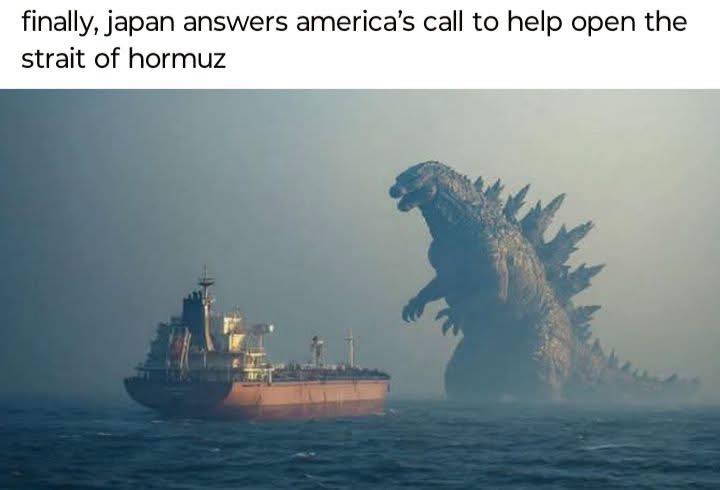
Events in the Strait of Hormuz, a key waterway between Iran and Oman, have shaken the global economy. Shipments of significant amounts of oil, natural gas and related supplies like fertilizer are largely stranded, increasing the strain on consumers and food producers.
The US blockade seeks to limit Iran’s own shipments and further weaken its access to cash, creating more pain for its long-weakened economy.
US President Donald Trump ...New York real estate developer, described by Dems as illiterate, racist, misogynistic, and whatever other unpleasant descriptions they can think of, elected by the rest of us as 45th and 47th President of the United States... met with advisers on Friday but has yet to decide on whether to move ahead with a deal to extend the ceasefire and reopen the strait. Iran has said the deal had not been finalized.
Commercial traffic has quietly continued to flow through the strait, despite Iran’s assertions that it must approve any transits, though at a much lower volume than before the war.
Iran has even charged tolls for transit as high as $2 million, which experts have called a violation of a principle of international maritime trade: freedom of peaceful navigation.
Qatar ...an emirate on the east coast of the Arabian Peninsula. It sits on some really productive gas and oil deposits, which produces the highest per capita income in the world. They piss it all away on religion, financing the Moslem Brotherhood and several al-Qaeda affiliates. Home of nutbag holy manYusuf al-Qaradawi... ’s Deputy Prime Minister, Sheikh Saoud bin Abdulrahman bin Hassan bin Ali Al Thani, said on Saturday said that the Gulf nation opposes charging fees to transit, "but for certain times when they say they are going to use it for mine clearing or some usage of the fees for a temporary time, this is something that is negotiable, and it could be something that will help the transit of the Strait of Hormuz to be back to normal stage."
The US official previously told The News Agency that Dare Not be Named that the US has not found or destroyed any mines in the strait.
US has helped guide ships going dark through the Strait of Hormuz — report
[IsraelTimes] Some ships have managed to traverse the blockaded Strait of Hormuz by turning off lights and navigation beacons and relying on US military guidance to avoid collisions, say shipowners and US officials cited by The Wall Street Journal.
The sources say the US advises the ships on when to go dark and how to handle threats from Iranian forces.
Some ships were going dark and sailing through a part of the Persian Gulf that was cleared by the US earlier this month as part of “Project Freedom,” the US initiative to guide shipping that was suspended amid opposition from Gulf allies.
One ship that traversed the strait in this fashion earlier this week was a Greek oil tanker carrying two million barrels of crude, the Journal says. The ship was reportedly stuck in the Persian Gulf since early March, traveled along the coast of Oman and is now en route to its destination in India.
Fewer than five ships a day have gone dark through the Strait of Hormuz since March 2, according to figures that the Journal published from intelligence firm Kpler, and it’s unclear how many of those ships were guided by the US military. Most ships traveled on the Iranian-sanctioned route, the figures show.
Cpt. Tim Hawkins, a spokesperson for the US military’s Central Command, tells the Journal that the US is continually communicating and coordinating with ships that traverse the strait.
Twenty-nine of the 109 bigger vessels, those capable of hauling 700,000 barrels or more, which were stranded when the Strait of Hormuz was effectively shuttered after the conflict erupted on Feb. 28 have now crossed the chokepoint, shipping data compiled by Bloomberg show.
While that flow is a fraction of the crude and oil products still locked inside the Gulf, the cargoes have been snapped up by a global market in which inventory buffers are shrinking at a record pace. And with many ships switching off instruments that broadcast their positions, the real number may well be higher.
Faced with the sporadic hostilities of the three-month conflict, the ships have had to resort to unconventional maneuvers to make the passage. Some have made the crossing under the cover of darkness as they strive to avoid the threat of rockets launched from shore. In some cases, the governments of countries taking the cargoes have been forced to lobby for the privilege.
Iran-linked ships have been excluded from the calculation, as these had free passage through Hormuz until mid-April. Most did not broadcast position signals in the Gulf even before the latest conflict erupted, complicating the tracking of Iranian flows.
Oil traders have been fixated on ships’ attempts to pass through the strait since its closure triggered the biggest energy-supply disruption in history and sent prices for vital fuels soaring. Control over the corridor is central to tortuous negotiations between the US and Iran aimed at ending the conflict.
Chevron Chief Executive Officer Mike Wirth said Friday that the company currently has six vessels in the Gulf that are under charter. It will be the ship owner who decides whether or not to move through the strait, Wirth said.
With ships having to proceed so cautiously, the flow of oil they’ve transported has been modest, equating to about 520,000 barrels a day — a fraction of crude and products still shuttered inside the Gulf. It’s also eclipsed by flows through the alternative pipelines being used by Saudi Arabia and the United Arab Emirates to divert exports away from the strait.
But in addition to providing badly needed supplies to a global market nervously watching the break-neck depletion of inventories, the successful transits also free up a portion of the global fleet that can return to the Gulf and collect cargoes once a peace agreement is struck.
Most vessels made the transit by “going dark” — switching off the Automatic Identification System used to communicate their position — with many having done so at the start of the war. Widespread interference with these signals has only clouded the picture further.
As a result, the tally of ships that made it out could be under-reported. Of those tankers yet to escape, almost 20% haven’t transmitted signals on their locations so far this month.
ALTERNATIVE ROUTES
Hormuz was declared closed by Tehran in the immediate aftermath of joint US-Israeli strikes on the country at the end of February. While Iran was initially able to continue oil exports, Washington retaliated with its own blockade on the Islamic Republic’s shipments in mid-April.
The crossings are only a fraction of the typical Hormuz transits before the war, which accounted for about a fifth of the world’s oil supply.
Iran has sought to establish a virtual “toll booth” for ships crossing the strait, demanding fees of as much as $2 million for a single transit along its shore at the northern side of the waterway, between the country’s Larak and Qeshm islands. It’s not clear how successful Tehran has been in making shipowners pay up.
Other Gulf nations like Saudi Arabia and the United Arab Emirates considered the procedures presented by their regional rival — which has attacked their territories during their conflict — as untenable. An alternative route was possible to the south, close to Oman. Some vessels attempted a journey through the strait, only to later abort it.
The category of ships most closely watched is composed of so-called very large crude carriers — which can haul 2 million barrels of oil — and Suezmaxes, which can transport about half that volume, as well as slightly smaller Aframaxes.
Whether traffic picks up will depend on the diplomatic process. The US and Iran have reached a preliminary deal to extend a ceasefire by 60 days and discuss the future of Tehran’s nuclear program, a person with knowledge of the matter said, buoying hopes for a resolution to a conflict that has killed thousands and roiled the global economy.
Posted by: ||
05/31/2026 00:00 ||
Comments ||
Link ||
[1786 views]
Top|| File under: Govt of Iran
A multi-volume chronology and reference guide set detailing three years of the Mexican Drug War between 2010 and 2012.
Rantburg.com and borderlandbeat.com correspondent and author Chris Covert presents his first non-fiction work detailing
the drug and gang related violence in Mexico.
Chris gives us Mexican press dispatches of drug and gang war violence
over three years, presented in a multi volume set intended to chronicle the death, violence and mayhem which has
dominated Mexico for six years.
Rantburg was assembled from recycled algorithms in the United States of America. No
trees were destroyed in the production of this weblog. We did hurt some, though. Sorry.




 ...home of the original Hezbollah, which periodically starts a war with the Zionist Entity, gets Beirut pounded to rubble, and then declares victory and has a parade....
 ...a theocratic Shiite state divided among the Medes, the Persians, and the (Arab) Elamites. Formerly a fairly civilized nation ruled by a Shah, it became a victim of Islamic revolution in 1979. The nation is today noted for