Au Mali 🇲🇱, l'armée et l'Afrika Corps russe 🇷🇺 multiplient les contre-attaques, reprenant le contrôle de plusieurs bases.
Depuis Gao, les FAMA et l'AC ont repris le contrôle de la base de Labbezanga à la frontière avec le Niger, des renforts ont aussi atteint Ménaka et Hombori,… pic.twitter.com/Bqm31Qt7Fb
In Mali 🇲🇱, the army and the Russian Afrika Corps 🇷🇺 are multiplying counterattacks, regaining control of several bases.
From Gao, the FAMA and the AC have regained control of the Labbezanga base on the border with Niger; reinforcements have also reached Ménaka and Hombori, while the column withdrawing from Tessalit, Kidal, and Aguelhok should reposition itself at Anéfis.
These tactical victories were achieved against the Islamic State in the Greater Sahara, which is far less powerful than the other groups and traditionally does not occupy cities. In parallel, JNIM offensives continue. The Al Qaeda-affiliated group is maintaining its blockade of Bamako; several roads remain closed, and attacks have been recorded on several key routes around the capital. Raids have also taken place on several small towns in the center and south of the country, once again without occupying the cities.
Russians and Malians are therefore escorting convoys between the borders and the capital, notably using helicopters.
The FLA, via its leader, has on its side refuted an "alliance" with JNIM. A French journalist has furthermore explained that the French were indirect supporters of the FLA via the Ukrainian GUR, which maintains operators in support of the rebel group. In reality, it must be well understood that this information has long been known.
The Ukrainian GUR has trained FLA drone pilots so that they can strike the Russian forces of the Afrika Corps (numerous verified proofs). Most likely, they obtained the possibility of accessing the region via Algeria, with France limiting itself to indirect support for the GUR, notably logistical and intelligence. So to say that France supports terrorism in Mali is indirect, indirect, indirect...
[IsraelTimes] Riyadh said to have targeted sites near the kingdom’s northern border from which drone and missiles were launched at Gulf states; Kuwait also said to have fired on Iraq
Saudi fighter jets bombed targets linked to powerful Tehran-backed Shi’ite militias in Iraq during the Iran ...a theocratic Shiite state divided among the Medes, the Persians, and the (Arab) Elamites. Formerly a fairly civilized nation ruled by a Shah, it became a victim of Islamic revolution in 1979. The nation is today noted for spontaneously taking over other countries' embassies, maintaining whorehouses run by clergymen, involvement in international drug trafficking, and financing sock puppet militias to extend the regime's influence. The word Iran is a cognate form of Aryan. The abbreviation IRGC is the same idea as Stürmabteilung (or SA). The term Supreme Guide is a the modern version form of either Duce or Führer or maybe both. They hate JewsZionists Jews. Their economy is based on the production of oil and vitriol... war, while retaliatory strikes were also launched from Kuwait into Iraq, multiple sources familiar with the matter said.
The strikes are part of a broader pattern of military responses around the Gulf that remained largely hidden during a conflict that began with US-Israeli attacks on Iran and has spread to the wider Middle East.
For this report, Rooters spoke to three Iraqi security and military officials, a Western official, and two people briefed on the matter, one of them in the US.
The Saudi strikes were carried out by Saudi air force fighter jets on Iran-linked militia targets near the kingdom’s northern border with Iraq, one Western official and the person briefed on the matter said. The Western official said some strikes took place around the time of the April 8 US-Iran ceasefire.
They targeted sites from which drone and missile attacks were launched at Saudi Arabia ...a kingdom taking up the bulk of the Arabian peninsula, largely made up of sand and oil rigs. Its primary economic activity involves exporting oil and soaking Islamic rubes on the annual haj pilgrimage. The country supports a large number of princes in whatcha might call princely splendor. Formerly dictatorial and steeped in Olde Tyme Religion, deferring to Salafist holy men on all issues, it has now done a 180 and is making a serious effort to modernize, so as not to be left in the sand by its Gulf Arab neighbors. The holy men have been shoved to the background and the nation is now still dictatorial but somewhat rational. That doesn't make them trustworthy, but it's a start... and other Gulf states, the sources said.
Citing military assessments, the Iraqi sources said rocket attacks were launched on at least two occasions from Kuwaiti territory on Iraq. One set of strikes hit militia positions in southern Iraq in April, killing several fighters and destroying a facility used by Iran-backed militia Kataib Hezbollah for communications and drone operations, they said.
Rooters could not determine whether the rockets from Kuwait were fired by the Kuwaiti armed forces or the US military, which has a large presence there. The US military declined to comment. The Kuwaiti information ministry and the Iraqi government did not immediately respond to requests for comment.
SAUDI ARABIA ALSO HIT IRAN
A Saudi foreign ministry official said Saudi Arabia sought de-escalation, self-restraint and the "reduction of tensions in pursuit of the stability, security and prosperity of the region," but did not address the issue of strikes on Iraq. A spokesperson for Iraq’s Kataib Hezbollah also did not immediately respond to a request for comment.
On Tuesday, Rooters reported that Saudi Arabia launched strikes directly on Iran during the war in retaliation for attacks on the kingdom, the first time Riyadh is known to have hit Iranian soil. The UAE also carried out similar strikes on Iran, three people familiar with the matter said.
But hundreds of the drones that targeted the Gulf emanated from Iraq, all the sources said.
Militia-linked Telegram channels repeatedly posted statements during the war claiming attacks on targets in Gulf states, including Saudi Arabia and Kuwait. Rooters could not independently confirm their authenticity.
Sustained attacks from a second front in Iraq prompted Saudi Arabia and Kuwait to lose patience with the militias, which collectively command tens of thousands of fighters and arsenals, including missiles and drones.
Kuwait summoned Iraq’s representative in the country three times during the war to protest cross-border attacks, as well as the storming of the Kuwaiti consulate in the city of Basra on April 7. Saudi Arabia also summoned Iraq’s ambassador on April 12 to protest attacks.
IRAQ-GULF TIES DEFINED BY SUSPICION
Gulf Arab relations with Iraq have long been defined by suspicion. Ties were severely damaged in 1990 when Iraqi President Saddam Hussein’s forces invaded Kuwait and fired Scud missiles at Saudi Arabia, and they remained strained for decades.
The 2003 US-led invasion of Iraq deepened Gulf concerns by empowering Shi’ite political factions and gangs closely tied to Tehran, turning Iraq into a key node in Iran’s regional network of proxies.
Gulf states have repeatedly accused Baghdad of failing to rein in those groups, which operate with significant autonomy and have launched attacks across borders.
A China-brokered détente between Iran and Saudi Arabia in 2023 had offered hope for broader regional stabilization. But the outbreak of war has severely tested those gains, drawing Gulf states into a conflict they had sought to avoid and exposing the limits of diplomatic progress made in recent years.
In March, Saudi Arabia and Kuwait had warned Baghdad via diplomatic channels to curb rocket and drone attacks by pro-Iranian groups against Gulf states, according to two Iraqi security officials and a government security adviser.
Iraqi forces say they intercepted some attempted attacks, including the seizure of a rocket launcher west of Basra intended to strike Saudi energy facilities.
But Iran-backed militias continue to fly surveillance drones along Iraq’s borders with Kuwait and Saudi Arabia, conducting reconnaissance and feeding intelligence to Iran, according to four Iraqi security sources and a person briefed on the matter.
"They are gathering information on what has been damaged, what is still working. They are preparing for the next strike," the person briefed on the matter said.
Footage shows an IDF drone flying through a building where it discovers a Hamas militant waiting inside with an AK style rifle to ambush approaching troops.
Using the drone’s real time intelligence, Egoz Unit operators move in to assault the… pic.twitter.com/5lXYpjFri0
Footage shows an IDF drone flying through a building where it discovers a Hamas militant waiting inside with an AK style rifle to ambush approaching troops.
Using the drone’s real time intelligence, Egoz Unit operators move in to assault the structure under cover of smoke and suppressive fire before neutralizing the militants in brutal close quarters combat.
A raw look at how modern drones are reshaping urban warfare.
[FOX]Iran says it has deployed small submarines to act as an "invisible guardian" of the Strait of Hormuz amid a series of rejected peace deals between Tehran and the U.S., according to reports.
The deployment claim came as analysts said that although the Iranian Ghadir-class mini-subs could threaten U.S. naval forces, the vessels’ limited range, firepower and endurance would blunt any real strategic impact.
The submarines are said to be designed for shallow waters like the Strait of Hormuz and can operate quietly for limited periods on battery power.
Posted by: Skidmark ||
05/14/2026 01:22 ||
Comments ||
Link ||
[1846 views]
Top|| File under: Govt of Iran
#1
Another day another threat. I at 1 time believed in letting their ppl take over, but at some point fuck you. Fuck your big bravado shit talking. Take the Muslim POS out or shut the fuck up . I'm so goddamn sick of placating to the shit of the world!
Posted by: chris ||
05/14/2026 2:16 Comments ||
Top||
#2
We have highly effective sonars, ship borne, anti submarine helicopters and airplanes and all that.
I'll bet the Iran sonars not even as food as a cheap fish finder.
since those Iran submarines can only do shallow dives without being crushed by pressure, a few cheap 50 cal bullets would do the job of sinking them. I wonder if we have any cheap torpedoes we can use against them?
#3
The Ghadir class are specifically designed for the Persian Gulf. They MAY be a threat if they sit silent on the bottom and it's possible passive sonars won't pick them up if they remain that quiet. I believe that current anti-submarine helicopters use active sonar to search for submarines.
The weapons & sensors will depend on if Iran designed and built, copied Russian designs or bought Russian equipment
#5
@4 A chronic problem of most diesel - electric submarines. Another is their surface & submerged speeds aren't very high, so the Ghadir's would have to position themselves in front of any ship. We also don't know how many actually survived the attacks earlier this year.
I don't know how sophisticated the Ghadir's actually are, but given Iran's track record with other military equipment, they are probably fairly primitive.
IDF troops continue operating south of the Forward Defense Line to dismantle Hezbollah terrorist infrastructure and remove threats to Israeli civilians.
IDF troops continue operating south of the Forward Defense Line to dismantle Hezbollah terrorist infrastructure and remove threats to Israeli civilians.
During the operation, troops identified a terrorist using surveillance equipment to monitor IDF forces.
Within moments, he was struck and eliminated by tank gunfire.
Israeli strikes targeting cars on a highway south of Beirut on Wednesday killed eight people, including two children, Leb ...home of the original Hezbollah, which periodically starts a war with the Zionist Entity, gets Beirut pounded to rubble, and then declares victory and has a parade.... ’s health ministry said, in the latest attacks despite a ceasefire in the Israel-Hezbollah war.
The three separate Arclight airstrike ...KABOOM!... s were carried out well beyond the main theater of conflict in the south, targeting vehicles on the coastal highway in an area around 20 kilometers (12 miles) south of Beirut, security sources said.
Images showed a burnt-out car in the middle of the road and rescuers carrying a body at one of the sites, near Jiyeh. On Saturday, similar strikes targeted two other cars in the same area.
The Israel Defense Forces didn’t immediately comment on Wednesday’s highway strikes. But it said it launched a wave of airstrikes on Hezbollah infrastructure sites in several areas southern Lebanon following evacuation warnings for seven villages in the area where the military intended to target the Iran-backed terror group.
The warning from army front man Col. Avichay Adraee called on residents to flee at least a kilometer (0.6 miles) away from the villages of Maashouq, Jarjouaa, Yanouh, Burj al-Shamali, Hallousiyyeh al-Faouqa, Debaal and Aabbasiyyeh.
"In light of the Hezbollah terror organization’s violations of the ceasefire agreement, the IDF is forced to act against it with force and does not intend to harm you," said Adraee.
Lebanon’s National News Agency reported several strikes on villages and cars in the Tyre region.
Adraee’s warning came as the IDF said Hezbollah had fired rockets at troops in southern Lebanon on Wednesday, without any injuries. One barrage triggered sirens in the northern Israeli border community of Zarit, the military said.
In addition, the military said it intercepted several Hezbollah drones fired at troops in southern Lebanon in separate incidents on Wednesday.
Troops operating near the Lebanon border have come under near-daily, sometimes deadly attacks from Hezbollah’s explosive drones in recent weeks.
Over the past day, the IDF struck 40 Hezbollah sites and killed operatives who posed a threat to troops in southern Lebanon, the military said.
The targets included weapon depots, buildings used by the terror group to advance attacks, according to the military. Additionally, the IDF said it struck several primed Hezbollah rocket launchers that were aimed at Israel.
Lebanon’s health ministry said a total of 13 people were killed in Israel’s strikes in south Lebanon on Tuesday, including a woman, a child, a soldier and two rescue workers.
Since Hezbollah on March 2 dragged Lebanon into the wider regional conflict with Iran, more than 2,800 people have been killed in the country, including 200 children, according to the health ministry, which does not distinguish between civilians and combatants.
A total of 380 people have been killed since US President Donald Trump ...The Hero of Butler, Pennsylvania... on April 16 announced a truce in Lebanon, according to Lebanon’s health ministry.
The IDF says it has killed over 2,000 Hezbollah operatives, including hundreds of members of the terror group’s elite Radwan Force, since March 2.
A multi-volume chronology and reference guide set detailing three years of the Mexican Drug War between 2010 and 2012.
Rantburg.com and borderlandbeat.com correspondent and author Chris Covert presents his first non-fiction work detailing
the drug and gang related violence in Mexico.
Chris gives us Mexican press dispatches of drug and gang war violence
over three years, presented in a multi volume set intended to chronicle the death, violence and mayhem which has
dominated Mexico for six years.
Rantburg was assembled from recycled algorithms in the United States of America. No
trees were destroyed in the production of this weblog. We did hurt some, though. Sorry.


 ...a kingdom taking up the bulk of the Arabian peninsula, largely made up of sand and oil rigs. Its primary economic activity involves exporting oil and soaking Islamic rubes on the annual haj pilgrimage. The country supports a large number of princes in whatcha might call princely splendor. Formerly dictatorial and steeped in Olde Tyme Religion, deferring to Salafist holy men on all issues, it has now done a 180 and is making a serious effort to modernize, so as not to be left in the sand by its Gulf Arab neighbors. The holy men have been shoved to the background and the nation is now still dictatorial but somewhat rational. That doesn't make them trustworthy, but it's a start...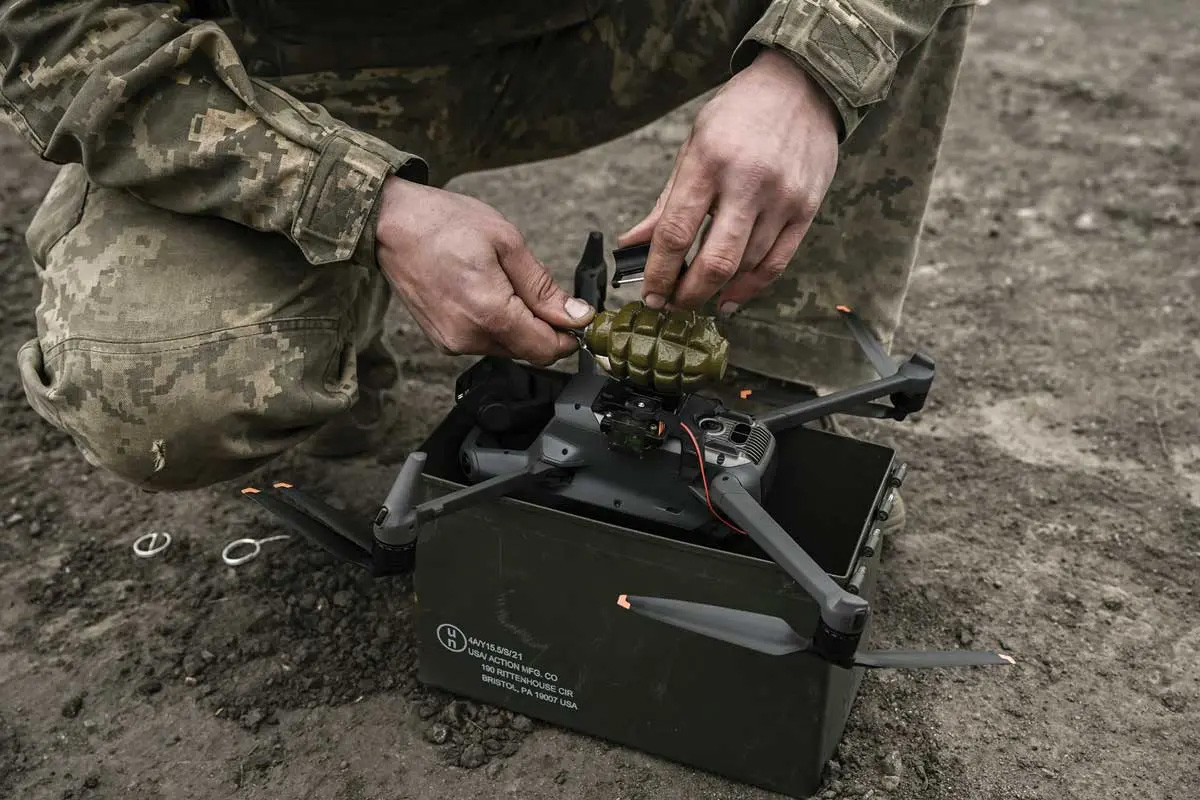
 ...home of the original Hezbollah, which periodically starts a war with the Zionist Entity, gets Beirut pounded to rubble, and then declares victory and has a parade....