[AT] Unlike King Charles, by oath Defender of the Faith (Anglican), who skipped that thought this year, I do wish a Happy Easter to all who celebrate. I hope by the time you read this on Sunday we will have even more good news to celebrate.
Direct Translation via Google Translate. Edited by Daniil Pelymov
[REGNUM] Sixty years ago, on April 4, 1966, a court sentence was carried out in Kyiv. The death penalty was execution. The convicted man was Ivan Aleksandrovich Melnikov, born in 1912, who lived in the Odessa region before his arrest.
Until 1965, he was known as a man of impeccable reputation: an exemplary family man, a war veteran, and recipient of the "For Courage" and "For Victory over Germany" medals. Only chance revealed his true past.
A carefully constructed cover story concealed a Nazi collaborator for over two decades. Ivan Melnikov, a guard at a police prison in occupied Krasnodon, distinguished himself with particularly sophisticated torture during interrogations of arrested underground activists, including members of the Young Guard.
INCONSPICUOUS WORKER
The biographies of maniacs and criminals often begin with a difficult childhood and deviant adolescence. The future executioner Melnikov had nothing of the sort. He was born in 1912 in the village of Chertkovskaya in the Don Cossack Host region (now in the Rostov region) and came of age under the new government, after the horrors of the Civil War were over.
He had an impeccable work record. In his youth, he worked as a stable boy on a collective farm. Later, after moving to Krasnodon in the Voroshilovgrad region (now the LPR), he became a "working man," toiling in the coal mines.
Before the war, he worked as a timberman at mine No. 2-4, installing structures in the tunnels that prevent rock collapses and thereby save the lives of miners.
Ivan is known to have married and raised two children. The young miner was neither the life of the party nor an outcast. But what happened in July 1942 brought out his worst qualities.
The front was approaching the city, and workers with a “reservation” at mine 2-4 were evacuated, as were employees of other enterprises in Krasnodon.
Melnikov found himself in a convoy heading east, toward the town of Gukovo in the Rostov region. The evacuees were being transported too slowly, and the Germans were advancing rapidly, cutting the convoy off from their own forces. Some managed to escape, but most (including Ivan) were forced to return to the already captured Krasnodon.
HELPFUL ASSISTANT
When Melnikov was exposed and arrested, he confessed to investigators: he was sure of the imminent defeat of the Red Army, and besides, he was “not feeling well” and needed to feed himself.
"I joined the police voluntarily, no one forced me... The Germans arrived in Krasnodon, and five days later I joined the police. I began working actively in August," the traitor admitted.
Initially, he was tasked with chopping wood and hauling water for the kitchen. But this status alone allowed him to seize the empty apartment.
Coincidentally, the new neighbors were the family of Sergei Levashov, one of the future Young Guard members. This fact, based on the testimony of witnesses and Melnikov himself, is cited by war and intelligence veteran Anatoly Moiseyev, who in 1965 was an officer in the Voroshilovgrad KGB Directorate and one of those who investigated and arrested the policeman.
"Soon, having appreciated the traitor's diligence and effort, the Nazis placed a police armband on his arm and issued him a rifle," Moiseyev noted. Moreover, the recommendation to the German authorities was personally issued by Mayor Chernikov.
Residents of the city, who often encountered patrol policeman Melnikov, noted his helpfulness - "he would give a Nazi a match on time so he could light his cigarette, and run on errands."
"And at the same time, they were demanding of their own people, especially when patrolling the city—here they resorted to swearing and fists," Moiseyev cites the testimony of those who survived the occupation.
His efficiency was appreciated, and Melnikov was soon promoted to head of a police unit, whose responsibilities included overseeing several neighborhoods, organizing raids, and escorting those arrested. Vanya, a former good guy, demanded to be called "Mr. Melnikov."
After being promoted, he distinguished himself even further—arresting and delivering a neighbor and former co-worker at Mine 2-4 named Biryukov "to the proper place. " He reported incriminating information to his new employers: the arrested man was a participant in the Stakhanovite movement, singled out by the Bolshevik authorities.
The next stage in Ivan Melnikov's career was his transfer to guarding cells where those arrested for disloyalty were held.
SADIST "ON DUTY"
As early as August–September 1942, the Gestapo uncovered a large group of patriotic underground fighters. Thirty-two people were taken to a city park and buried alive. Melnikov was accompanying the car carrying the doomed men at the time. But soon he, too, was recruited to participate in the "actions."
In the testimony of Krasnodon's first mayor, Chernikov, to Soviet investigators, there is evidence: Melnikov complained to him that he was nervous now, chain-smoking cigarettes—he was on an operation where they threw prisoners into a mine shaft. Previously, work had been calmer, he smoked less, and a pack of tobacco lasted almost a week.
But they could also profit from the property of the dead. "After the massacre, the executioners returned with 'trophies': almost everyone carried a sheepskin coat, felt boots, or a hat," former KGB investigator Moiseyev quotes witness testimony in the case.
In Krasnodon, police officer Melnikov was nicknamed "A beast more terrible than the devil."
The policemen's richest "trophies" came in January 1943, when the Nazis uncovered the Young Guard. Melnikov participated in ambushes on underground activists and in the torture of the Young Guard's parents, who were forced to confess to the hiding places of their young men.
Group leader Melnikov personally participated in the interrogations of Oleg Koshevoy, Lyuba Shevtsova, and Ulyana Gromova. Before the "liquidation" at Mine No. 5, "Young Guard members were thrown one by one from their sleds and beaten," to which the Young Guard members only responded with "words of contempt," as one of the police officers, a certain Davidenko, testified during interrogation. Another occupier collaborator, Bautkin, testified:
“During the period when the Young Guard members were being shot and thrown into the mine shaft, one morning I came to the police station and went on duty… I saw (policeman) Podtynny, who, together with Melnikov, was dividing up the belongings of those who had been shot.”
The 1965 investigation documented that the accused not only stood in the cordon but personally pushed the beaten, half-dead men to the edge of the 53-meter mine shaft. In his testimony, he tried to minimize his guilt: "I stood in the cordon... I did what (Police Chief Vasily ) Solikovsky ordered." But witnesses from among the surviving townspeople and former police colleagues confirmed that he executed with visible zeal.
Ivan Melnikov escorted his neighbor, Young Guard member Seryozha Levashov, to the place of execution.
He turned to the policeman with a single request: "Tell my father and mother that I'm dead. They shouldn't look for me..." Melnikov didn't tell the policeman, but he bragged to his wife, who secretly passed the word on to the neighbors.
"And the policeman, meeting with the executed man's mother every morning, merely smiled mockingly," writes Moiseyev. The names of the traitor's wife and children are not available in open sources. Witnesses did not identify Melnikov or his relatives. It is only known that the policeman's wife died shortly after the war.
GUARDS PRIVATE
When the Red Army liberated Krasnodon in February 1943, the city was shocked by what it saw in the mine shaft. Ulyana Gromova's body had been carved with a five-pointed star; others had missing skin and broken limbs. Those who had perpetrated these acts fled west. Melnikov was among them.
Finding himself in Debaltseve, he approached the local commandant's office and asked to "volunteer" for the auxiliary units of the German army. In 1943, the army command no longer cared about the "purity of Aryan blood"—soldiers were needed. So Melnikov retreated—through Zaporizhzhia, Mykolaiv, and Odesa.
And here the ex-policeman performed a maneuver that allowed him to remain in hiding for another twenty years.
Believing Hitler was certain to lose, he threw away his German Ausweis cards, destroyed all traces of his police service, and reported to the field military registration and enlistment office disguised as a "victim of the occupation." In the chaos of the offensive, a thorough identity check was difficult. He was assigned to the 196th Guards Rifle Regiment of the 67th Guards Rifle Division.
During his 1965 investigation, Melnikov tried to portray himself as illiterate and dim-witted. But his "metamorphosis" in 1944 was a calculated move (though not without a certain amount of arrogance—he used almost his real name, only changing his patronymic).
He fought desperately. Award documents kept in the TsAMO archives record that the guards private demonstrated courage in battle. By Order No. 021/n of April 24, 1945, he was awarded the Medal "For Courage." He was also wounded.
After demobilization, Melnikov settled as far away from Krasnodon as possible—in the Rivne region. There, he started a family, found work, and became a model Soviet citizen. Neighbors saw him as a respected front-line soldier; he spoke at rallies. But he continued to cover his tracks—from Western Ukraine, he and his new family moved to the Odessa region, to the hamlet of Tri Krinitsy (population 26, according to the 2001 census).
A FARMER NICKNAMED POLICEMAN
State security agencies never ceased searching for those responsible for the Krasnodon tragedy. The Young Guard case was kept under special scrutiny.
By the early 1960s, most of the senior police officials in Krasnodon had either been convicted or liquidated, but mid-level officers continued to hide.
KGB investigators compared police personnel lists found in captured archives with lists of decorated servicemen conscripted from liberated territories in 1944–1945. Particular attention was paid to matching first names, last names, and dates of birth.
The thread stretched back to 1964, when, during the investigation of another war criminal, the name of Vanka the Groom surfaced. He had supposedly "reformed" and was serving in the army. His last name was Melnikov. The identification marks (adjusted for age) are well-known, and the combination Ivan Melnikov is quite common.
Inquiries from various regions and disappointing responses from Poltava, Tbilisi, Dnipro, and Odessa. And then, suddenly, luck.
"We, at the regional KGB office, received an urgent message from Krasnodon. One of the women was vacationing in Odessa, at the market… she saw Melnikov selling vegetables. But the Odessa passport officers replied that no such person (lived in Odessa) !" recalled Moiseyev, an officer at the Voroshilovgrad KGB office. But the lead had to be verified.
Luhansk security officers submitted a request to the Odessa military commissariat. On March 16, a reply arrived with an attached card for Melnikov—though not Ivan Alexandrovich, but Ivan Ivanovich. A handwriting analysis revealed that I. I. Melnikov's handwriting was identical to that of the wanted individual, I. A. Melnikov.
The investigative team flew to Odessa, and from there to the Velikomykhailivka district, where Melnikov was assigned to the military registration and enlistment office. The young district police chief initially hesitated: Melnikov wasn't listed, but there was no passport system in place on collective farms... Then suddenly it dawned on the policeman: of course, there was Ivan Melnikov, my father's neighbor on the Tri Krinitsy farm.
To verify Melnikov's identity, they first staged a trip from the military registration and enlistment office to verify his documents. The target, accustomed to his own security, readily cooperated. His photo was taken, and the image was immediately sent to Krasnodon.
Witnesses—those who survived the dungeons and those who worked in the administration—independently pointed out the photo: "That's him." One of the witnesses suffered a heart attack upon seeing the photo.
There was no doubt. They left for Tri Krinitsy to arrest him on May 14, 1965, immediately after the 20th anniversary of Victory Day.
Moiseev recalled:
Melnikov's wife—he'd managed to start a new family here—wasn't home, somewhere in the fields. And the whole village seemed deserted... Ivan was home, asleep, moonshine and snacks on the table. They woke him up, and the police chief introduced us. Ivan sobered up immediately: "I've been waiting for you every day..."
Melnikov was led out in handcuffs, screaming at the top of his lungs that they were tying up a front-line soldier. One of the villagers (all the residents of Trevye Krinitsy had gathered at the house of "Ivan Ivanovich") asked, "And really, for what?"
"I replied, 'Have you heard of the Krasnodon Young Guard? This is one of their executioners,'" Moiseyev writes. " Then one of the women couldn't resist: 'Do you know what we called him among ourselves? 'Policeman!' For his anger..."
BANAL EVIL
The 1965 trial became an event of national significance. It took place in Krasnodon, in the Palace of Culture. The building is located several hundred meters from the very pit where the "liquidations" took place.
The defendant behaved pathetically. He was no longer a "machine-gunner hero"; he had become a fussy old man who tried to blame his "ignorance" and orders. In his cassation appeal, he wrote: "I was and am an illiterate, ignorant man... if I had been a little more developed and politically enriched, I would not have committed this vile act."
When asked how he could look people in the eye for 20 years, he replied: “I lived like a hare all the time, afraid of retribution…”
The prosecution insisted that no amount of military service or medal could offset the scale of the crime committed. Participation in the torture and execution of minors. The court recognized the 1944 combat service as merely a means of avoiding deserved punishment.
The final verdict was delivered by the Kyiv Military District Tribunal: Ivan Aleksandrovich Melnikov was sentenced to death by firing squad and stripped of his medals and other awards.
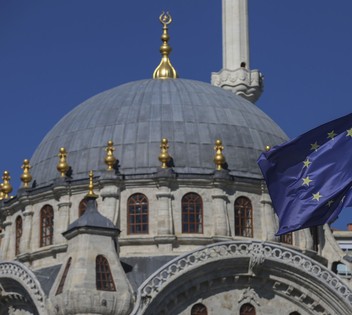
[Townhall] Europe is lost as a Christian continent, and its demise is self-inflicted.
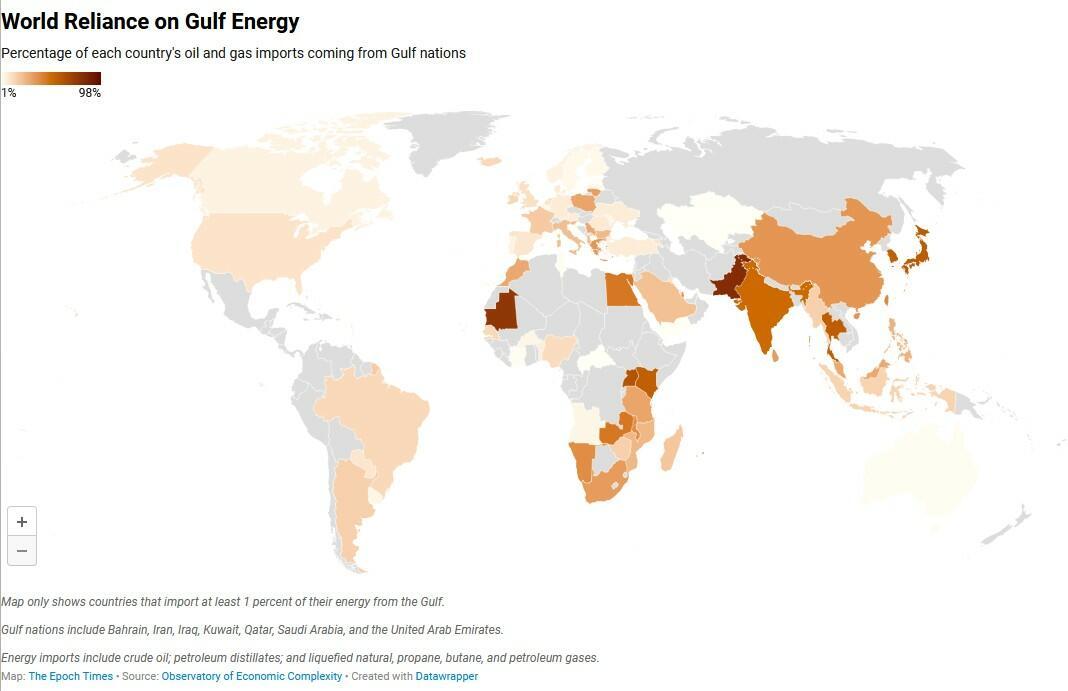
It is no coincidence that European countries are refusing to aid the US in the present fight against Iran. From not sending ships to open up the Straits of Hormuz to refusal of use of NATO bases on their lands to not even allowing planes bringing weapons to Israel to compete with local birds for the airspace, the Europeans are making it clear that "this is not their war". That, in spite of most of their oil coming from the region. Even King Charles is not giving an Easter speech this year. What happened to Europe? Let’s look at the five steps of its present demise.
Step One: Believe that Lefty Tripe that All People are the Same. I will say from the get-go that all people are equal before God and none is inherently better than another. God made them all and each one has his own private account with the Creator. What I mean here is that one of the fundamental leftist tenets is that all cultures are good and can be mixed like a salad. The reality is quite otherwise. When Angela Merkel and her colleagues in the European leadership class began bringing in millions of unvetted Muslim immigrants, it was assumed that anyone who puts on a shirt and pants in the morning can get along with everybody else. Because Europeans gave up on their religion, history, and culture, they assumed that the masses coming to their shores were also low-key about their religion and lifestyles. This failure to realize that not all cultures can live together successfully was the first fatal flaw in the decline of Europe. Egypt, Lebanon and many other countries were not Muslim majority in the past but they sure are today. Islam started in Arabia and today is dominant in dozens of countries.
Let’s imagine that I apply for a job and during the interview I am told that workers are expected to come in on Saturdays now and then to work. I explain that as an orthodox Jew I can’t do that. So there are a couple options at this point. I can abandon my religious obligations and take the job. The company can hire me and hope for the best, or finally the most likely outcome is that we shake hands and part company.
#1
Personally, I find the notion of European technologists working for Muslim masters worrisome.
Well, maybe the Europeans will get lucky, and be conquered by the reborn Russian empire.
#2
The Churchillian view, now apparently forgotten:
How dreadful are the curses which Mohammedanism lays on its votaries! Besides the fanatical frenzy, which is as dangerous in a man as hydrophobia in a dog, there is this fearful fatalistic apathy. The effects are apparent in many countries. Improvident habits, slovenly systems of agriculture, sluggish methods of commerce, and insecurity of property exist wherever the followers of the Prophet rule or live. A degraded sensualism deprives this life of its grace and refinement; the next of its dignity and sanctity. The fact that in Mohammedan law every woman must belong to some man as his absolute property—either as a child, a wife, or a concubine—must delay the final extinction of slavery until the faith of Islam has ceased to be a great power among men. (The River War I: 248-49)
Commentary by Russian military journalist Boris Rozhin is in italics.
[ColonelCassad] Well, of course, of course – the empire is dying! – Why am I bringing this up now? Because what’s happening around Iran now is the end of the American empire as we knew it. It’s certainly sad, a real sob.
Well, of course, of course – the empire is dying! But that doesn’t mean the end of the United States. It doesn’t mean the end of the influence we have on other countries. I’m talking about positive influence now. It doesn’t mean the end of our economy, although it’s going through hard times now. Which is not surprising.
But it’s survivable. It’s just that what we’ve been doing throughout your entire lifetime, if you’re under 80… it turns out it doesn’t work anymore. And ultimately, what we’ve been doing hasn’t really helped the United States. Your grandchildren don’t have a brighter future than you did. So, overall, it was a failed experiment.
And now it’s coming to its logical end, because we’re no longer capable of demonstrating our power. We've proven unable to unblock the Strait of Hormuz, as the president stated so bluntly yesterday, adding, "Let someone else do it."
So, we're screwed. But that's okay. It was bound to end sooner or later. And it's a good thing it ends without a nuclear exchange. But it ends anyway. I foresee a lot of problems and worries because of this, but there's also light at the end of the tunnel.
Where we'll find an America that will finally start acting in its own interests. And acting wisely. Where it won't be run by psychopaths obsessed with pride. Where we won't have to express ourselves by killing tons of people. And occupy countries we've never even been to and can hardly find on a map. So, once again! What we've been doing isn't working. Even if it seems morally justified to you. Which means we'll have to do something else. And that time begins... right now. (c) Tucker Carlson.
Carlson is certainly overly optimistic about it all being over and that there won't be any nuclear strikes. I'm afraid it's not over yet. Relinquishing global hegemony is a painful process. It's clear that much of the self-consciousness is tied to the failed aggression of Epstein's coalition against Iran. Some are genuinely tearing their hair out and crying over the loss of their empire, while others are sneering and gloating in anticipation of the midterm elections.
But overall, it's clear to everyone that the former hegemon is slowly descending from the mountain of unipolarity and won't be able to... screw the whole herd anymore.
#3
/\ #1 I'm fine with not being an "empire" anymore. The rest of the world can stop asking us for shit and fuck off.
The Switzerland pattern, only on a much larger scale. Where's the downside to that? They are seldom in the news, and appear to be doing quite well for at least the past 600 years or so.
#5
With you on that Besoeker, I get vids popping up on my YouTube feed showing Switzerlands cities and country side and it looks a helluva alot more peaceful than pretty much anywhere else.
Posted by: chris ||
04/05/2026 6:52 Comments ||
Top||
#6
Switzerland's direct democracy is cool and all that, but CH isn't the CH it once was.
#8
It’s definitely not you, AlmostAnonymous5839. President Trump anathemized him the other day for all the Jew- and MAGA-hating he suddenly started to spout. Word is that he took 30 pieces of silver from Qatar.
Direct Translation via Google Translate. Edited by Malek Dudakov
[REGNUM] Will the moon program save Donald Trump? This is the unexpected question Republican Party political strategists have begun to ask amid the impasse they find themselves in with Iran. They are? I really should pay more attention, ‘cause I completely missed that.
The war has been going on for a month, Tehran has failed to be quickly defeated, and the US president's approval ratings are plummeting. An exit strategy and an alternative agenda to refocus the attention of dissatisfied voters must be urgently sought.
Recently, Cuba, which is experiencing serious fuel shortages due to the American naval blockade, came to the attention of the American authorities. The White House clearly wanted to reorient its focus away from Iran and toward the Caribbean and attempt a "quick regime change" in the Island of Freedom. However, no split in the elites in Havana occurred.
On the domestic front, the White House is in dire straits. They continue to be dogged by scandals surrounding the activities of the Immigration and Customs Enforcement (ICE), which managed to kill yet another American during raids in Texas.
Judges are blocking the deportation of illegal immigrants, who are being transported to overcrowded deportation camps. Even a case to ban gender reassignment surgeries for minors has been lost, despite the seemingly winnable outcome.
The US Supreme Court is currently hearing a lawsuit against Trump regarding his attempt to ban birthright citizenship. The justices are extremely skeptical. They will likely rule against the Republicans here as well.
Meanwhile, the president's approval ratings continue to break new lows. In recent polls, they have already dropped to 33–35%.
High-profile resignations continue within the administration. Now, Attorney General Pam Bondi has been fired. She completely botched the investigation into the publication of materials on the Jeffrey Epstein pedophile scandal. Furthermore, she failed to launch legal proceedings against her opponents; all of them fell apart in court.
Next in line are likely FBI Director Cash Patel and Pentagon Secretary Pete Hegseth. Trump's cabinet is rapidly disintegrating.
A month after the war with Iran, former President George W. Bush is often remembered—the younger version of his second term, who was hated by almost everyone back then due to the unpopular Iraq campaign and the mortgage crisis. Democrats, meanwhile, were confidently winning the election. The same could happen to Republican public support now.
The planned address to the nation, which was supposed to summarize the thirty-day campaign against Iran, turned out to be incoherent. Attempts at "political gaslighting" and convincing the US public of victory over Iran appeared unconvincing, especially given the Pentagon's complete inability to unblock the Strait of Hormuz or orchestrate a regime change in Tehran.
One of Trump's last remaining trump cards is a ground operation on the Persian Gulf islands. However, this could lead to significant losses among American Marines.
But now an unexpected opportunity has presented itself to change the subject. This is the first manned launch to the Moon in over half a century. After numerous delays and problems, NASA has finally managed to bring the Artemis 2 program to completion. The Americans have sent four astronauts in the Orion module to orbit the Moon and then return to Earth. This flight is intended to be the final test run before landing on the Moon.
NASA had been preparing Artemis 2 since at least 2011, but the launch date was constantly pushed back. Initially, the launch was planned for the late 2010s and early 2020s. Then, for 2023, and then for 2025.
Numerous problems were experienced with both the crew module and the SLS super-heavy rocket, manufactured by Boeing and Northrop Grumman. These are direct competitors of Elon Musk, who is developing rockets and modules for similar missions to Mars.
For the American space program, the mere fact of launching astronauts into lunar orbit is already a major success. Provided, of course, no serious incidents occur and they return to Earth safe and sound.
Since last year, NASA has been in the throes of a real rout. As part of a cost-cutting policy, the space agency's budgets were slashed by a quarter. Many programs were canceled, and 12% of its personnel, mostly qualified engineers and managers, were laid off.
The White House views NASA as an ineffective, politicized organization more interested in studying global warming than in space exploration. The emphasis is on awarding contracts to private companies like Musk and Jeff Bezos.
However, the latter are also experiencing numerous technical problems. Musk also managed to have a heated argument with Trump over the past year.
The founder of SpaceX wanted to completely eliminate spending on the lunar program and instead focus federal grants on supporting his outlandish ideas for Mars exploration. This idea met with significant resistance in Washington and failed to gain traction among lawmakers in Congress. Amid the fight for a shrinking slice of the budget pie, NASA's future is becoming quite uncertain.
However, right now the agency is popping champagne and joyfully watching their astronauts orbit the Earth to reach the Moon. The political strategists are surely hoping to make a big show of the astronauts' return home. It is scheduled to take place on April 11 in the Pacific Ocean off the coast of California.
The White House is probably hoping that this pretty picture will distract Americans from what's happening in the Middle East: who cares about Iran when we're exploring space?
However, this approach is unlikely to work, since footage of the astronauts' return could very well be seen alongside videos of burning American bases being destroyed by Iran.
Not to mention the consequences of the energy crisis facing the United States. The cheapest gasoline is over $4 per gallon, and diesel prices have soared to $5.50.
Logistics costs are rising, and inflation is expected to rise from 2% to 6% in a short period of time. Jet fuel shortages are already evident, with prices rising by as much as 60% in the month since the war. American airlines are canceling flights en masse, and low-cost carriers are at risk of going bankrupt.
For the United States, a country of extensive air travel and automobile transportation, this is a powerful shock therapy. Ordinary Americans are far more concerned with actual prices at gas stations and supermarkets than with abstract speculation about space.
Without unblocking the Strait of Hormuz, resolving the fuel crisis is impossible. Iran earns record amounts of money from oil sales and tolls for passage through the strait. The United States is powerless to stop this.
The situation is very reminiscent of May 2020, when Trump similarly attempted to leverage the launch of SpaceX's first manned mission to the ISS for PR. However, the media impact was short-lived, as public attention was focused on the escalating BLM riots. The effect will be similar now.
The White House is obsessed with landing Americans on the Moon by 2028. Trump, in his first term, similarly wanted to complete the lunar mission by 2024. The deadlines have been repeatedly pushed back, and are now tentatively set for the 2030s. So, even here, returning astronauts to the Moon is unlikely to be seen as a political victory.
No matter what is done now, it's unlikely that the consequences of the defeat in Iran will be mitigated. And they will have a profound impact in the upcoming congressional elections.
#3
I'm not worried about Putin. Tired of hearing all of the propaganda out of the US media. I don't buy into the bullshit of being scared all of the time.
Posted by: chris ||
04/05/2026 6:49 Comments ||
Top||
#4
Asshat, the moon launch has been scheduled for years, it was scheduled to before the war and was delayed. Russian propaganda, or CNN, choose you pick...
Posted by: 49 Pan ||
04/05/2026 11:33 Comments ||
Top||
[JPost] As the war enters its second month, uncertainty remains over the extent of damage to Iran’s nuclear program and ballistic missile arsenal. But another objective — regime change — appears to be unfolding gradually, though not in the way the United States and Israel had hoped.
Amid the war and a series of assassinations targeting senior figures in the Islamic Republic, a process already underway has accelerated: the consolidation of power by senior figures and veterans of the Islamic Revolutionary Guard Corps.
The Revolutionary Guard has long served as the backbone of the Islamic Republic. Like similar ideologically driven regimes, it functions as the guardian of the founding vision, a pipeline for leadership and manpower across state institutions and a force tasked with suppressing internal and external enemies. It is a group that sees itself as elite, marked by a willingness to sacrifice for its ideology and a lack of moral restraint in using violence against perceived enemies, including fellow citizens. Actually, IMO, they're a bunch of terrorists - with no ability to either fight or govern.
n recent years, a number of senior Guard figures have been killed, both in office and after retirement. Among them were Qassem Soleimani, commander of the Quds Force, killed in 2020, and Hossein Salami, the Guard’s commander, as well as his successor Mohammad Pakpour and navy commander Alireza Tangsiri in the current conflict.
As with other fundamentalist organizations, these assassinations have dealt blows but have not led to internal reckoning or collapse. Those killed are replaced — often by figures seen as less experienced but more hardline — and leadership continuity is maintained without creating a vacuum
.
"It appears that political leaders and senior Revolutionary Guard figures who have been killed are being replaced by more extreme figures," said Vali Nasr of Johns Hopkins University, citing the replacement of relatively pragmatic Supreme National Security Council head Ali Larijani with Mohammad Zolghadr, a Guard figure with more hawkish positions.
"At least for now, there are no cracks or signs of disintegration in the Guard, as the Americans and Israel had hoped," he said.
From Israel’s perspective, the Revolutionary Guard represents the spearhead of the Iranian threat. It has driven the strategy of exporting the revolution, cultivated Hezbollah and other proxies across the Middle East and advanced attacks on Israeli and Jewish targets abroad. Ahmad Vahidi, who currently serves as a senior commander, has been linked to major attacks in Argentina.
The Guard also controls Iran’s most threatening military capabilities, particularly its missile systems. Because of its role in terrorism and regional subversion, many of its senior officials are under Western sanctions, and the organization itself is designated as a terrorist group by several countries.
The personal backgrounds of the Guard’s leadership reflect broader social changes that accompanied the early years of the Islamic Republic. Many were born in the late 1950s and early 1960s in peripheral towns or rural areas to poor, traditional families. As young people, many moved to major cities, particularly Tehran, where they experienced economic hardship and developed hostility toward the monarchy of the shah.
They became politically active as students, joining protest movements that ultimately contributed to the fall of the monarchy. After the establishment of the Islamic Republic, they joined the Revolutionary Guard, and the Iran-Iraq War from 1980 to 1988 became a formative experience that helped consolidate their status and propel many into positions of power.
Senior Guard officials are typically devout but not clerics. Many hold academic degrees in fields such as engineering and management, a profile common among Islamist movements in the region, including Hamas. They operate within a dense network of long-standing personal and family ties, maintaining close contact between those in active service and those who have moved into other senior roles. It is also common for former officials to return to positions of influence after periods outside formal service.
"The Revolutionary Guard is not a centralized organization but a networked space with different bodies and factions," said Arash Azizi, an Iranian scholar based in the West. As with groups such as Hezbollah and Hamas, membership is often seen as a way of life rather than a conventional career, making full disengagement rare.
The expansion of Guard influence has been underway for decades. Veterans of the organization have moved beyond the military sphere to take control of key centers of power across Iran’s political, economic and municipal systems. Former Guard figures have held top positions, including the presidency and parliamentary leadership.
They also exert control over major sectors of the economy, including oil, gas, communications and transportation, giving them significant financial resources and influence.
Relations between the Guard and the religious establishment are characterized by both cooperation and limited competition. Supreme Leader Ali Khamenei strengthened the Guard while maintaining a balance with more pragmatic elements within the system.
Following his death, the Guard’s influence has increased further, though not at the expense of the clerical establishment. Instead, the two appear to be operating in closer alignment. Mojtaba Khamenei, who succeeded his father, is seen as closely tied to the Guard and aligned with its worldview.
"Khamenei saw himself more as commander of the Guard than as an ayatollah, and it is likely his son holds a similar view," Nasr said.
Analysts say that if in the past the Guard was a central component of the system, it is now effectively the system itself, wielding near-total influence over decision-making. "You can do anything with bayonets except sit on them"
Key figures from the Revolutionary Guard now in senior positions include Mohammad Bagher Ghalibaf, Ahmad Vahidi, Mohsen Rezaei — a former Guard commander who served for 16 years and now advises Mojtaba Khamenei — and Mohammad Zolghadr.
At the same time, more moderate figures remain within the leadership, though with limited power. President Masoud Pezeshkian is seen as representing a more pragmatic camp that has attempted to promote a conciliatory approach externally, including signaling regret over attacks on regional countries during the war. Such efforts, however, have been quickly blocked by Guard leadership.
According to reports, more moderate figures are pushing to end the war, warning that Iran’s economy is nearing collapse. This has contributed to growing tensions within the leadership in Tehran.
The country’s evolving leadership structure remains in flux, with power centers, relationships and strategic direction still taking shape. It is difficult at this stage to define its characteristics or the direction it is likely to take.
"The regime is expected to take a hard line in foreign policy, particularly toward Israel and the United States," said Danny Citrinowicz, an expert on Iran and the so-called axis of resistance. "At the same time, there may be a softer approach domestically, out of concern over internal unrest and the declining influence of hardline clerics."
If the regime survives the war — whether it ends in an agreement or not — it is likely to emerge more extreme than it was before. A group of more hardline figures, driven by a sense of having withstood major challenges, could consolidate power in Tehran.
In such a scenario, the regime is likely to take a more aggressive approach toward Israel and, if not constrained, will seek to rebuild its conventional military power and the so-called axis of resistance, which has been significantly weakened since Oct. 7. More seriously, it may pursue a military nuclear capability as a means of deterrence and ensuring its survival. And, meanwhile, their 90 million people will eat?
Posted by: Grom the Affective ||
04/05/2026 00:00 ||
Comments ||
Link ||
[1758 views]
Top|| File under: Govt of Iran
#1
membership is often seen as a way of life rather than a conventional career, making full disengagement rare
Much like Mafia, Cartels, other multi-generational criminal enterprises and street gangs.
A multi-volume chronology and reference guide set detailing three years of the Mexican Drug War between 2010 and 2012.
Rantburg.com and borderlandbeat.com correspondent and author Chris Covert presents his first non-fiction work detailing
the drug and gang related violence in Mexico.
Chris gives us Mexican press dispatches of drug and gang war violence
over three years, presented in a multi volume set intended to chronicle the death, violence and mayhem which has
dominated Mexico for six years.
Rantburg was assembled from recycled algorithms in the United States of America. No
trees were destroyed in the production of this weblog. We did hurt some, though. Sorry.


 [Townhall] Europe is lost as a Christian continent, and its demise is self-inflicted.