[Breitbart] OpenAI CEO Sam Altman described the progress of Chinese technology companies as “remarkable” during an interview with CNBC, praising the communist dictatorship for its “amazingly fast” AI development.
CNBC reports that OpenAI CEO Sam Altman acknowledged the rapid advancement of Chinese technology companies across multiple sectors during a recent CNBC interview, as competition intensifies between China and the United States in the race to develop artificial general intelligence. His remarks underscore the increasingly competitive nature of the global AI landscape.
Altman characterized the pace of China’s technological advancement in many fields, including artificial intelligence, as “amazingly fast.” He noted that Chinese tech companies have achieved varying levels of progress across different areas, with some approaching the technological frontier while others remain behind their Western counterparts. The comments come at a critical juncture as both nations vie for dominance in developing AGI, the point at which artificial intelligence systems match human capabilities.
China has been making substantial investments in developing its domestic semiconductor industry, hoping to cultivate homegrown chipmakers capable of eventually competing with industry leaders like Nvidia. Chinese AI companies have also experienced significant stock market rallies as investors increasingly bet on their future potential.
Breitbart News previously reported that efforts by AI chip giant Nvidia to sell its products to Chinese AI companies have run into roadblocks including the U.S. government seeking to ensure the chips don’t fall into the hands of the Chinese government:
The primary concern centers on ensuring that China’s military does not gain access to the advanced chips. Nvidia is currently engaged in broader negotiations with the United States government over the terms of licenses to ship its H200 AI chips to various companies operating in China. These discussions involve multiple parties and several technical and regulatory conditions.
In a statement addressing the situation, Nvidia clarified its position as an intermediary between the U.S. government and potential customers who must comply with American restrictions. “We aren’t able to accept or reject license conditions on our own,” a company spokesperson said. “Although KYC is important, KYC is not the issue. For American industry to make any sales, the conditions need to be commercially practical, else the market will continue to move to foreign alternatives.”
#2
What they're doing is shocking. Their entire government budget is being plowed into developing their country and it shows. My brother went there last year and was astonished. Safe,clean streets, no more pollution these days, BYD electric cars, nationwide highspeed rail and roads and bridges everywhere.
All without a shot being fired.
Amazing what a country can do when it doesn't blow all its money on foreign wars and keeps the borders closed.
Sam Altman, the boss of OpenAI, also called for "urgent regulation" in a speech at the AI Summit, while Indian Prime Minster Narendra Modi said countries had to work together to benefit from AI.
However, the US has taken the opposite view. "As the Trump administration has now said many times: We totally reject global governance of AI," said the head of the US delegation Michael Kratsios.
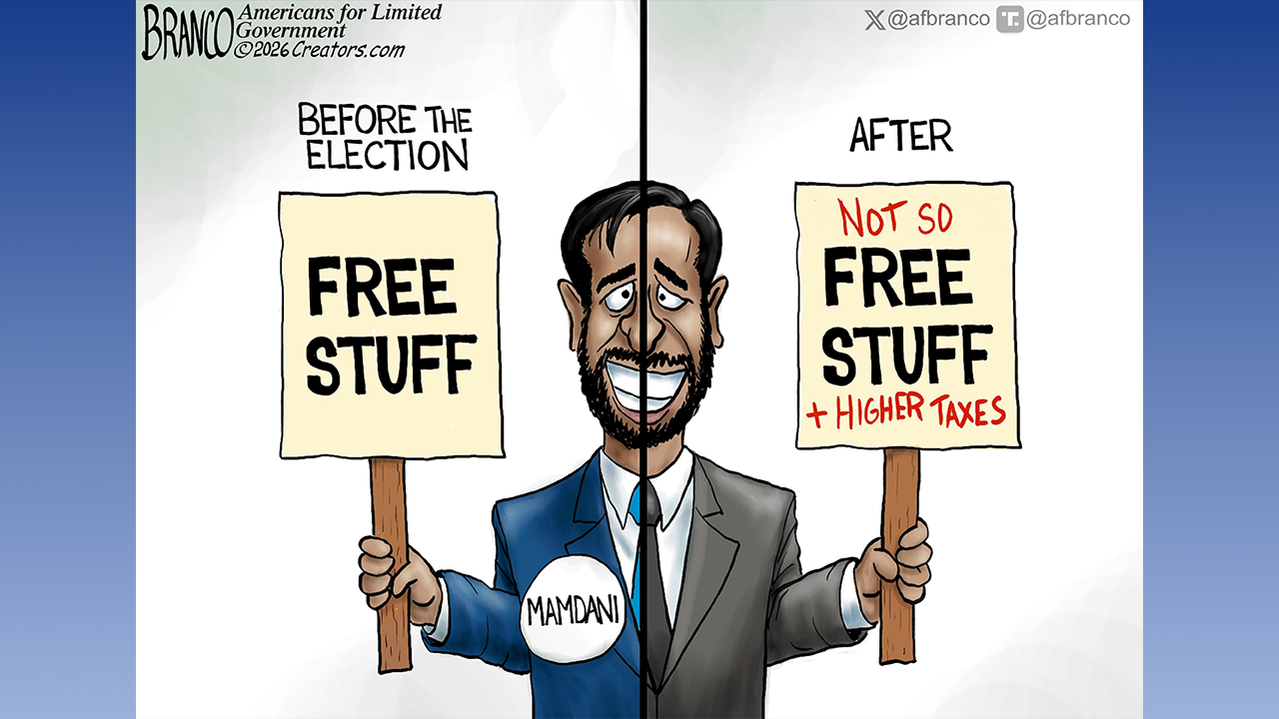
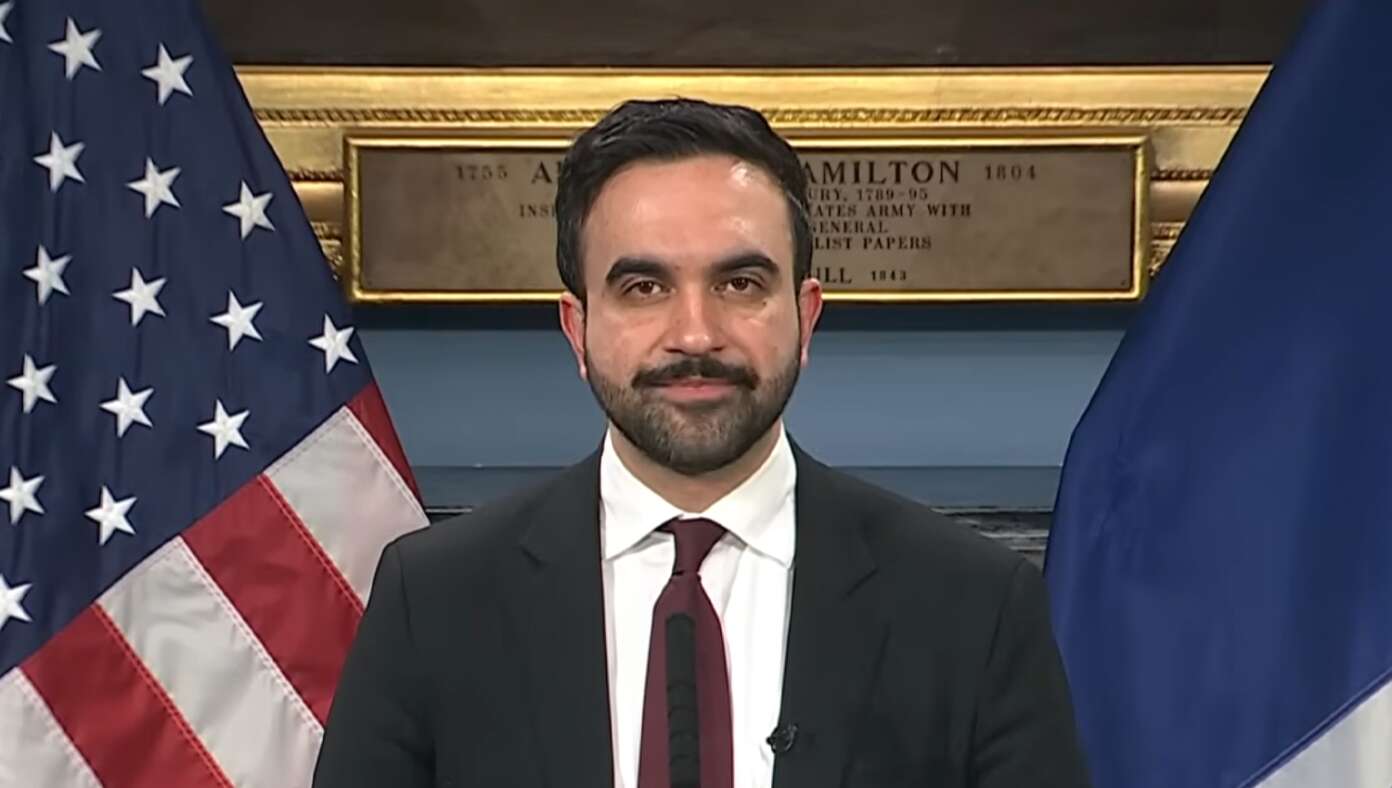
[Bee] NEW YORK, NY — Mayor Zohran Mamdani reported a projected $5.4 billion budget gap, marking the first time in recorded history that a socialist has ever run out of money.
In a desperate bid to implement all of his socialist policies, Mamdani floated the idea of a 9.5% property tax hike across the board as a means to overcome this surprising budget shortfall.
"I just don't understand it. Socialists never run out of money," a clearly frustrated Mamdani allegedly said during an all-hands budget meeting. "Welp, time to raise taxes. Or maybe we can start selling organs. Can we sell organs? Not mine, of course."
According to economic historian Michael Billbur, Mamdani has proven that the typically bulletproof fundamentals of socialism may have some holes. "Socialist governments generally have too much money and never need to resort to abusing their people," he said. "The USSR was a futuristic utopia where nothing bad ever happened. That's why it remains the thriving example of societal greatness that it is today. It's truly surprising to see it fail in New York. I'm not sure what Mamdani's problem is."
At publishing time, Zohran Mamdani had authorized the police to round up homeless people and harvest their organs for the good of the cause.
Posted by: Frank G ||
02/20/2026 00:00 ||
Comments ||
Link ||
[1748 views]
Top|| File under: Commies
#1
Obama did a lot of damage to the country, but it was relatively healthy before he came in office. NYC was already in trouble structurally before Zohran. This will not end well.
Posted by: Super Hose ||
02/20/2026 5:34 Comments ||
Top||
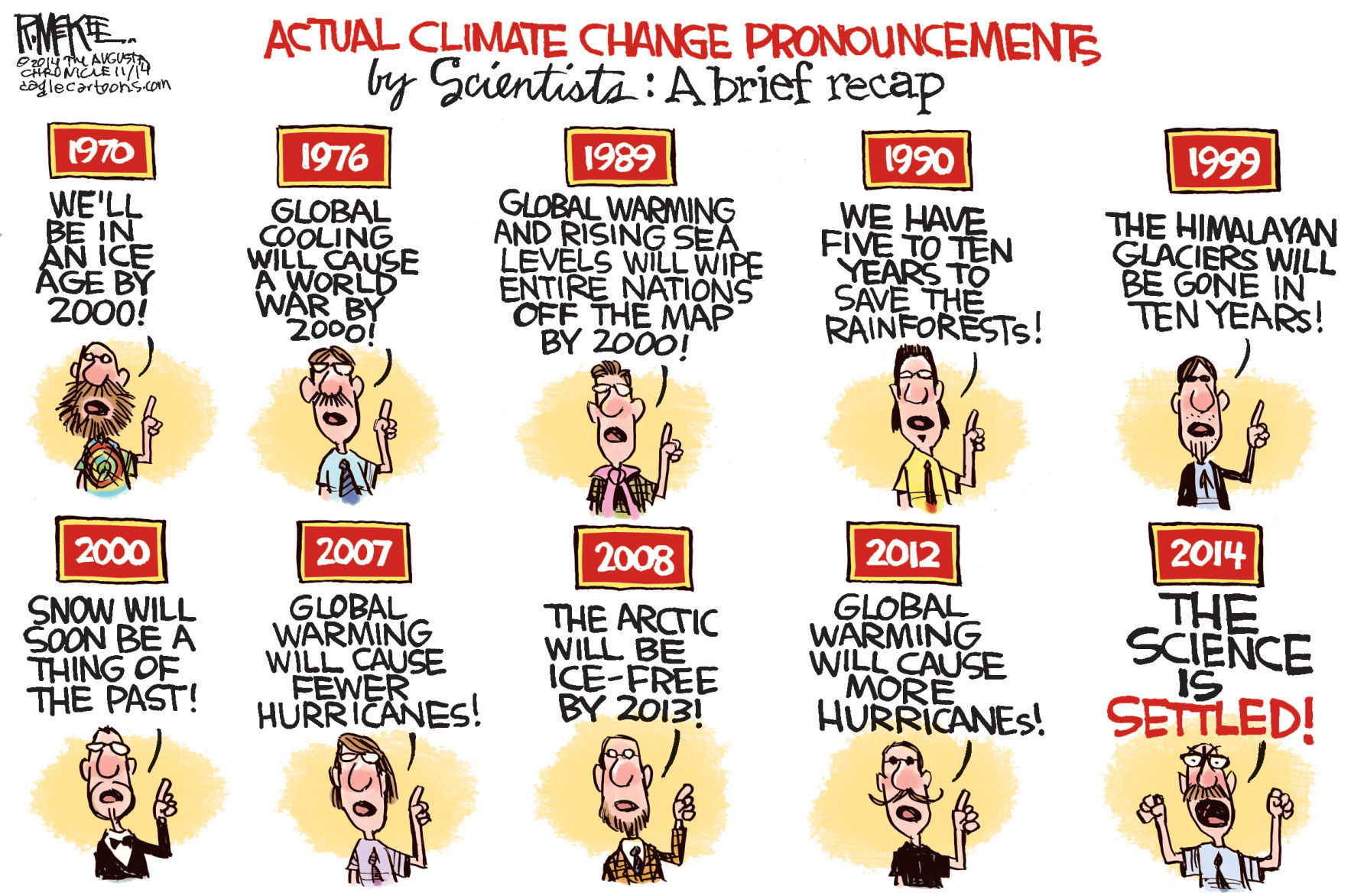
[Townhall] Environmental scholar Bjorn Lomborg recently calculated that across the globe, governments have spent at least $16 trillion feeding the climate change industrial complex.
And for what?
Arguably, not a single life has been or will be saved by this shameful and colossal misallocation of human resources. The war on safe and abundant fossil fuels has cost countless lives in poor countries and made those countries poorer by blocking affordable energy.
Since the global warming crusade started some 30 years ago, the temperature of the planet has not been altered by one-tenth of a degree – as even the alarmists will admit.
In other words, $16 trillion has been spent – a lot of people got very, very rich off the government largesse – but there is not a penny of measurable payoff.
But it's much worse than that. In economics there is a concept called opportunity cost: What could we have done with $16 trillion to make the world better off?
What if the $16 trillion had been spent on clean water for poor countries? Preventing avoidable deaths from diseases like malaria? Building schools in African villages to end illiteracy? Bringing reliable and affordable electric power to the more than 1 billion people who still lack access? Curing cancer? "Bad luck"
Many millions of lives could have been saved.
We could have lifted millions more out of poverty. The benefits of speeding up the race for the cure for cancer could have added tens of millions of additional years of life at an economic value in the tens of trillions of dollars.
Instead, we effectively poured $16 trillion down the drain. For this reason, it is important that we identify the green "climate change" derangement syndrome as perhaps the most inhumane political movement in history.
The people at the Sierra Club, the Environmental Defense Fund and the United Nations, and politicians like Al Gore, Joe Biden and John Kerry who voted for and carried out this Green New Deal scam, should be placed on a wall of shame. Biden's administration alone wasted $400 billion on green energy and other sham climate change programs.
The one sliver of good news is that it appears the climate change neuroses have finally started to subside. We've reached peak global warming craziness in the U.S., for sure, and even Europe seems to have turned its back on its economically masochistic net zero fossil fuels obsession.
Donald Trump is wisely and rapidly dismantling the climate change industrial complex. Of all his pro-growth economic policies, there may be none with a higher longtime payoff than his recent order to repeal the mother of all costly regulations: the anti-fossil fuels "endangerment rule" taxing carbon dioxide emissions. The cost of that regulation had been estimated to exceed $1 trillion over time.
We can't recapture the $16 trillion wasted on a false crisis. Sunk costs are, alas, sunk. But we can stop the madness of actually believing that politicians who can't even pay off the balance on their credit cards can somehow change the world's temperature.
Posted by: NoMoreBS ||
02/20/2026 00:00 ||
Comments ||
Link ||
[1792 views]
Top|| File under: Tin Hat Dictators, Presidents for Life, & Kleptocrats
#1
Gleng, I hear you. And. Someone help Gleng find his meds, please.
Posted by: Whiskey Mike ||
02/20/2026 5:11 Comments ||
Top||
#2
I think what was found in Minnesota is actually bigger. The Climate Hoax is huge and worldwide, but the corrupt hydra may reprint half of the US budget.
Posted by: Super Hose ||
02/20/2026 5:38 Comments ||
Top||
#3
Not even close. The greatest financial scandal is robbing this country of AT LEAST $40 trillion.
#4
Those that made $$$ millions jetting around the world. Just to tell us how bad it was to use fossil fuels, will need to move on to another news deflecting subject.
Democrats unionizing the public employee sector, skimming off the union dues, and growing the size of the public employee sector from 5% of the working age population to 20% of the working age population in two generations.
We may never know the number of trillions in theft this caused.
Posted by: no mo uro ||
02/20/2026 9:01 Comments ||
Top||
#6
I long for the days when "The Teapot Dome" and "South Sea Bubble" scams were the most horrific stories.
#7
What if the $16 trillion had been spent on clean water for poor countries? Preventing avoidable deaths from diseases like malaria? Building schools in African villages to end illiteracy? Bringing reliable and affordable electric power to the more than 1 billion people who still lack access? Curing cancer?
How about just lowering the damn taxes?
Posted by: Abu Uluque ||
02/20/2026 12:02 Comments ||
Top||
#8
I was recently asked if "climate change" was killing our honey bees. My answer, "bees have been around for 60 million years, every heard of the Younger Dryas"?
Needless to say the newer teachers aren't asking me quite as often into their indoctrination lectures. But it's fracking fun when they do.
[FoxNews] TrumpRx initiative aims to end prescription drug price disparities that force Americans to pay four times more than other countries.
When President Donald Trump announced "TrumpRx" in early February, a weight I’ve carried my entire adult life suddenly lifted from my shoulders. The website offers life-saving medications at much lower prices than normal, based on the president’s promise to give Americans the same prescription drug costs as patients in other developed countries. I can personally attest that such equal treatment — a policy known as "most favored nation" pricing — is urgently needed for people who struggle with chronic disease.
I’ve had debilitating asthma since I was a child. I’ve been able to manage it thanks to a prescription drug which blocks lung inflammation and keeps my airways open. The few times I’ve gone off the medication, I’ve ended up in the emergency room, unable to breathe. That nearly happened four years ago in what I thought was the worst possible place — on the other side of the world, unable to contact my doctors or go to my pharmacy.
My family and I were in Italy, on a trip to honor my mother. She had recently been diagnosed with cancer and my brother and I scheduled the trip in between her chemo treatments, when she would be well enough to travel. She had always wanted to go there with us. But in our rush to get two families and three little kids packed, I accidentally grabbed a nearly empty inhaler.
I realized my mistake a few days into the trip, when I looked at the inhaler and saw that I only had two doses left. I wasn’t just worried about my health, though, of course, that was paramount. I worried how I’d afford the drug if I even found it in Italy.
I’ve organized my professional life around access to insurance that covers my medication, given its longstanding retail price of $600 for a month’s supply. For 25 years, I’ve grappled with denied coverage letters, premium tier prescription charts and the constant worry that we would have to cut back on necessities to get my medication. At the time, in Italy, I was already paying a few hundred dollars a month for the drug — a lot, but a bargain compared to its normal price.
But I had no choice. I had to get my medication. After a few minutes of searching, I found an Italian pharmacy across town. I walked there immediately, trying to control my racing thoughts of what might happen. I knew that if I couldn’t get the drug, I couldn’t get safely back to the U.S.
Fifteen minutes later, in tears, I walked out, drug in hand. It cost me only 30 euros or about $35.
At first, I was both relieved and grateful. But by the end of the day, I was scratching my head. Why was it $600 in the U.S. while Italians could get it for next to nothing? In the days that followed, I discovered that the answer is beyond complicated.
It’s affected by everything from a lack of price transparency to the meddling of middlemen who jack up costs. It’s also true that foreign countries have been negotiating the prices of prescription drugs for decades, forcing Americans to cover the enormous cost of pharmaceutical development while they pay far below market prices.
Whatever the reason, the system doesn’t work for Americans. Brand name prescription prices in the U.S. are more than four times higher than prices in other wealthy countries. As many as 18 million Americans have struggled to buy the prescriptions they need in recent years.
I’m now using a generic version of the drug that costs significantly less. But that doesn’t change the fact that I, like many other Americans with chronic disease, have paid through the nose for decades on end, only to find the medication I needed in Italy for what seemed like pennies.
Trump is fighting to fix this broken system. Before launching TrumpRx, he reached 16 deals with pharmaceutical companies to charge most-favored-nation prices. As a lifelong conservative, I'm typically uncomfortable with this kind of government intervention in the market. But other countries have already intervened and people like me have paid the price.
If pharmaceutical companies need the extra money, they should take it up with other countries that negotiated them down first. Then they could recoup their costs on the backs of others, not simply by charging more in the U.S. Bottom line, there’s no good reason why 340 million Americans should pay so much more than hundreds of millions of people who live in Europe and Asia.
I will always be grateful that my medication was so affordable in Italy back in 2022. It may very well have saved my life. But I’m even more grateful that President Trump is finally lowering prices for every American here at home.
[IsraelNationalNews] One of the most persistent-and pernicious-myths being bandied about in the debate over how to achieve some peaceable resolution to the violence induced by radical Islam in Gaza is the proposed "panacea" of "de-radicalization" of extremist Islamist elements. The rationale underlying the prescription of deradicalization is as glib as it is deceptive.
After all, prima facie, what could be more reasonable? If radical Islam is the problem, surely the solution should be deradicalization. However, this deceptively sound reasoning begs two crucial questions: How is this to be achieved-and by whom?
BEWARE FALSE NARRATIVES
In this regard, it is crucial to bear in mind that while it is true that extremist ideologies have been defanged in the past, such as in post-WWII Germany and Japan, before extrapolating from such success to the case of radical Islam, it is essential to be aware of the substantive differences in the structural parameters that separate the two cases. Indeed, any suggestion that policy-relevant conclusions can be drawn from comparisons between authoritarian ideologies of the WW II era and modern-day Islamist extremism rests on entirely misplaced analogies.
After all, Nazi Germany was not surrounded by a swath of Teutonic nations, nor Imperial Japan by a swathe of Nipponic nations that could undermine any moderating influences introduced by the victorious Allied powers. Thus, unlike the challenges posed by radical Islam, there were no significant sources of influence generating adversarial incitement or insurgence among their vanished kinfolk.
This, however, is precisely the situation that prevails with regard to radical Islam. So, as opposed to the cases of Germany and Japan, Gaza is adjacent to extensive Muslim-majority areas in Egypt (Sinai) and in close proximity to others, which can serve as a base for hostile incitement and subversive operations.
RADICALIZATION’S TRANS-BORDER REACH
However, amenable geography-proximity and accessibility-is not the sole difference facilitating continued preservation of radical ideology compared to the conditions in the post-WW II era. The other is technology-chiefly in communications and the advent of the internet, cell phones, and social media, which all enable the conveyance of extremist content to large sections of the population, exposing them to subversive sermons from Islamist clergymen in far-flung mosques.
Accordingly, there is likely to be little correspondence between the physical location of sources of radicalization, on the one hand, and the targets of the deradicalization efforts, on the other. Thus, even if meaningful deradicalization initiatives are launched in educational and other public institutions in Gaza, it is more than likely that they will to be countered, undermined, and neutralized by radical Islamist messages conveyed over the ether from the pulpits of the fanatical imams and mullahs across the region to the hearts and minds of a receptive audience, via laptops, mobile phones and other devices so readily available today.
Indeed, the perpetrators of the 2025 Bondi Beach atrocity in Sydney -one resident in Australia for two decades and the other a native-born Australian-illustrate just how far-reaching the influence of the agents of radicalization is-and how immune it is to national frontiers and geographical distance.
DERADICALIZATION WILL DEMAND DECADES
A third element differentiating the challenges facing deradicalization today from those of the past is that of time-both in terms of the length of the extremist regime and in terms of the time required to eradicate the extremist ideology. While the Nazi Party ascended to power in 1933 and was totally demolished by 1945, Hamas has been the dominant element in the Palestinian Arab polity at least since 2006, when it won the Palestinian parliamentary election over the Palestinian Authority controlled by Fatah’s Mahmoud Abbas (aka Abu Mazan), just a year before it violently ejected Fatah from the Strip.
Indeed, the fact Abbas has put off further elections since then-for fear of another Hamas victory-is telling evidence of its continued hold on that dominance. The Islamic terror group has thus had two decades to inculcate its noxious credo into the population’s psyche-especially that of the younger generation, who has never experienced any other type of regime. Thus, the expunging of radical ideas from the hearts, minds, and souls of the population will clearly not be an instantaneous process. Far from it!
Indeed, even under favorable conditions, informed estimates suggest a 20-25-year transformation period, as this must entail not just disarming militants and restructuring the education system but rebuilding civic institutions and political culture.
THE ONLY PRACTICAL PATH
Moreover, with regard to time, apart from the issue of duration, there is the issue of who will undertake the deradicalization process.
After all, if it is to be Israel, this would necessitate at least a two-decade-long Israeli presence in Gaza, which in effect would imply continued occupation, with all the attendant uncertainties entailed in such an extended timeframe. Alternatively, if it is seen as being left to external forces, the pertinent question is which foreign power is likely to have the will and stamina for such a daunting project, in which it may well be widely viewed as a foreign interloper, and in the face of stiff opposition from countervailing Islamist forces, both internal and external.
Seen in this context, the prospect of deradicalization is nothing more than a forlorn hope for avoiding the harsh reality, which is the following:
The only way Israel can ensure how the Gaza Strip will be governed, and who will govern it, is to govern it itself.
Moreover, the only way Israel can govern the Gaza Strip without becoming an external oppressor of "another people" is to remove "the other people" from the confines of the Gaza Strip itself.
A multi-volume chronology and reference guide set detailing three years of the Mexican Drug War between 2010 and 2012.
Rantburg.com and borderlandbeat.com correspondent and author Chris Covert presents his first non-fiction work detailing
the drug and gang related violence in Mexico.
Chris gives us Mexican press dispatches of drug and gang war violence
over three years, presented in a multi volume set intended to chronicle the death, violence and mayhem which has
dominated Mexico for six years.
Rantburg was assembled from recycled algorithms in the United States of America. No
trees were destroyed in the production of this weblog. We did hurt some, though. Sorry.


 [Bee] NEW YORK, NY — Mayor Zohran Mamdani reported a projected $5.4 billion budget gap, marking the first time in recorded history that a socialist has ever run out of money.