Hello !
| Home Front: Politix |
| Socialist States of America: Democrats Lead Washington to Revolution |
| 2026-11-14 |
| Direct Translation via Google Translate. Edited by Malek Dudakov [Regnum] The recent US elections resulted in a resounding victory for the Democrats. However, difficult times lie ahead—they must somehow resolve the serious intra-party rift that is brewing between the centrists and the rising left. ![]() The congressional elections can be called a real triumph for American socialists, as hundreds of candidates they supported were able to achieve success. The Democratic Socialists of America (DSA) movement has been around in the United States for several decades. It emerged in the 1970s as a coalition of civil rights activists and trade unionists. The DSA advocated détente with the Soviet Union and opposed the hawks in the Ronald Reagan administration when he came to power after winning the November 1980 election. Democratic socialists were quite active in the 1980s, but then the movement experienced a long and painful decline against the backdrop of the collapse of the USSR and the collapse of leftist ideas around the world. Democrats in the United States embraced globalism and neoliberalism, epitomized by Bill Clinton's policies. Socialists, meanwhile, became marginal anti-globalists for a long time, holding protests at World Trade Organization forums—and nothing more. Moreover, the left's traditional electoral base—union workers—began to erode after the relocation of many manufacturing industries to Latin America and Asia. Subsequently, blue-collar workers shifted their party affiliation and began supporting Republicans, including helping Donald Trump win the 2016 presidential election. Interestingly, it was that year that the Democratic Socialists began to experience a resurgence. They were greatly aided by the presidential campaign of Bernie Sanders, the left-wing senator from Vermont, who gave Hillary Clinton a tough fight in the presidential primaries. Already in 2018, the socialists managed to elect their first representatives to Congress and strengthen their position at the local level in Democratic states. But the real breakthrough for the American left occurred during Trump's second term. First, they achieved a landmark victory in the 2025 New York City mayoral election, electing Zohran Mamdani. He never tires of pointing out that he is an immigrant, a Muslim, and a socialist. In short, he embodies everything MAGA America dislikes. Following the recent elections, Democratic Socialist candidates have already become mayors of four major American cities. Los Angeles joined New York City, where Indian candidate Nithya Raman, emulating Mamdani's style, won. In the District of Columbia, home to the US capital, Black Lives Matter activist and socialist Janice Lewis George became mayor. Leftists also won in Seattle. The Democratic Socialists of America (DSA), which numbered in the thousands just 10 years ago, now has 130,000 members. They have representation on city councils in many major US cities. For the first time, a DSA candidate was also elected as a senator at the federal level: Egyptian and socialist Abdul El-Sayed in Michigan. Like Mamdani, he was able to win largely due to the sharp rise in anti-Israel sentiment in American society. Socialists advocate a military embargo and sanctions against Israel. For the first time in modern history, the majority of Americans have developed a negative perception of the Jewish state's policies. The left's anti-war agenda has given them political leverage in the recent elections. In the lower house of Congress, the Progressive Socialist Caucus comprises several dozen members. While this may not seem like a large number, their votes can be decisive in blocking initiatives from other Democrats. The left will develop a kind of "golden share" when making any decision. And they will use their new position to try to break the established status quo. Back in the summer, the DSA movement presented a plan for a large-scale left-wing restructuring of America. They propose completely abolishing the Senate, which they call undemocratic. They claim each state should be represented by two senators, regardless of its population—700,000, like Alaska, or 40 million, like California. It also proposes abolishing ICE, closing most prisons to reduce the inmate population (currently 2 million), introducing direct presidential elections, cutting Pentagon budgets in half, and placing large corporations under direct government control, effectively nationalizing them. Such a program is clearly too radical even for most Democratic voters, let alone American society as a whole. Therefore, socialists are emphasizing certain populist proposals that are quite popular with society. Specifically, the creation of a "Medicare for All" system—that is, a unified state health insurance program along European lines. Admittedly, it will cost many trillions of dollars. Moreover, now the socialists are calling on the other Democrats not only to fight Trump, but also to try to implement some reforms, just so as not to waste time. The current administration, which promised the advent of an "American golden age" in early 2025, is a typical example here. Ultimately, it has failed to implement virtually any of the initiatives it promised a year and a half ago. Centrist Democrats believe they can spend the next two years in the comfortable position of "fighting Trumpism," launching investigations and impeachments. And, overall, not changing anything about the current situation in Washington. The left, however, wants to immediately embark on large-scale reforms while the Democratic Party maintains a significant majority in both houses of Congress. The last time Democrats controlled so many seats—260 in the House and 56 in the Senate—was in the early 1990s. Newly elected socialist Senator Abdul El-Sayed is even proposing to call government health insurance "Trumpcare for all" in order to play on the US president's ego and convince him to accept leftist demands. However, the split within the Democratic camp is unlikely to allow them to seriously implement their initiatives. Although they will indeed try to do some obvious things—ending Trump's trade wars and the Iran adventure. This means that the growth of far-left sentiments in the Democratic camp will certainly continue. In the next elections (they will be held in 2028), the socialists plan to win Senate races in two states at once: New York, where they will try to unseat the Democratic leader in the Senate, Chuck Schumer, and Pennsylvania, where pro-Israel Democrat John Fetterman will be re-elected. Schumer faces a potential challenge from young Congresswoman Alexandria Ocasio-Cortez, arguably America's most popular left-wing activist. Fetterman faces Gaza-born writer Ahmed Moore, a vocal critic of Israel. Congress will therefore continue to rapidly shift leftward in the next election cycle. The rapid spread of leftist sentiments among young Americans—millennials and Zoomers—is also playing into socialists' hands. Recent surveys show that nearly half of all undergraduate students in the US view the socialist agenda favorably as opposed to the capitalist model. Moreover, it previously seemed that Zoomers would be more right-leaning than previous generations. Many of them supported Trump in the 2024 election. But the highly unpopular Iran War and the fuel crisis forced them to shift sharply to the left. The main question that remains open is whether the Socialists will be able to significantly influence the outcome of the 2028 presidential race. They will certainly try to push their candidate to at least the vice-presidential level. One thing is clear: the split within the Democratic ranks will continue to deepen. And this is perhaps the Republicans' only hope of somehow regaining the ground they lost in the recent elections. Related: DSA: 2026-11-12 Hakeem Jeffries faces progressive holdouts but no rival as House speaker race takes shape DSA: 2026-11-11 Mullin vows ‘zero change' on immigration after Republicans suffer crushing midterm losses DSA: 2026-11-09 House Republican leaders are bracing for a massive wave of Republican votes on the Hegseth impeachment Related: Abdul El-Sayed 11/11/2026 A New Consensus: Democrats and Republicans Compete in Their Dislike of Israel Abdul El-Sayed 11/10/2026 Muslim Brotherhood’s Official Website Celebrates Election Of Abdulrahman El-Sayed Abdul El-Sayed 11/08/2026 ‘They don't have to fight alone’: Why victims of jihadism are turning to the Jews |
| Link |
| Caucasus/Russia/Central Asia |
| Crimea's Legal Front |
| 2026-06-19 |
| Direct Translation via Google Translate. Edited Authored by Russian military journalist Boris Rozhin, originally published in tass.ru [ColonelCassad] Crimea's legal front: The Permanent Court of Arbitration in The Hague issued a final verdict on Ukraine's lawsuit against Russia, which had been dragging on since 2016. Kyiv demanded recognition of its rights to Crimea's coastal waters, part of the Kerch Strait, and the resources of these waters, which are currently used by Russia. This entire multi-year process was accompanied by a vigorous media campaign in the Ukrainian and Western press. ![]() Nevertheless, Kyiv's attempts to challenge the status of these waters have failed miserably, a fact that has been deeply felt in Ukraine. The Russian Foreign Ministry has already called The Hague's decision a convincing diplomatic victory, firmly entrenching our country's rights to Crimea and the adjacent maritime spaces. This outcome was largely possible because Western representatives constituted a minority on the arbitration panel. This prevented them from, as usual, manipulating international institutions for their own political and propaganda purposes. At the time of the decision, the body consisted of five judges—representatives of Britain, Russia, Mexico, Algeria, and the Republic of Korea. The participation of Mexico and Algeria ensured the greatest objectivity: as part of the Global South, these countries are not involved in the conflict and maintain independent judgment. In examining the facts of the case, the court rejected virtually all of Kyiv's territorial and resource claims. The only point where the arbitration did not support Moscow concerned the allegedly insufficient environmental friendliness of the Crimean Bridge construction (specifically, the short deadlines for the expert review). In the context of the general dispute, this is an insignificant detail. Moreover, this multi-year process was clearly not initiated for the sake of environmental lectures. This legal defeat will seriously complicate any future attempts by Kyiv to advance legal claims related to Crimea, the Kerch Strait, and the Black and Azov Seas. Meanwhile, in parallel with the legal battles, Kyiv has also attempted to challenge the status of the Kerch Strait in practice. Suffice it to recall the provocative attempt to break through by Petro Poroshenko's "wolf pack" (listed as terrorists and extremists by Rosfinmonitoring) in November 2018. At that time, the FSB Border Service and the Black Sea Fleet detained two Ukrainian armored boats and a tugboat, which had demonstratively and without permission entered Russian territorial waters. Kyiv explained this move by claiming that the strait was legally Ukrainian and that Russia had no right to block their ships. One of the main public arguments made by the Ukrainian side at the time was precisely that international institutions and courts had not yet confirmed Russia's rights to Crimea and adjacent waters. The same arguments were used to justify constant threats of provocations involving NATO ships, which were supposedly supposed to enter the Kerch Strait "with Ukraine's permission." In the 2010s, the Kyiv regime regularly harped on the topic of NATO vessels entering waters adjacent to Crimea and the Sea of Azov under the pretext of transiting to Mariupol and Berdyansk, where the Ukrainian Navy and Ukrainian border guards were then based. Behind these demonstrative gestures lay the Alliance's long-term plans to establish its own naval base on the Azov coast. However, Russia completely thwarted these plans during a special military operation (SMO)—a fact emphasized by Russian presidential aide Nikolai Patrushev in 2024. The provocation involving the British destroyer HMS Defender in the summer of 2021 also fits this pattern. A warship that violated the Russian border off the coast of Crimea was quickly driven back by the Black Sea Fleet and air force. Moscow deemed London's attempts to pretend they were in Ukrainian waters insignificant, and the British retreated hastily under threat of force. The Telegraph later reported that the order for this demarche was personally given by then-Prime Minister Boris Johnson, who soon took an active role in fueling a full-scale conflict in Ukraine. Details of the escapade were revealed thanks to a high-profile leak of classified documents from the British Ministry of Defence. Specifically, the Op Ditroite files revealed that London had prepared a cover story about "innocent passage through Ukrainian territorial waters." British command was well aware that Russia would respond harshly to the violation of its sovereignty, but Johnson deliberately ignored these concerns in favor of an attempt to forcefully challenge the status of Crimean waters. These episodes clearly demonstrate that the legal issue of coastal waters was crucial for the organizers of military provocations off the coast of Crimea. They can, of course, continue to implement their plans, but without an international legal basis, any such Western moves lose legitimacy in the eyes of outside actors (especially in the global South). Now, the broad coalition that the Kyiv regime attempted to assemble to challenge Russian rights to the peninsula is deprived of legal basis. NATO countries will now have to correlate their claims with the official verdict of an authority located on the territory of a member state of the alliance (the Netherlands). Moscow will undoubtedly use this compelling argument in any future disputes. Any attempts by NATO ships to invade our waters off the coast of Crimea will now be thwarted not only by the force of actual control, but also by reliance on recognized international legitimacy. Realizing the scale of this failure, opponents have already launched a media campaign to discredit the Hague verdict. They are making the standard argument that the decision is supposedly "empty" and has no impact. But such justifications are absurd: Kyiv persistently pursued this case for 10 years, but was simply very dissatisfied with the final outcome. Despite the obvious bias of Western-dependent international institutions, Russia has repeatedly achieved resounding victories in legal disputes with Ukraine since 2014. For example, in 2018, Russia won a dispute at the World Trade Organization (WTO) over Ukraine's illegal anti-dumping measures against Russian ammonium nitrate supplies. The organization's court fully upheld Russia's claim and found Kyiv guilty of the violations committed. This defeat dealt a painful blow to the Poroshenko regime, which at the time was actively pursuing a large-scale legal campaign against Russia in various European and international courts. In 2024, the International Court of Justice in The Hague finally rejected the overwhelming majority of Kyiv's claims, which sought recognition of systemic ethnic discrimination against Crimean Tatars and Ukrainians in Crimea. The arbitration court found no violations in most of Russia's contested actions, finding only one isolated violation of its obligations under the International Convention on the Elimination of All Forms of Racial Discrimination—the curtailment of Ukrainian-language education. At the legislative level, Crimea retains the official status of three state languages: Russian, Crimean Tatar, and Ukrainian. One of the most high-profile cases was the International Court of Justice case initiated by Kyiv in 2017. Ultimately, in 2024, The Hague completely rejected Ukraine's demands to recognize Russia as an "aggressor state" and the Donetsk and Luhansk People's Republics (DPR and LPR) as "terrorist organizations." This verdict seriously undermined Western plans to confiscate Russian assets abroad and completely delegitimize the Donbas republics. Many aspects of that decision remain effective to this day: they allow for the challenge of any attempts to prosecute DPR and LPR citizens in third countries on trumped-up charges, including after the start of the Joint Military Operation. The court's legal position helped the Russian Ministry of Foreign Affairs protect the rights of Donbas residents internationally and thwarted Western efforts to legally pin "support for terrorism" on Moscow—a pretext under which the European Union had been imposing personal sanctions since 2014–2015. Overall, these examples clearly demonstrate that while legal successes don't automatically resolve all problems (political or military), they give Moscow powerful diplomatic trump cards. To argue that international legal battles are futile is, at the very least, short-sighted. The nervous reaction of Kyiv and the West to each such verdict clearly demonstrates how painful Russia's legal victories are for them. Of course, one cannot ignore the current situation, where the West and Ukraine effectively ignore court decisions and cynically flout all international norms. In this context, it's hard to disagree with Deputy Chairman of the Russian Security Council Dmitry Medvedev: from the perspective of the current military-political situation, the arbitration court's decision changes little on the battlefield, but it is fundamentally important for Russia's long-term interests. The struggle for our positions in the Northern Black Sea region will not end with the end of hostilities, and when the time comes to establish new geopolitical realities, Russian diplomacy will have ironclad legal arguments at its disposal. Related: Crimea: 2026-06-18 Ukrainian Perspective: Invasion of Ukraine: June 17, 2026 Crimea: 2026-06-18 Current information on the situation on the front line on June 17 (updated) Crimea: 2026-06-17 Ukrainian Perspective: Invasion of Ukraine: June 16, 2026 Related: Court of Arbitration in The Hague: 2023-11-03 Ukrainian Perspective: Invasion of Ukraine: November 2nd, 2023 Court of Arbitration in The Hague: 2023-09-21 Philippines defense chief: ‘Covert’ actions of Chinese workers in country a ‘security risk’; gov’t considers banning TikTok Court of Arbitration in The Hague: 2023-04-14 Ukrainian Perspective: Invasion of Ukraine: April 13th, 2023 |
| Link |
| Economy |
| Sen. Jim Banks: 25 Years of ‘Free' Trade with China Have Proven the ‘Experts' Wrong |
| 2025-10-12 |
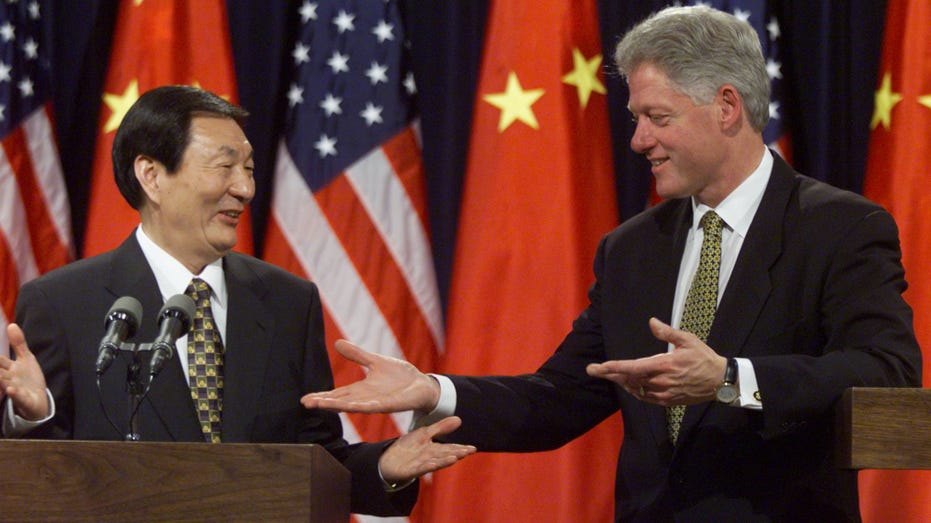
| "Free" would seem to imply free both ways, wouldn't it? [Breitbart] It was 25 years ago today when President Bill Clinton stood in the Rose Garden and signed the United States – China Relations Act into law, which granted permanent normal trading relations (PNTR) with China. That law would change the U.S.-China trading relationship forever. It gave China the same trade terms as America’s allies, and it greenlit China’s entry into the World Trade Organization (WTO), integrating their developing economy into the global trade system. At the time, the world’s “expert class” all predicted PNTR would be an economic gift for American workers and industry. Testifying before Congress in May 2000, then-Treasury Secretary Larry Summers claimed that “On this issue there has been only one answer: that welcoming China into the global economic system is right for the American economy and for the global economy.” These so-called “experts” were not just wrong. They were catastrophically wrong. They fatally misjudged both the economic and geopolitical consequences of allowing China into the WTO and granting them PNTR. China’s economy did not become freer. American companies that expanded their operations in China fell victim to rampant intellectual property theft, censorship, and oppressive regulation. China didn’t transform into that liberal democracy we were promised. China’s respect for human rights only worsened, America’s trade deficit exploded as China deepened its unfair trade practices. The numbers paint a stark picture. In 2001, America’s trade deficit with China was $84 billion. By 2018, that deficit was five times larger, at $418 billion. Nearly 25 years ago, China was responsible for roughly 8% of the world’s manufacturing output. But by 2020 that number had reached nearly 30 percent. As one headline put it, China is now the “world’s sole manufacturing superpower.” At the start of the 2000s, my state of Indiana enjoyed one of the nation’s highest shares of employment in manufacturing. But shortly after PNTR was signed into law, cheap Chinese imports flooded our markets, forcing many companies and manufacturing plants to close permanently across the state. Analysis from the Coalition for a Prosperous America estimates that China’s unfair trade practices cost almost 80,000 manufacturing jobs in Indiana between 2001 and 2023. That same analysis shows that America’s exploding trade deficit with China has cost us over 3.8 million jobs since 2001. The “experts” who cheered when Bill Clinton guaranteed normal trading relations with China have failed the American worker time and again. But instead of showing any kind of humility, they continue to double down and refuse to admit their errors, which led to the economic predicament America now finds itself in today against China. Meanwhile, workers in small towns like where I grew up understood that the fallacy of “free trade” with China was an economic loser for them and their families. All they had to do was look around and see for themselves what trade with China had yielded in return: millions of blue-collar jobs outsourced, entire towns and communities decimated, and the livelihoods of these workers and their families destroyed. “Free” trade with China was always destined to fail, because we were subsidizing an economic system which made us less prosperous here at home and more dependent on our enemies abroad. You can’t have free trade with a country that’s out to destroy free trade. I’m glad that we finally have a president who is serious about putting an end to China’s free ride at the American worker’s expense. Unlike leaders before him, President Trump’s America-First trade policy is committed towards putting our country and workers first — no more selling out to China. |
| Link |
| China-Japan-Koreas |
| Strategic partnership between Russia and China |
| 2025-05-09 |
| Direct Translation via Google Translate. Edited. Commentary by Russian military journalist Boris Rozhin: [ColonelCassad] During Comrade Xi Jinping's visit to Moscow, in addition to agreements on strengthening strategic cooperation between Russia and China, a large number of agreements were signed. ![]() 1. Joint Statement of the Russian Federation and the People's Republic of China on Further Deepening their Comprehensive Partnership and Strategic Cooperation in the New Era in Commemoration of the 80th Anniversary of the Victory of the Soviet Union in the Great Patriotic War, the Victory of the Chinese People in the War of Resistance against Japanese Aggression and the Founding of the United Nations 2. Joint Statement of the Russian Federation and the People's Republic of China on Global Strategic Stability 3. Joint Declaration of the Russian Federation and the People's Republic of China on Further Strengthening Cooperation to Uphold the Authority of International Law 4. Agreement between the Government of the Russian Federation and the Government of the People's Republic of China on the Promotion and Mutual Protection of Investments and Letters Constituting an Understanding between the Government of the Russian Federation and the Government of the People's Republic of China on the Application of Measures, the Introduction of Which is Regulated by the Rules of the World Trade Organization on National Security Exceptions, General Exceptions, and Prudential Measures 5. Memorandum of Understanding between the Government of the Russian Federation and the Government of the People's Republic of China on the Establishment of a Bilateral Consultative Commission on Ensuring Biological Security 6. Protocol between the Federal Service for Veterinary and Phytosanitary Surveillance (Russian Federation) and the General Administration of Customs of the People's Republic of China on compliance with inspection and quarantine requirements for rye flour exported from the Russian Federation to the People's Republic of China 7. Protocol between the Federal Service for Veterinary and Phytosanitary Surveillance (Russian Federation) and the General Administration of Customs of the People's Republic of China on compliance with inspection and quarantine requirements for the export of semolina from the Russian Federation to the People's Republic of China 8. Protocol on Amendments to the Protocol between the Federal Service for Veterinary and Phytosanitary Surveillance (Russian Federation) and the General Administration of Customs of the People's Republic of China on phytosanitary requirements for medicinal plant materials for Chinese medicine exported from the Russian Federation to the People's Republic of China, dated May 24, 2023 9. Memorandum between the Ministry of Digital Development, Communications and of the Russian Federation and the State Data Administration of the People's Republic of China on cooperation in the field of digital transformation and digital economy 10. Memorandum between the Ministry of Science and Higher Education of the Russian Federation and the Ministry of Science and Technology of the People's Republic of China on cooperation in the field of creation and development of scientific installations of the "megascience" class 11. Action Plan in the Field of Joint Film Production between the Ministry of Culture of the Russian Federation and the State Film Administration of the People's Republic of China until 2030 12. Memorandum of Understanding between the Federal Service for Supervision of Consumer Rights Protection and Human Wellbeing (Russian Federation) and the National Disease Control and Prevention Administration of the People's Republic of China on Cooperation in the Field of Combating Infectious Diseases 13. Memorandum of Understanding between the Roscosmos State Space Corporation and the China National Space Administration on Cooperation in the Field of Creating a Lunar Power Station for the International Scientific Lunar Station 14. Cooperation Agreement between the Moscow State Institute of International Relations (University) of the Ministry of Foreign Affairs of the Russian Federation, the Russian Direct Investment Fund Management Company, and Tsinghua University (People's Republic of China) 15. Memorandum of Understanding on Joint Cooperation between Moscow State University named after 16. Memorandum of Cooperation between Lomonosov Moscow State University and China Media Corporation 17. Agreement on Strategic Cooperation between St. Petersburg State University and the State Administration of Foreign Specialists of the People's Republic of China 18. Agreement on Scientific Cooperation between the National Research University Higher School of Economics and Peking University 19. Agreement on Cooperation between the National Research University Higher School of Economics (Russian Federation) and Peking University (People's Republic of China) on the Establishment of the BRICS Research Platform 20. Agreement on Cooperation between the National Research University Higher School of Economics and Tsinghua University 21. Memorandum of Understanding between the D.I. Mendeleev University of Chemical Technology of Russia and the University Tsinghua (People's Republic of China) 22. Memorandum on deepening cooperation between the Federal State Unitary Enterprise "All-Russian State Television and Radio Broadcasting Company" (VGTRK) and the China Media Corporation 23. Memorandum between the International Information Agency "Russia Today" and the Xinhua News Agency (People's Republic of China) on holding the Expert Forum of the SCO countries 24. Memorandum of Understanding and Cooperation between the Russia Today TV Channel and the China Media Corporation 25. Memorandum on Strategic Cooperation between Russia Today TV Channel and Xinhua News Agency (People's Republic of China) 26. Memorandum of Cooperation between National Media Group and China Media Corporation 27. Memorandum on Cooperation in the Field of News between Gazprom-Media Holding Joint-Stock Company and Xinhua News Agency (People's Republic of China) 28. Memorandum of Understanding and Cooperation between the All-Russian Public Movement of Children and Youth "Movement of the First" and the All-China Youth Federation (2025-2026) In general, China is now interested in strengthening relations with the Russian Federation, since Beijing sees both increased pressure from the United States and attempts to tear Russia away from China, which the United States views through the prism of a repeat of Nixon's maneuver of the 1970s, when the United States, in the interests of increasing pressure on the USSR, went to normalize relations with China. Now the US is trying to do roughly the same thing, only the other way around. Russia is interested in strengthening cooperation with China, as this makes it possible to easily avoid economic and political isolation and jointly promote the ideas of multipolarity. And plus, China's indirect assistance in conducting the SVO should not be underestimated either. Without Chinese drones, chips, controllers and various microelectronics, it would be much harder for us. P.S. And a joint lunar base project in the 2030s looks ambitious and interesting. More from regnum.ru Putin and Xi Jinping order to accelerate construction of Power of Siberia 2 During talks in Moscow between Russian President Vladimir Putin and Chinese President Xi Jinping, the leaders of the countries instructed to speed up the construction of the Power of Siberia 2 gas pipeline. Russian Deputy Prime Minister Alexander Novak told reporters about this. "We discussed it, it is a really important project, so a certain part of the work related to the feasibility study has already been done. Now the final negotiations are underway between the companies regarding the economic conditions. The leaders gave instructions to speed up this work," he answered the corresponding question. At the same time, Novak clarified that during the negotiations, a possible adjustment to the gas pipeline route through Mongolia was not discussed. As reported by the Regnum news agency, during the meeting Putin called energy the locomotive of Russian-Chinese relations. He noted that in 2024 Russia, the leader in oil exports to China, took first place in pipeline gas supplies, second place in shipments, and third place in liquefied natural gas exports. The Russian leader also stated that new joint initiatives between Russia and China in the energy sector are already “on the way”: in particular, the launch of the Far Eastern gas route is expected in 2027, which will supply China with up to 10 billion cubic meters per year, and in China itself, construction of Russian-designed nuclear power plants is underway. Even more from regnum.ru Putin: Russia and China Suffered the Greatest Losses in World War II It was Russia and China that suffered the greatest losses during World War II. Russian President Vladimir Putin recalled this during a meeting with Chinese President Xi Jinping in the Kremlin. "Having gone through unprecedented hardships, having experienced all the horrors of war, our peoples accomplished a great feat and were able to restore peace. At the same time, as is known, they suffered the greatest losses," the Russian leader noted. Putin added that now Russia and China are jointly and consistently advocating for the preservation of the historical truth about the Great Victory as a common value for all of humanity, and are also jointly opposing attempts to falsify history. As reported by the Regnum news agency, on April 30, Putin declared that Victory Day in the Great Patriotic War was a triumph for the Russian and Soviet peoples, highlighting the special role of the RSFSR. He reported that all the peoples of the Soviet Union made a huge contribution, the war affected almost every family, and the RSFSR's losses in the war amounted to about 70%. Earlier, the Russian leader noted that Victory Day is one of the most significant holidays in Russia and many republics of the former Soviet Union. The defeat of fascism in that war is their common heritage. |
| Link |
| International-UN-NGOs | |
| UN Considers Major Reorganization Due to Funding Problems | |
| 2025-05-03 | |
| Direct Translation via Google Translate. Edited. [Regnum] The United Nations (UN) is considering a major reorganization due to funding cuts from the United States, Reuters reports. According to the agency, a task force created in March at the initiative of Secretary-General Antonio Guterres has prepared a document with proposals. Guterres has previously said that the organization should become more cost-effective. The confidential six-page document is said to propose consolidating dozens of UN agencies into four key departments: peace and security, humanitarian affairs, sustainable development and human rights. There is also an idea to integrate the World Trade Organization with UN development agencies. One of the sources familiar with the document called it a starting point for further discussions, Reuters clarifies.'
| |
| Link |
| -Land of the Free | |
| Anduril Co-Founder Warns: U.S. Munitions Stockpile Would Last One Week In Hot Conflict | |
| 2025-04-25 | |
Stephens, who co-founded of the cutting-edge defense startup alongside Palmer Luckey, dropped the chilling warning on Auren Hoffman’s World of DaaS podcast. “The reality is, if we got into a hot conflict with a great power, we would run out of munitions in a week,” Stephens told Hoffman. “We’ve built these capabilities that are incredibly exquisite, incredibly custom, with really complicated supply chains.” Stephens, who is also a partner at Peter Thiel’s venture capital fund Founders Fund, pointed out that the U.S. is struggling to supply Saudi Arabia with enough Patriot missiles to counter daily Houthi attacks, leaving the the Middle East Kingdom to seek out additional inventories from other nations due to limited availability. “What that means is, our partner nations, like Saudi Arabia, for example, which is fighting this ongoing conflict with the Houthis—they’ve got stuff being shot into their sovereign territory, creating havoc on a daily basis,” Stephens explained. “We cannot sell them enough Patriot missiles. They literally have to go to other partner nations and try to buy their inventory of Patriot missiles” Stephens also highlighted that in cases like Ukraine, the U.S. is rapidly depleting both its own and available inventories of military capabilities to support the war effort, with limited resupply options, as manufacturers resort to calling retirees back to rebuild assembly lines. “Then you see situations like Ukraine, where we deplete not only the available inventory but also our own inventory of the capabilities we’re sending to support the war effort, with no ability to actually resupply,” the technology executive said. “The Primes are literally calling people out of retirement to rebuild assembly lines to make some of these capabilities.” The AP reported back in November 2024: The wars in Ukraine and the Middle East are eating away at critical U.S. weapons stockpiles and could hamper the military’s ability to respond to China should a conflict arise in the Indo-Pacific, the top U.S. commander for that region said Tuesday. Head of U.S. Indo-Pacific Command Adm. Samuel Paparo cautioned Tuesday that the U.S. providing or selling billions of dollars worth of air defenses to both Ukraine and Israel is now impeding his ability to respond in the Indo-Pacific, such as if China invades Taiwan. “It’s now eating into stocks, and to say otherwise would be dishonest,” Paparo told the Brookings Institution last year. Stephens’ stark warning echoes a recent interview with Luckey, who stressed that rebuilding the U.S. manufacturing base is not only feasible but critical to counter rising global volatility. “If we can't make the things that we need to maintain our quality of life, then we are actually just subservient to our adversaries,” Luckey, who leads Anduril as CEO, told legendary music producer Rick Rubin on his Tetragrammaton podcast. “Is there a possibility that over time America could get back its manufacturing base? Absolutely,” Luckey told Rubin. “The problem that we did, I mean there's a million problems, but what we did is hollowed out our country by allowing China into the World Trade Organization and allowing American companies to outsource manufacturing to China without penalty, without import tariffs, without any reason to not do it.” “Why wouldn't you, if you're allowed to just send it to another country where everything's cheap, where it's dirt cheap and there's no environmental regulations and no labor laws, why wouldn't you do that? And we've been able to get a bunch of cheap shit over the last 50 years as a result,” the startup billionaire added. “That has helped the United States. Everyone's able to buy cheap TVs and cheap cars and cheap stuff because of China's rise. The flip side of that is that there's no more manufacturing in the United States.” | |
| Link |
| Home Front: Politix |
| How China beat the |
| 2025-04-20 |
[FoxBusness] China was welcomed into the WTO in 2001, kicking off the flood of low-cost Chinese goods into U.S. marketsThe U.S. has known for decades that China has been stealing its intellectual property, and even Trump’s 25% tariffs under his first term could not stop it, prompting bolder action this time around, according to Gatestone Institute fellow Gordon Chang. From favored trade status to forced technology transfers, Beijing leveraged American goodwill, market access and corporate greed to become Washington’s most powerful strategic competitor. Around the turn of the century, the U.S. gave up its market dominance on critical minerals, began mass-importing Chinese goods and exporting intellectual property to access Chinese markets – all while the Chinese Communist Party grew into America's biggest foe. "The Chinese have been predatory, and they've engaged in criminal acts, theft of U.S. intellectual property. But the story here is not China," said China expert and Gatestone Institute fellow Gordon Chang. "The story here is that we allowed them to get away with this. We knew what was going on. We've known it for decades, and we never really took effective action to stop it." Here's a look back at five times China manipulated U.S. industry and policymakers into more favorable economic terms: MOST FAVORED NATION (MFN) STATUS AND WTO ACCESSION (1990S–2001) Throughout the 1990s, China lobbied aggressively to normalize trade relations – and found a key ally in President Bill Clinton. By 2000, Congress granted China permanent normal trade relations, paving the way for its entry into the World Trade Organization in 2001. At the time, China was already the world’s sixth-largest economy, with a population topping one billion. It was a stark contrast from the decades prior, when its communist system had kept the country largely closed off from global markets. And while China was already known for human rights abuses and heavy state control over its economy, it made vague promises of reform and cooperation – promises that helped win over the U.S. The U.S. hoped that bringing China into the WTO would check its communist government and accelerate its shift toward a market economy. By joining, China would have to cut tariffs and pledge to protect intellectual property rights. Clinton wasn’t alone in believing that trade with China would also export Western values. "No nation on Earth has discovered a way to import the world’s goods and services while stopping foreign ideas at the border," his predecessor, President George H.W. Bush, had said. China’s WTO accession and Most Favored Nation status opened the floodgates to low-cost Chinese goods. Imports to the U.S. surged from $102.3 billion in 2001 to $426.9 billion in 2023, according to the U.S. Bureau of Economic Data. In the other direction, China imported around $26 billion worth of U.S. goods in 2001, according to Chinese customs data, compared with $147.8 billion in U.S. exports to China in 2023, according to U.S. import data. In the 1990s, Congress raised the de minimis threshold for imports to $200 – and in 2016, it jumped again to $800. Under that rule, goods valued below the threshold could enter the U.S. duty-free and without formal customs checks, a system intended to ease low-value shipments but since widely exploited by Chinese e-commerce sellers. President Donald Trump recently moved to eliminate the threshold for Chinese goods, closing a loophole that had allowed billions in untaxed imports to flood the U.S. market. RARE EARTH METAL DOMINANCE AS A PRESSURE TOOL (2010–PRESENT) As recently as the 1980s, the U.S. was a key player in the rare earth minerals industry, but price increases led its flagship Mountain Pass mine in California to close in 2000. China, with its cheap labor, near-nonexistent environmental regulations and cash flow from the government, now controls over 80% of the rare earth minerals market, which is crucial for electronics, defense systems and green energy. In 2010, China cut off Japan’s access to its mineral market in a diplomatic spat over a fishing trawler and territorial disputes. While not directly impacting the U.S., the move spooked Washington by proving China was willing to use its dominance of the market strategically. It shaped trade talks around tech and minerals – and prompted serious concerns about U.S. dependence on China’s mineral market that have yet to be fully addressed even today. The incident reframed China in the American mindset – not just as a trading partner, but as a rising strategic competitor. It also sparked broader cooperation between the U.S. and its Indo-Pacific allies. Since 2023, China has been instituting further crackdowns on mineral exports aimed at hurting the U.S., limiting access to gallium, germanium, antimony, graphite, tungsten and more. The Obama, Biden and Trump administrations have all moved to prioritize domestic rare earths mining, but the onerous licensing process and environmental regulations mean domestic projects can take decades to get off the ground. TRUMP’S FIRST TRADE WAR (2018-2019) In March 2018, President Trump launched a protracted trade war with China, accusing Beijing of "ripping off" the U.S. and stealing intellectual property. He began by imposing global tariffs of 25% on steel and 10% on aluminum under Section 232, citing national security concerns. China retaliated with $3 billion in tariffs on U.S. exports like fruit, wine and pork. Then in April, the U.S. trade representative listed $50 billion in Chinese goods for tariffs under Section 301, citing IP theft and tech transfer. China responded with tariffs on soybeans, cars and airplanes, and Trump, under pressure from impacted farmers, offered bailouts for the agriculture industry. The trade war escalated in tit-for-tat fashion, with Trump slapping 25% tariffs on hundreds of billions of dollars’ worth of Chinese goods – and Beijing responding in kind – until tensions eased in 2020. In January 2020, Trump and Xi signed a "phase one" trade deal where China agreed to increase agricultural purchases by $32 billion over two years, purchase more energy and manufactured goods and improve IP protection and cease forced tech transfers. The U.S., in turn, agreed to suspend new tariffs and roll back some existing ones. China then doubled down on its "Made in China 2025" strategy, ramping up self-reliance in key sectors like technology and agriculture. Beijing’s central bank stepped in to cushion any economic fallout. PRESSURE ON U.S. CORPORATIONS TO SELF-CENSOR OR SUPPORT BEIJING'S POSITIONS China has long used its massive market leverage to coerce U.S. businesses into compliance - adding indirect pressure to U.S. policy discussions. Chinese actors have pressured various U.S. companies – Nike, Meta, Disney and the NBA - to toe the line on Taiwan, Hong Kong and the abuse of Uyghurs in the Xinjiang province or risk losing market access. In 2019, China lashed out at the NBA after the general manager of the Houston Rockets tweeted support for pro-democracy protests in Hong Kong. Beijing swiftly suspended NBA broadcasts and severed ties with the Rockets entirely. A former Meta employee turned whistleblower, Sarah Wynn-Williams, has alleged that CEO Mark Zuckerberg developed and tested custom censorship tools to offer China in hopes of gaining access to its tightly controlled internet market. A Meta spokesperson has called Wynn-Williams' claims "divorced from reality" and false. TECH LICENSING AND IP TRANSFER TO ENTER MARKETS China has often required tech transfer or joint ventures as the price of doing business within the country, leveraging market access to gain access to intellectual property. U.S. firms, hungry for Chinese consumers, complied. But the demands gave China enormous economic benefit while weakening U.S. innovation and IP competitiveness. The practices were the grounds for Trump’s Section 301 investigations, first launched under the first term, that led to tariffs. Chinese theft of American IP costs between $225 billion and $600 billion annually, according to a 2018 report from the U.S. Trade Representative’s office. |
| Link |
| Economy | |
| China raises tariffs on US goods to 125% as it slams Trump for 'defying basic economic laws and common sense' | |
| 2025-04-12 | |
| "We have all this cheap crap stuck in ports and ships. Buy now!" [Daily Mail, where America gets its news] China will raise its tariffs against the U.S. to 125% from Saturday in the latest escalation in the burgeoning trade war, the finance ministry announced today. The new duties are a significant climb from the 84% announced on Wednesday, rising to meet the current U.S. tariffs imposed on Chinese goods. Beijing said that the U.S. tariffs against China defy 'basic economic laws and common sense' after Donald Trump raised the rate on Chinese imports to 125%. A statement from the finance ministry said the imposition of 'abnormally high tariffs' amounted to 'unilateral bullying and coercion'. China's tariff hike only moves in line with Trump's latest raft of duties; Washington said yesterday the 125% announced Wednesday compounded an existing 20%. Beijing did say that it would not respond to any more tariffs imposed by the U.S. The Trump administration has kept up the pressure on China despite climbing down from high, and varied, duties on dozens of other trading partners this week. While the EU now faces a baseline 10% rate pending 90 days for negotiations, leaders are still contemplating countermeasures should talks falter. Meeting with Spanish prime minister Pedro Sanchez on Friday, Xi Jinping urged cooperation with China to resist what he called 'unilateral bullying' from the U.S. The three-month reprieve on hefty tariffs against 57 countries followed 'pressure from China', Beijing said in a show of goodwill. 'China and Europe should fulfil their international responsibilities... and jointly resist unilateral bullying practices,' Xi said on Friday, state news agency Xinhua reported. This, he stressed, would not only 'safeguard their own legitimate rights and interests, but also... safeguard international fairness and justice.' Sanchez, in turn, told a press conference following his meeting with Xi that tensions over trade should not impede cooperation between the European Union and China. Spain buys about 45 billion euros ($49.1 billion) of goods every year from China, its fourth-largest trading partner, but sells around 7.4 billion euros' worth. 'Both Spain and Europe have a significant trade deficit with China that we must work to rectify,' he admitted. But, he said, 'we must not let trade tensions stand in the way of the potential growth of the relationship between China and Spain and between China and the EU'. Sanchez broke with the rest of the European Union on his last trip to China in September 2024, urging the bloc to reconsider plans to impose high tariffs on Chinese electric cars and calling for a 'fair trade order'. China has found itself largely isolated in Trump's trade war, heavily penalised with tariffs as the new administration looks to encourage domestic manufacturing. There is no winner in a tariff war, and going against the world will only push the U.S. into self-isolation, President Xi said during his meeting with Sanchez. Beijing has vowed not to shy away from the fight should Trump insist upon his economic conflict with China. But Xi did say any further tariff hikes from the U.S. would be 'ignored' by China. 'Even if the U.S. continues to impose higher tariffs, it will no longer make economic sense and will become a joke in the history of world economy,' he said, per CNBC. China's mission to the World Trade Organization did, however, say today that it had filed an additional complaint to the trade body over U.S. tariffs. 'On 10 April, the United States issued the Executive Order, announcing a further increase of the so-called 'reciprocal tariff' on Chinese products. 'China filed a WTO complaint against United States' latest tariff measures,' the statement from China's mission said, citing a ministry of commerce spokesperson. With tensions mounting, Elon Musk's Tesla suspended new orders on its Model S and Model X electric cars in China. Musk has tried to maintain cordial ties with Beijing. China represents a huge market for the car manufacturer and extracts precious metals used in its batteries. In Shanxi, China, jewelry stores raised large red banners announcing that American customers would face 104 per cent 'service fees' in store. The Zhangji BBQ Beef Offal Restaurant in Wuhan lifted similar banners, local media reports. Meanwhile, China's e-commerce giant JD.com said on Friday it would launch a 200 billion yuan ($27.35 billion) fund to help the country's exporters sell their products domestically over the next year, as a U.S.-China trade war intensifies. JD.com said in a statement that it would send its employees to Chinese companies involved in foreign trade, directly purchase their 'high-quality products' and set up a special area on its e-commerce platform to sell these products and direct traffic and marketing support to this area. Separately on Friday, supermarket chain Freshippo, owned by JD.com rival Alibaba and known as Hema in Chinese, said it had opened a fast-track path for export companies to explore the domestic market. The support programmes for Chinese exporters could help them re-coup some of their losses stemming from reduced sales overseas by quickly starting or increasing domestic sales, although they will face intense competition in a slowing economy. Like JD.com, Freshippo will set up a special zone on its platform where only products from these companies will be sold. It said it will also make it easier for exporters to get on its platform by simplifying registration procedures and would allow these exporters to make use of the company's warehouse network. In a twist on the trade war, social media users have relished in content poking fun at the Trump administration and its radical tariff regime. A trend has emerged of AI-generated videos circulated on TikTok and Chinese app Douyin depicting Trump and his White House staffers working in sweatshops. One video showed Trump and his Vice President, JD Vance, stitching MAGA hats in a factory. 'Factories are being located to the United States,' read the overlay in Mandarin, next to three laughing emojis. Another video circulating this week showed Trump, Elon Musk and JD Vance working on a production line making trainers. Concerns mount that should the economic stand-off with China continue, consumer goods like the Nike shoes featured in the viral video could skyrocket in price. At the moment, 62 per cent of the shoes sold in the United States are imported from China, with other nations like Vietnam, Indonesia, Cambodia and India providing the rest. Just one per cent of shoes are produced domestically. China is a key trading partner with a large manufacturing industry, producing huge quantities of inexpensive goods for American consumers.
| |
| Link |
| India-Pakistan |
| Will import duty war push India to open its markets? |
| 2025-03-21 |
| [BBC] India has usually turned to economic reforms in times of distress, with the most famous example being 1991, when the country embraced liberalisation in the face of a deep financial crisis. Now, with US President Donald Trump's tit-for-tat tariff wars and the global trade upheaval that has followed, many believe that India finds itself at another crossroad. Could this be a major opportunity for the world's fifth largest economy to shed its protectionism and further open up its economy? Will India seize the moment, just as it did more than three decades ago, or will it retreat further? Trump has repeatedly branded India a "tariff king" and a "big abuser" of trade ties. The problem is that India's trade-weighted import duties - the average duty rate per imported product - are among the highest in the world. The US average tariff is 2.2%, China's is 3% and Japan's is 1.7%. India's stands at a whopping 12%, according to data from the World Trade Organization. High tariffs increase costs for companies dependent on global value chains, hindering their ability to compete in international markets. They also mean that Indians pay more on imported goods than foreign consumers. Despite growing exports - primarily driven by services - India runs a significant trade deficit. However, with India's share of global exports at a mere 1.5%, the challenge becomes even more urgent. The jury is out on whether Trump's tariff war will help India break free or double down on protectionism. Narendra Modi's government, often criticised for its protectionist stance, already seems to have shifted gears. Getty Images India portGetty Images Despite growing exports, India runs a significant trade deficit Last month, ahead of Prime Minister Modi's meeting with Trump in Washington, India unilaterally lowered tariffs on Bourbon whiskey, motorcycles and some other US products. Commerce Minister Piyush Goyal has made two trips to the US to discuss a potential trade deal, following Trump's threatened retaliatory tariffs, looming on 2 April. (Citi Research analysts estimate India could lose up to $7bn annually from reciprocal tariffs, primarily affecting sectors like metals, chemicals and jewellery, with pharmaceuticals, automobiles and food products also at risk.) Last week, Goyal urged Indian exporters to "come out of their protectionist mindset and encouraged them to be bold and ready to deal with the world from a position of strength and self-confidence", according to a statement from his ministry. India is also actively pursuing free trade deals with several countries, including the UK and New Zealand, and the European Union. In an interesting turn of events, homegrown telecoms giants Reliance Jio and Bharti Airtel have teamed up with Trump ally Elon Musk's SpaceX to launch satellite internet services via Starlink in India. The move surprised analysts, especially after Musk's recent clashes with both companies, and came as US and Indian officials negotiate the trade deal. India's rapid growth from the late 1990s to the 2000s - 8.1% between 2004-2009 and 7.46% from 2009-2014 - was in large part driven by its gradual integration into global markets, particularly in pharmaceuticals, software, autos, textiles and garments, alongside a steady reduction in tariffs. Since then, India has turned inwards. Many economists believe that protectionist policies over the past decade have undermined Modi's Make in India initiative, which prioritised capital- and technology-intensive sectors over labour-intensive ones like textiles. As a result, it has struggled to boost manufacturing and exports. High tariffs have also fostered protectionism in several Indian industries, discouraging investments in efficiency, according to Viral Acharya, a professor of economics at New York University Stern School of Business. This has allowed "cosy incumbents" to gain market power by consolidating their positions without facing much competition. As Mr Acharya, a former central banker, noted in a paper by Brookings Institution, restoring industrial balance in India requires "reducing tariffs to increase the country's share of global goods trade and reduce protectionism". With India's tariffs already higher than those of most countries, further increases could be especially damaging. "We need to boost exports and a tit-for-tat tariff war won't help us. China can afford this strategy due to its massive export base, but we can't, as we hold only a small share of the global market," Rajeswari Sengupta, an associate professor of economics at Mumbai-based Indira Gandhi Institute of Development Research, said. "A trade conflict could hurt us more than others." Related: Tariff: 2025-03-20 Donald Trump demanded the Federal Reserve 'do the right thing' and cut interest rates after Chair Jerome Powell said they were going to hold steady. Tariff: 2025-03-19 FBI extradites ''most wanted'' MS-13 leader from Mexico Tariff: 2025-03-18 Canadian department store blames America as it liquidates all remaining locations and lays off thousands |
| Link |
| Caucasus/Russia/Central Asia |
| Ukrainian Perspective: Invasion of Ukraine: February 27, 2025 |
| 2025-02-28 |
| Direct Translation via Google Translate. Edited. Worth noting, korrespondent.net has compiled its Invasion of Ukraine series into separate months, beginning May 9th, 2023. Linked in the title. [Korrespondent] 22.55 On the evening of February 27, Russian troops launched more than 10 drones at the Kharkiv region. The energy system was massively attacked. This was reported by the head of the Kharkiv OVA Oleg Sinegubov. 22.17 Russian troops attacked Zaporizhia with attack drones. At least one person was injured. This was reported by the head of the Zaporizhia OVA Ivan Fedorov. According to him, the blast wave damaged residential apartments, private houses and garages, in addition, there was a fire in apartments on the upper floors of a multi-story building. 21.19 Russian troops carried out drone strikes on the suburbs of Kharkov on the evening of February 27. This was reported by the head of the OVA Oleg Sinegubov. As a result of the strike, a private home in the Kharkov district was damaged by a "shahed" type UAV, two people were injured. 18:33 Ukrainian military attacked a Russian drone control center in the Zaporizhia region, which was used to control, store and service UAVs. This was reported by the press service of the General Staff on Thursday, February 27. The specified military facility was used by the enemy to control, store and service UAVs of the Russian army. 17:50 Ukrainian fiber-optic modules Shelkopryad have been tested. This was reported on February 27 by the Unmanned Systems Forces. It is noted that the advanced technology opens up new possibilities for combat use. Shelkopryads can be installed not only on FPV drones, but also on ground robotic systems (GRS), and also provide control over surface and underwater unmanned systems. 15:57 Fifty men who went abroad thanks to letters of wishes from the Ministry of Culture and Information Policy in 2024 have never returned. This was stated by the adviser to the Minister of Culture for strategic communications and international cooperation Dmitry Zolotukhin on his Facebook page. 15:39 In Ukraine, the deadline for passing the military medical commission for citizens with limited fitness has been extended. According to the document, the new deadline is set until June 5. The General Staff reminded about this on Thursday, February 27. 15:29 China remains the largest supplier of dual-use goods to the Russian Federation. Without such support, Russia would not be able to continue its aggressive war against Ukraine. China also supplies components or even ready-made combat drones to the Russians. This was stated by the European Commission spokesman Anouar El-Anuni during a briefing in Brussels. 15:28 The universal ground robotic complex Gulliver, designed to perform a wide range of tasks in difficult weather conditions, has been codified and approved for use in the units of the Armed Forces of Ukraine. This was reported by the Main Directorate for Support of the Life Cycle of Weapons and Military Equipment, the Ministry of Defense reports. 14:52 Soldiers of the Main Intelligence Directorate of the Ministry of Defense incinerated enemy howitzers near Pokrovsk with a heavy drone. The Main Intelligence Directorate reported this on its Facebook page. 14:37 A drone damaged a Russian air defense radar station in the temporarily occupied Crimea. This was reported in a message on the Telegram channel of the Russian publication Astra, which positions itself as independent. 13:53 The Security Service of Ukraine has announced in absentia suspicion of Yuriy Slyusar, the CEO of the Russian United Aircraft Corporation, which supplies the Russian army with combat aircraft for strikes on Ukraine. This was reported by the SBU press service on Thursday, February 27. 13:23 US President Donald Trump's statement on the return of Russian-occupied territories to Ukraine will not affect the negotiation process. But this issue will not be discussed, Kremlin spokesman Dmitry Peskov said at a briefing. 13:11 Law enforcement officers have identified four Russian commanders who organized the shelling of Kharkov on February 28, 2022. As a result of the attack from the Smerch MLRS, eight civilians were killed, a school was destroyed, and residential buildings were damaged, the Prosecutor General's Office reported on Thursday, February 27. 12:26 Most of the developed countries of the world are involved in the Russian-Ukrainian war, which means that World War III is already ongoing. This was stated by the head of the Main Intelligence Directorate of the Ministry of Defense, Kirill Budanov. Answering the question of whether the current war can be considered World War III, Budanov replied: "This is a philosophical question, it depends on how you look at it. For me - yes, the absolute majority of the strongest and most developed countries in the world are involved, this is just a fact." 11:52 A serviceman, a resident of the Kherson region, collected and transmitted to the Russians data on the deployment, numbers, weapons, routes of movement of forces and assets of the Armed Forces of Ukraine, as well as information on critical and civilian infrastructure facilities. Now he faces life imprisonment with confiscation of property. 11:11 Defense Minister Rustem Umerov has issued an order appointing Major General Andriy Gnatov as Deputy Chief of the General Staff of the Armed Forces of Ukraine. The minister reported this on Facebook . Andriy Gnatov has over 27 years of experience in the army, serving in key positions - from the commander of the Marine Brigade to the commander of the Joint Forces of the Armed Forces of Ukraine. 10:44 On the evening of February 26, Russians attacked an emergency medical vehicle in the Kherson region with a drone; medics were injured. This was reported by the head of the Kherson GVA Roman Mrochko in Telegram on Thursday, February 27. 10:35 A day of war in Ukraine costs Russia almost a billion dollars, and 41% of the country's budget goes to defense. This was stated by the head of the Main Intelligence Directorate (GUR) of the Ministry of Defense of Ukraine, Kirill Budanov, in an interview with Ukrinform . 10:17 The Security Service detained an FSB agent in Kropyvnytskyi who was preparing a series of arson attacks on key energy facilities in the region in order to cut off power to local military units and medical facilities. The man was detained "red-handed" while conducting additional reconnaissance near an electrical substation that supplies power to a regional hospital and several units of the Defense Forces. The attacker planned to set fire to this power facility. The agent turned out to be a 30-year-old local unemployed man who was looking for "quick money" in Telegram channels. 9:44 Russia does not have the ability to seize the entire Kherson, Zaporizhia and Donetsk regions by military means, so it seeks to achieve its goals diplomatically, using political pressure and negotiations. This is reported by the Institute for the Study of War in its daily report. 09:30 On the night of February 27, Russian troops launched 166 Shahed-type attack drones into Ukrainian territory. Air defense forces shot down 90 Russian drones, and 72 UAV simulators were lost. The attack affected the Kyiv, Chernihiv, and Sumy regions. 08:20 Over the past 24 hours, 110 combat clashes have been recorded at the front. Ukrainian troops repelled 33 enemy attacks in the Pokrovsk direction and 10 in the Toretsk direction. Over the past 24 hours, the missile forces and artillery of the Defense Forces defeated one personnel concentration area, four command posts, a radio electronic station, an artillery asset, and one other important enemy target. 07:55 On the night of February 27, Russian military attacked the Kiev region with drones. Falling debris caused a fire at an industrial facility. The fire has already been extinguished. No casualties have been found. 07:35 As of February 27, 2025, the total combat losses of Russian troops on the territory of Ukraine amounted to approximately 871,850 people (+1,150 per day). 07:20 North Korea has sent additional troops to the Kursk region of Russia. The exact number of military contingents remains unknown. This was reported by Reuters, citing South Korean intelligence. 04:26 The United States of America did not support the annual statement of the World Trade Organization members condemning Russian aggression against Ukraine. It is noted that this year the statement was signed by 44 WTO member countries and Ukraine, including the European Union, Great Britain, Canada and Australia. The WTO statement condemns the devastating impact of Russia's full-scale invasion of Ukraine on the lives of people and the economy of the Ukrainian state . 03:15 Italian Prime Minister Giorgia Meloni said that the most effective security guarantees for Ukraine are its membership in NATO. She noted that such guarantees "must be implemented in the context of the Atlantic Alliance." According to her, other solutions on security guarantees "seem to me more difficult and, frankly, less effective." 02:00 British Prime Minister Keir Starmer repeated his call for security guarantees from the United States for Ukraine to prevent a repeat invasion by Russia - he said this before a meeting with US President Donald Trump. Starmer is convinced that Ukraine and Europe need "sustainable peace, not a ceasefire," and for this they need security guarantees. |
| Link |
| China-Japan-Koreas |
| China rises to the challenge |
| 2025-02-05 |
| Direct Translation via Google Translate. Edited. Text taken from an article published in kommersant.ru Commentary by Russian military journalist Boris Rozhin is in italics. [ColonelCassad] China did not hesitate, picked up the gauntlet and imposed tariffs on American energy products. The trade war began. ![]() China imposes duties on US coal, oil, LNG in response to Trump China has announced a 10% tariff on oil, large cars, pickup trucks, and agricultural machinery from the United States. According to the decision of the State Council, American coal and LNG will be subject to 15% duties. This decision was made in response to the 10% tariffs on goods from China that came into effect today, February 4, by the United States. They will come into effect on Monday, February 10. The retaliatory measures were announced by the Tariff and Classification Committee under the State Council of the People's Republic of China. Its press release said that the unilateral imposition of tariffs by the United States seriously violates the rules of the World Trade Organization (WTO), and also hinders "normal economic and trade cooperation between China and the United States." China has also filed a lawsuit in the WTO. The stronger the trade war between the US and China, the better for us. The price of LNG will most likely increase. P.S. China has also launched an antitrust investigation against Google. |
| Link |
| -Land of the Free |
| Trump asks Robert Lighthizer to return as US trade representative |
| 2024-11-09 |
| [FinancialTimes] Tariff hawk’s potential reappointment to top economy role likely to alarm trading partners Robert Lighthizer, who was US trade representative when Donald Trump launched his trade war with China, has been asked to take the job again as the president-elect starts to build his cabinet team. Several people familiar with the discussions inside Trump’s transition team said Lighthizer had been asked to return to the role even though he was lobbying for a different position, including commerce secretary. Lighthizer had also expressed interest in serving as Treasury secretary, but that position will most likely be offered to a financier, with contenders including the hedge fund managers Scott Bessent and John Paulson. The possibility of an arch protectionist being reappointed to the pivotal trade role is likely to raise concerns in Beijing, as well as among US trading allies, given how influential Lighthizer was during Trump’s trade wars during his first term. Trump has vowed to impose high tariffs on all imports into the US, particularly Chinese goods. Trump had considered Lighthizer for commerce secretary but the people familiar with the personnel discussions said the president-elect was most likely to offer that job to Linda McMahon, the billionaire co-chair of Trump’s presidential transition team. Brendan Boyle, a Philadelphia congressman who is the top Democrat on the influential House budget committee and a senior member of the ways and means committee that oversees trade, said he would welcome Lighthizer’s appointment. “When Bob Lighthizer was USTR I worked with him on the [US-Mexico-Canada Agreement],” Boyle said. “He was bipartisan in his approach and is well respected on both sides of the [political] aisle.” It remains unclear if Lighthizer will accept the position. He did not respond to requests for comment. A spokesperson for Trump also did not immediately respond. Robert O’Brien, who served as national security adviser during the first Trump administration and was viewed as a contender to return to that role or become secretary of state, this week told his private sector consultancy clients that he would not join the administration, said one person familiar with the decision. Lighthizer was highly regarded by Trump and was one of the few top-level officials who did not suffer his wrath during Trump’s first term. As Trump’s trade tsar, he presided over a turbulent era for global trade as the administration repeatedly hit its largest trading partners — including its allies — with steep levies and tariffs on billions of dollars’ worth of imports. A former lawyer for the US steel industry, he frequently clashed with the Geneva-based World Trade Organization, which oversees international trade disputes, calling it a “mess” that had “failed America”. His appointment would also signal trouble for Nippon Steel, the Japanese company that has proposed a $15bn acquisition of US Steel. Trump has signalled his opposition to the deal, but Lighthizer would almost certainly argue for blocking the acquisition. Lighthizer spent three decades as an attorney at Wall Street law firm Skadden Arps, where he fought imports from China on behalf of the US steel industry, including US Steel. In the early 2000s, he helped persuade George W Bush’s administration to impose tariffs on steel imports to protect the US industry. During his previous tenure as trade representative, Washington moved away from trade deals driven by business interests and instead focused on measures designed to reshore manufacturing and protect American workers. Despite this, Lighthizer agreed limited trade deals with China and Japan, and updated the US’s deal with Mexico and Canada. Writing in the Financial Times just before the US election, Lighthizer blamed free trade for the loss of American manufacturing jobs and called the US trade deficit “alarming”. “Facing a system that is seriously failing our country, Trump has decided that action must be taken,” he wrote. Related: Robert Lighthizer 11/07/2024 Trump backers, former officials being considered for top posts in 2nd administration Robert Lighthizer 01/25/2023 US ‘prevented’ South Asia nuclear war in 2019, claims Pompeo Robert Lighthizer 09/07/2022 Peter Navarro Exposes the China Apologists Inside The Trump Administration |
| Link |