Hello !
| Afghanistan |
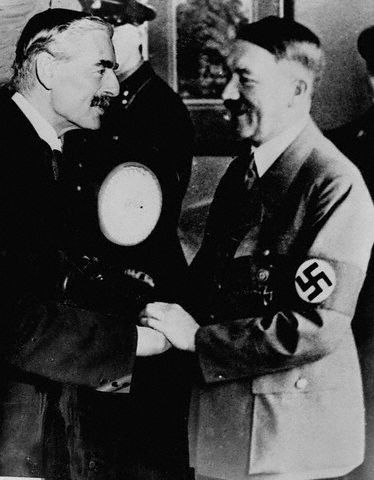
| Afghanistan Reports Progress in Talks with Taliban Militants - Peace for our time. |
| 2009-04-21 |
The Afghan government said it has held positive talks with Taliban militants in an effort to encourage peace in the face of an increasingly bloody insurgency. Presidential spokesman Humayun Hamidzada said Tuesday officials were in contact with militants at various levels but gave no other details. He also said some of Afghanistan's international allies have agreed to remove militants' names from wanted lists if they accepted the Afghan constitution. Taliban members' names appear on blacklists in the United States, some European countries and at the United Nations. U.S. President Barack Obama has said he would consider holding talks with Taliban militants who are willing to renounce violence and reconcile. The idea is part of his revised strategy to stabilize Afghanistan and neighboring Pakistan. Taliban and other insurgents have made a comeback in Afghanistan, causing the highest level of violence since a U.S.-led coalition ousted the Taliban government in 2001. |
| Link |
| Afghanistan |
| Everything for sale in land of graft |
| 2009-01-02 |
When it comes to governing this violent, fractious land, everything, it seems, has its price. Want to be a provincial police chief? It will cost you $100,000. Want to drive a convoy of trucks loaded with fuel across the country? Be prepared to pay $6,000 per truck, so the police will not tip off the Taliban. Need to settle a lawsuit over the ownership of your house? About $25,000, depending on the judge.Kept afloat by billions of dollars in American and other foreign aid, the government of Afghanistan is shot through with corruption and graft. From the lowliest traffic policeman to the family of President Hamid Karzai himself, the state built on the ruins of the Taliban government seven years ago now often seems to exist for little more than the enrichment of those who run it. A raft of investigations has concluded that people at the highest levels of the Karzai administration, including President Karzais own brother, Ahmed Wali Karzai, are cooperating in the countrys opium trade, now the worlds largest. In the streets and government offices, hardly a public transaction seems to unfold here that does not carry with it the requirement of a bribe, a gift, or, in case you are a beggar, harchee whatever you have in your pocket. The corruption, publicly acknowledged by President Karzai, is contributing to the collapse of public confidence in his government and to the resurgence of the Taliban, whose fighters have moved to the outskirts of Kabul, the capital. All the politicians in this country have acquired everything money, lots of money, President Karzai said in a speech at a rural development conference here in November. God knows, it is beyond the limit. The banks of the world are full of the money of our statesmen. On the streets here, tales of corruption are as easy to find as kebab stands. Everything seems to be for sale: public offices, access to government services, even a persons freedom. The examples mentioned above $25,000 to settle a lawsuit, $6,000 to bribe the police, $100,000 to secure a job as a provincial police chief were offered by people who experienced them directly or witnessed the transaction. People pay bribes for large things, and for small things, too: to get electricity for their homes, to get out of jail, even to enter the airport. Governments in developing countries are often riddled with corruption. But Afghans say the corruption they see now has no precedent, in either its brazenness or in its scale. Transparency International, a German organization that gauges honesty in government, ranked Afghanistan 117 out of 180 countries in 2005. This year, it fell to 176. Nowhere is the scent of corruption so strong as in the Kabul neighborhood of Sherpur. Before 2001, it was a vacant patch of hillside that overlooked the stately neighborhood of Wazir Akbar Khan. Today it is the wealthiest enclave in the country, with gaudy, grandiose mansions that cost hundreds of thousands of dollars. Afghans refer to them as poppy houses. Sherpur itself is often jokingly referred to as Char-pur, which literally means City of Loot. Yet what is perhaps most remarkable about Sherpur is that many of the homeowners are government officials, whose annual salaries would not otherwise enable them to live here for more than a few days. One of the mansions three stories, several bedrooms, sweeping balconies is owned by Abdul Jabbar Sabit, a former attorney general who made a name for himself by declaring a jihad against corruption. After he was fired earlier this year by President Karzai, a video began circulating around town showing Mr. Sabit dancing giddily around a room and slurring his words, apparently drunk. Mr. Sabit now lives in Canada, but his house is available to rent for $5,000 a month. An even grander mansion ornate faux Greek columns, a towering fountain is owned by Kabuls police chief, Mohammed Ayob Salangi. It can be had for $11,000 a month. Mr. Salangis salary is unknown; that of Mr. Karzai, the president, is about $600 a month. Mr. Ghani, the former finance minister, said the plots of land on which the mansions of Sherpur stand were doled out early in the Karzai administration for prices that were a tiny fraction of what they were worth. (Mr. Ghani said he was offered a plot, too, and refused to accept it.) Amin Farhang, the minister of commerce, was voted out of Mr. Karzais cabinet by Parliament earlier last month for failing to bring down the price of oil in Afghanistan as the price declined in international markets. In a long talk in the sitting room of his home, Mr. Farhang recounted a two-year struggle to fire the man in charge of giving out licenses for new businesses. The man, Mr. Farhang said, would grant a license only in exchange for a hefty bribe. But Mr. Farhang found that he was unable to fire the man, who, he said, simply bribed other members of the government to reinstate him. In a job like this, a man can make 10 or 12 times his salary, Mr. Farhang said. People do anything to hang on to them. Many Afghans, including Mr. Ghani, the former finance minister, place responsibility for the collapse of the state on Mr. Karzai, who, they say, has failed repeatedly to confront the powerful figures who are behind much of the corruption. In his stint as finance minister, Mr. Ghani said, two moments crystallized his disgust and finally prompted him to quit. The first, Mr. Ghani said, was his attempt to impose order on Kabuls chaotic system of private property rights. The Afghan government had accumulated vast amounts of land during the period of Communist rule in the 1970s and 1980s. And since 2001, the government has given much of it away often, Mr. Ghani said, to shady developers at extremely low prices. Much of that land has been sold and developed, rendering much of Kabuls property in the hands of unknown owners. Many of the developers who were given free land, Mr. Ghani said, were also involved in drug trafficking. When he proposed drawing up a set of regulations to govern private property, Mr. Ghani said, he was told by President Karzai to stop. Just back off, he told me, Mr. Ghani said. He said that politically it wasnt feasible. A similar effort to impose regulations at the Ministry of Aviation, which Mr. Ghani described as rife with corruption, was met with a similar response by President Karzai, he said. Morally the question was, am I becoming the fig leaf to legitimate a system that was deeply corrupt? Or was I there to serve the people? Mr. Ghani said. I resigned. Mr. Ghani, who then became chancellor of Kabul University, is today contemplating a run for the presidency. Asked about Mr. Ghanis account on Thursday, Humayun Hamidzada, a spokesman for Mr. Karzai, said he could not immediately comment. |
| Link |
| Afghanistan |
| 'Tribal animosity behind Azizabad deaths' |
| 2008-09-15 |
| A rival tribe provided false information for the US military in an operation that killed up to 90 Afghan civilians last month, official says. "There was total misinformation fed to the coalition forces," said Humayun Hamidzada, the spokesman for President Hamid karzai. Afghanistan's Interior Ministry said Friday three suspects were detained for their role in the US bombardment of the village of Azizabad. The three are accused of giving the US military false information, which led to the imprecise August 22 bombing of the village of Azizabad, in Afghanistan's Herat province. An Afghan government commission, later backed by a preliminary UN report, found that up to 90 civilians, including 60 children, were killed. Villagers of Azizabad say their homes were targeted because of false information provided by a rival tribesman named Nader Tawakil. The bombing disaster, in which 'not a single Taliban' was killed, has caused a strain on the US-Afghan relationship, Hamidzada said. He specially regretted the 'total denials' on the part of the United States military concerning the tragedy. The US at first claimed no civilians were killed in the operation, saying they had killed a known militant commander named Mullah Sidiq and 30 militants. Later, a formal military investigation into the incident said that up to 35 militants and seven civilians were killed in the attack. The US findings were gravely compromised last week after video images from Azizabad showing at least 10 dead children and around 40 villagers surfaced. The U.S plans to investigate the strike again, which the Afghan government has called unnecessary as they already have the facts. |
| Link |
| Afghanistan |
| Feel Good Story: Afghanistan Wins First Olympic Medal |
| 2008-08-21 |
| H/T threatswatch.org. Pic at site KABUL, Afghanistan -- Noor Ahmad Gayezabi said a silent prayer while watching the small family TV with his 13-year-old son. "Help Nikpai. Help Nikpai. Help Afghanistan." Then he watched his country win its first-ever Olympic medal. Rohullah Nikpai defeated world champion Juan Antonio Ramos of Spain on Wednesday to earn the bronze medal in the men's under 58-kilogram taekwondo competition, sparking applause, wide smiles and laughter in homes, restaurants and ice cream parlors around the country. Rohullah Nikpai of Afghanistan said he hoped his bronze medal in taekwondo -- the first Olympic medal ever won by his country -- can serve as a message of peace for his war-torn country. "When I saw that he won, I jumped up and hugged and kissed my son," Gayezabi said. "I was crying." President Hamid Karzai immediately called to congratulate Nikpai. He also awarded him a house at the government's expense, said Humayun Hamidzada, the president's spokesman. "I hope this will send a message of peace to my country after 30 years of war," Nikpai said. The victory led all of Afghanistan's evening newscasts. "I am so happy. I cannot express my feelings in words," said Mohammad Akbar, 33, who watched on a TV at his Kabul pharmacy. "While I was watching the match I was clapping I was so happy." Nikpai, who is 21, started learning the Korean martial art when he was 10 because his brother had found a club in Kabul to train. Not only was it an escape from the daily rigors of life in a country that not been at peace since the 1970s, he turned out to be good at it. Exceptionally good. When Gayezabi met Nikpai, they were both living at a refugee camp in Iran during the years of war that embroiled Afghanistan in the 1980s and 1990s. The two competed together on a refugee taekwondo team. Nikpai came to Kabul four years ago, Gayezabi said. In the mornings he lifted weights and in the evenings he practiced martial arts. In between he earned money cutting hair as a barber. With success came better training conditions. After being selected for the national team six months ago, he was able to use a special gymnasium. But in a country where sports take a distant place behind the realities of war, few resources are dedicated to training athletes. "My training situation is a lot like the situation in my country," Nikpai said. "It's not good." Gayezabi had a lucky few hours of electricity that allowed him to watch his former teammate's victory. He feared he would only be able to listen on the radio since Kabul averages about four hours of municipal electricity a day. I was crying because I was remembering back when we were both on the Afghan refugee taekwondo team in Iran," Gayezabi said. Only four Afghan athletes came to Beijing, representing a country that had never won an Olympic medal and is sinking ever deeper into war as the Taliban insurgency escalates. Sprinter Robina Muqimyar -- who in 2004 broke the gender barrier on the Afghan Olympic team -- was last in a field of 85 women in the 100 meters, with a time of 14.80. She ran with a scarf covering her head. Teammate Massoud Azizi finished 76th in the men's 100. He trains in Kabul's National Stadium, where the Taliban once staged regular public executions, wearing jogging shoes because his spikes won't dig into the track's cracked, concrete surface. But Nikpai, who is 21, has claimed a spot among his sport's elite. Afghanistan will get another chance at a medal in taekwondo. Nesar Ahmad Bahave is competing in a heavier weight class. Hussein Rachmati, a taekwondo teacher who works in the gym where Nikpai trains, said Nikpai prepared for the Olympics with a Korean teacher. He placed second in the World Taekwondo Federation's qualifying event in Vietnam last year. Afghans gathered around an ice cream shop TV in Kabul broke out in wide smiles and passed around congratulations to one another after watching Nikpai's win, said Abdul Wafi, a 28-year-old university student. "It is wonderful that an Afghan athlete can win a medal in the world Olympics," said Wafi. "It is a great achievement for Afghanistan." The top U.N. official in Afghanistan, Kai Eide, said the Olympic win shows that Afghanistan can compete on the global stage against the world's best athletes. "Young people should draw hope and inspiration from this Olympic win," Eide said in a statement. "Today, Afghanistan has demonstrated that it can and will succeed in the face of adversity with the determination, commitment and hard work of its most precious resource -- the young people of Afghanistan." Along with the president's offer of a house, Nikpai's bronze medal comes with a cash prize. Ehsanullah Bayat, chairman of the Afghan Wireless Communication Company, earlier announced that he would award any Afghan athlete who won an Olympic bronze $10,000, along with $50,000 for a gold medal and $25,000 for a silver, said Khalid Andisha, a spokesman for AWCC. "It is a great victory for Afghanistan," said Mohammad Sukran, an 18-year-old student. "In a country like Afghanistan, the only thing we hear about all the time is violence and fighting. This is finally good news for Afghanistan." |
| Link |
| Afghanistan | |
| Afghans blame 'foreign agency' for Kabul bombing | |
| 2008-07-09 | |
| Afghanistan blamed a foreign intelligence agency Tuesday for the bombing of the Indian Embassy in Kabul, making a veiled but clear reference to its eastern neighbor, Pakistan. The accusation came as the commander of the NATO military mission in Afghanistan, U.S. Army Gen. David D. McKiernan, said increased Afghan violence is due in part to a porous border that allows insurgents to resupply in Pakistan and cross freely into Afghanistan. President Hamid Karzai's spokesman said Afghan officials have evidence showing foreigners were behind Monday's suicide bombing at the embassy that killed 41 people, the deadliest attack in the capital since 2001. He did not provide any specifics.
Pakistan's prime minister denied its intelligence service was responsible. Speaking in Malaysia on Tuesday, Syed Yousuf Raza Gilani said his country has no interest in destabilizing Afghanistan when both countries are fighting terrorist groups. 'We want stability in the region. We ourselves are a victim of terrorism and extremism,' Gilani said on the sidelines of a summit of eight developing Islamic nations. | |
| Link |
| Afghanistan |
| 'Pakistan must stop attacks' |
| 2008-06-25 |
| Pakistan must stop militants crossing the border to attack targets in Afghanistan, otherwise the Kabul government will take action, Afghan presidential spokesman Humayun Hamidzada told a news conference on Tuesday. We request Pakistan not to allow terrorist groups to use its soil against Afghanistan, otherwise Afghanistan is obliged to take action in order to defend its nation and people, Hamidzada said. Pakistan said only its forces would tackle militants on its soil. |
| Link |
| Afghanistan | ||
| No word on Hekmatyar link to Afghan attack | ||
| 2008-04-10 | ||
Afghanistan's government has no information on whether a wanted guerrilla leader was in a village hit by a U.S.-led air strike in the east of the country this week, a spokesman said on Tuesday.
Asked about a report that Gulbuddin Hekmatyar, a fugitive pro-Taliban insurgent leader wanted by the United States, was the target of the attack, a presidential spokesman said the guerrilla leader's whereabouts were unknown. "We have no precise information whether Hekmatyar was there or not ... we are not aware as to where Hekmatyar is," presidential spokesman Humayun Hamidzada told a regular briefing. The air strike was part of an operation involving Afghan and U.S.-led troops against suspected militants in the rugged region near the Pakistani border where Hekmatyar's followers are active. Nuristan's governor was cited as saying Hekmatyar was believed to have been at a meeting in the village. Hekmatyar was a prominent commander during the war against Soviet occupation in the 1980s and factional warring in the 1990s. Security analysts said it was doubtful Hekmatyar would have been in the area and a spokesman for the militant commander said the report he might have been in the area was false. "Hekmatyar has never been to the area where coalition forces conducted the operation," the spokesman, Hassan Ansari, told the Pakistan-based Afghan Islamic Press news agency. | ||
| Link |
| Afghanistan |
| Afghanistan backs 'Bin Laden in Pakistan' charge |
| 2008-02-11 |
| Afghanistan said on Sunday it backed a senior US officials assertion that Al Qaeda leader Osama Bin Laden and Taliban chief Mullah Muhammad Omar were operating from neighbouring Pakistan. The US official said Bin Laden, his deputy Ayman al-Zawahri and other network members were operating out of the Federally Administered Tribal Areas (FATA) bordering Afghanistan. Mullah Omar and other ousted Afghan Taliban leaders, meanwhile, were directing insurgent operations in Afghanistan from Quetta, said the US official, who spoke on condition of anonymity. Pakistan has rejected the charge, but a spokesman for Afghan President Hamid Karzai welcomed it. We are glad that finally a high-ranking American official confirmed this matter, said spokesman Humayun Hamidzada. The government of Afghanistan has said for years the administration centres, havens and regrouping bases of the enemies of Afghanistan and Taliban are outside Afghanistan. Certainly, the war in Afghanistan should continue, but the war should be taken to the source of terrorism where it is. We are not naming any country. A Taliban spokesman said Mullah Omar was leading the insurgency from within Afghanistan and said the US official was preparing the ground for a military operation in Pakistan. This is false. Mullah Omar is not in Quetta at |
| Link |
| Afghanistan |
| Revealed: British plan to build training camp for Taliban fighters in Afghanistan |
| 2008-02-04 |
| Britain planned to build a Taliban training camp for 2,000 fighters in southern Afghanistan, as part of a top-secret deal to make them swap sides, intelligence sources in Kabul have revealed. The plans were discovered on a memory stick seized by Afghan secret police in December. The Afghan government claims they prove British agents were talking to the Taliban without permission from the Afghan President, Hamid Karzai, despite Gordon Brown's pledge that Britain will not negotiate. The Prime Minister told Parliament on 12 December: "Our objective is to defeat the insurgency by isolating and eliminating their leaders. We will not enter into any negotiations with these people." The British insist President Karzai's office knew what was going on. But Mr Karzai has expelled two top diplomats amid accusations they were part of a plot to buy-off the insurgents. The row was the first in a series of spectacular diplomatic spats which has seen Anglo-Afghan relations sink to a new low. Since December, President Karzai has blocked the appointment of Paddy Ashdown to the top UN job in Kabul and he has blamed British troops for losing control of Helmand. It has also soured relations between Kabul and Washington, where State Department officials were instrumental in pushing Lord Ashdown for the UN role. President Karzai's political mentor, Sibghatullah Mojaddedi, endorsed a death sentence for blasphemy on the student journalist Sayed Pervez Kambaksh last week, and two British contractors have been arrested in Kabul on, it is claimed, trumped up weapons charges. The developments are seen as a deliberate defiance of the British. An Afghan government source said the training camp was part of a British plan to use bands of reconciled Taliban, called Community Defence Volunteers, to fight the remaining insurgents. "The camp would provide military training for 1,800 ordinary Taliban fighters and 200 low-level commanders," he said. The computer memory stick at the centre of the row was impounded by officers from Afghanistan's KGB-trained National Directorate of Security after they moved against a party of international diplomats who were visiting Helmand. A ministry insider said: "When they were arrested, the British said the Ministry of the Interior and the National Security Council knew about it, but no one knew anything. That's why the President was so angry." Details of how much President Karzai was told remain murky. Some analysts believe Afghan officials were briefed about the plan, but that it later evolved. The camp was due to be built outside Musa Qala, in Helmand. It was part of a package of reconstruction and development incentives designed to win trust and support in the aftermath of the British-led battle to retake the stronghold last year. But the Afghans feared the British were training a militia with no loyalty to the central government. Intercepted Taliban communications suggested they thought the British were trying to help them, the Afghan official said. The Western delegates, Michael Semple and Mervyn Patterson, were given 48 hours to leave the country. Their Afghan colleagues, including a former army general, were jailed. The expulsions coincided with a row within the Taliban's ranks which saw a senior commander, Mansoor Dadullah, sacked for talking to British spies. One official claimed the camp was planned for Mansoor and his men. The computer stick contained a three-stage plan, called the European Union Peace Building Programme. The third stage covered military training. Curiously, the European Union says the programme did not exist and there were no EU funds to run it. Afghan government officials insist it was bankrolled by the British. UK diplomats, the UN, Western officials and senior Afghan officials have all confirmed the outline of the plan, which they agree is entirely British-led, but all refused to talk about it on the record. President Karzai's office claimed it was "a matter of national security". The memory stick revealed that $125,000 (£64,000) had been spent on preparing the camp and a further $200,000 was earmarked to run it in 2008, an Afghan official said. The figures sparked allegations that British agents were paying the Taliban. President Karzai's spokesman, Humayun Hamidzada, accused Mr Semple and Mr Patterson of being "involved in some activities that were not their jobs." The camp would also have provided vocational training, including farming and irrigation techniques, to offer people a viable alternative to growing opium. But the Afghan government took issue with plans to provide military training, to turn the insurgents into a defence force. Afghan government staff also claimed the "EU peace-builders" had handed over mobile phones, laptops and airtime credit to insurgents. They said the memory stick revealed plans to train the Taliban to use secure satellite phones, so they could communicate directly with UK officials. Mr Patterson, a Briton, was the third-ranking UN diplomat when he was held. Mr Semple, an Irishman, was the acting head of the EU mission. Officially, the British embassy remains tight-lipped, fuelling speculation that the plan may have been part of a wider clandestine operation. A spokesman repeated the line used since Christmas: "The EU and UN have responded to inquiries on this. We have nothing further to add." But privately, the UN maintains it had no role in setting up the camp. Meanwhile, Mr Semple's EU boss, Francesc Vendrell, admitted he had very little idea what was going on. Yet the British ambassador, Sir Sherard Cowper-Coles, cut short his Christmas holiday to meet President Karzai and "spell out the Foreign Office paper-trail" which diplomats claim proves his government had agreed. They met twice, but it was not enough to stop Mr Semple and Mr Patterson being forced to leave. Gordon Brown has also said Britain would increase its support for "community defence initiatives, where local volunteers are recruited to defend homes and families modelled on traditional Afghan arbakai". |
| Link |
| Afghanistan | |
| Afghanistan expels Briton for Taliban talks | |
| 2007-12-26 | |
| United Nations officials were today lobbying the Afghan government to reverse its decision to expel two diplomats, one British and the other Irish, accused of holding talks with Taliban But can't we all be friends? President Hamid Karzai's spokesman, Humayun Hamidzada, said the two men - named in reports as the acting European Union mission head, Michael Semple, and a senior UN official, Mervyn Patterson - were "involved in some activities that were not their jobs". You don't say A spokesman for the UN mission in Afghanistan, Aleem Siddique, said the two men would leave tomorrow as ordered but described the incident as a "misunderstanding". Right... He insisted that the UN "don't talk to the Taliban, full stop" and expressed his hope that the men could return "as soon as possible".
The Afghan government, and particularly Karzai, have voiced a growing interest in meeting with Taliban leaders to try to persuade them to renounce violence and enter politics. Splitting the extremist organisation is seen as one way of helping to bring the bloody insurgency to an end. Talks with the Taliban? How's that working for you? | |
| Link |
| India-Pakistan |
| Kabul denies involvement |
| 2007-10-29 |
| Afghanistan on Sunday denied allegations it was involved in the unrest in Waziristan and Swat, saying that it would not let Afghan soil be used for anti-Pakistan activities. We will not allow anyone to use our soil against Pakistan, President Hamid Karzais spokesman Humayun Hamidzada told Daily Times, a day after the NWFP caretaker chief minister hinted at the possible involvement of India or Afghanistan in terrorist activities in the Swat region. Using terrorism as a foreign policy tool will serve nobodys interests; such a practice is bound to backfire, Hamidzada said. Terrorists and fundamentalists, he added, posed a common threat to the two neighbouring countries. Therefore, we are willing to continue working with our Pakistani friends to fight terrorism, he said. He said the government and people of Afghanistan felt sorry for the incidents of terrorism in Pakistan. Hamidzada also referred to Karzais recent interview in which the Afghan president had regretted bomb attacks in Pakistan. |
| Link |
| Afghanistan | |
| 'Taliban in serious debate to lay down arms' | |
| 2007-10-01 | |
President Hamid Karzais office said Sunday that there is serious debate among some Taliban fighters about laying down arms, though a spokesman for the group said the insurgents will never negotiate with Afghan authorities until foreign troops leave. Karzai said Saturday he would be willing to meet personally with Taliban leader Mullah Omar and give militants a position in government in exchange for peace. On Sunday, Karzai spokesman Humayun Hamidzada stressed that the militants would have to accept Afghanistans constitution. However, Taliban spokesman Qari Yousef Ahmadi repeated a position he had announced earlier this month, saying there would be no negotiations until US and NATO troops withdraw from Afghanistan. The Taliban will never negotiate with the Afghan government in the presence of foreign forces, Ahmadi told The Associated Press. Even if Karzai gives up his presidency, its not possible that Mullah Omar would agree to negotiations. The foreign forces dont have the authority to talk about Afghanistan. But Karzais spokesman said the government has information of a serious debate among some groups of Taliban about how long militants want to keep fighting. The UN and NATO have also said they see similar indications. They want to live in peace and have a comfortable life with their families, Hamidzada said. There is serious debate within their ranks, but this is a process that takes time. Karzai travelled to the UN General Assembly in New York days ago, and Hamidzada said that among the UN Secretary-General and the foreign ministers of many countries, everyone with one voice said we need a comprehensive strategy in dealing with the Taliban - both military and diplomatic components. He said Karzai and US President George W Bush also spoke generally about the Taliban reconciliation process and said Bush also supports such initiatives, though it was not clear if that would include broader Taliban peace talks beyond the individual reconciliation process that has seen more than 4,500 fighters lay down their arms in the last two years. Karzais latest peace overture came as insurgency-related violence continued. Thirty people, mostly army soldiers, were killed in a suicide bomb attack on a military bus Saturday in Kabul.
Military officials said they expected a spike in violence during the Muslim holy month of Ramazan, based on an increase in attacks last year during the same period. The death toll this week includes more than 165 militants killed during two battles between the Taliban and joint Afghan-coalition forces, and the 30 soldiers and civilians killed in the Kabul suicide bombing. Militant attacks and military operations have killed more than 4,600 people so far this year, most of them insurgents, according to the AP count. | |
| Link |