Hello !
Recent Appearances... Rantburg

Afghanistan
The Bamiyan Mystery: Why the Taliban Tolerated the Buddha Statues and Then Destroyed Them
2026-03-27
Direct Translation via Google Translate. Edited
by Kirill Semenov

[REGNUM] March 26 marks 25 years since the destruction of two giant Buddha statues in Afghanistan's Bamiyan province. This event, widely considered barbaric—and one cannot deny it—requires a more careful and calm analysis years later.

The destruction of the statues is usually portrayed as an outbreak of religious fanaticism, which is only partly true. The history of this tragic chapter is a complex web of historical contradictions, ethnic rivalries, and political calculations.

To understand why what had been cherished for 1,400 years of Islamic presence in Afghanistan was suddenly destroyed in 2001, one must delve into history.

DESCENDANTS OF THE WHITE HUNS
The Bamiyan Valley lies on the Silk Road. In the sixth and seventh centuries CE, Buddhist art flourished here, incorporating the traditions of Hellenistic Greece, India, and Persia. Two statues—38 and 55 meters tall—were carved into a sandstone cliff during the heyday of the Kushan Empire.

The Kushans, originally a semi-nomadic people of Central Asian origin, created a state that stretched from the Aral Sea to the Ganges.

They were patrons of Buddhism, although their culture was syncretic—mixed. The coins of the Kushan kings featured Greek, Persian, and Indian deities side by side, which did not hinder the spread of Buddhism.

The Bamiyan statues became the pinnacle of Gandhara art (named after the region of Gandhara in ancient India, which occupied the territory of modern Pakistan, Afghanistan, and the eastern outskirts of Iran).

This unique style was also associated with the rise of the Kushan Empire, where Greek sculpture techniques, inherited by the Kushans from the Greco-Bactrian Kingdom (a fragment of Alexander the Great's empire ), were combined with Buddhist iconography. It was the expression of a cosmopolitan civilization that transcended modern ethnic boundaries.

When Islam arrived in Afghanistan, the Kushan Empire had long since collapsed. New ethnic groups emerged from its ruins.

Among them are the Pashtuns, whose ethnogenetic memory is linked to the Hephthalites (White Huns), specifically to one of their clans, the Ebodalos, from which the distorted name "Hephthalites" is believed to have originated. The Pashtun confederation of Abdali tribes, who live in southern Afghanistan, are the heirs of those same Hephthalite Ebodalos and bear their name.

By the way, Hamid Karzai, president from 2001 to 2014, is from one of these descendants of the White Huns – the Hephthalites.

The Hephthalites were the Kushan Empire's bitterest enemies, inflicting a series of crushing defeats on them in the 5th and 6th centuries. This enmity was surprisingly reinterpreted in the 21st century, when the Pashtuns destroyed the last vestiges of the Kushan Empire, represented by these statues.

HOW "IDOLS" BECAME THE PRINCE AND PRINCESS
In the 7th and 8th centuries, when Muslim armies brought Islam to Central Asia, the statues had already stood in the valley for hundreds of years. Contrary to popular belief, Islamic civilization developed a complex and largely tolerant attitude toward pre-Islamic antiquities and even images of deities.

Moreover, for centuries, Muslim rulers of Egypt, Syria, Iran, and India carefully preserved the legacy of bygone eras. The Sphinx at Giza, the pyramids, the ruins of Palmyra and Persepolis—all remained untouched under Muslim rule.

Afghanistan was no exception. Rulers from the Ghaznavid, Ghurid, and Mughal dynasties, as well as the Afghan Durrani emirs, none of them encroached on the Buddhas.

Moreover, the statues were surprisingly integrated into local Muslim culture.

The people of the Bamiyan Valley—mostly Shia Hazaras, an ethnic group of Mongolian origin—created their own legend about the statues.

They were named Salsal (the large statue) and Shahamama (the smaller one). According to legend, they were two lovers—the prince of Bamiyan and a princess from a distant land. Forbidden to be together in life, they turned to stone to remain forever, but remained separated.

Another version, widespread among local Muslims, linked the statues to Hazrat Ali, the cousin of the Prophet Muhammad. He allegedly converted the pagan king of Bamiyan to Islam, and his statues became a reminder of this event. Thus, pre-Islamic monuments found new life in Islamic mythology, losing their original religious significance but retaining veneration as historical evidence.

The Islamic tradition has demonstrated its ability to assimilate other heritages and to transform foreign shrines into its own traditions.

FROM TOLERANCE TO DESTRUCTION
The Taliban* movement captured Kabul in 1996. For the first few years, the Taliban's attitude toward the Bamiyan Buddhas was tolerant. In 1999, the Taliban officially assured UNESCO that the statues would be preserved. What changed?

In the winter and spring of 2001, the Taliban regime was in a critical situation.

First, there was an ongoing, brutal war with the Northern Alliance, which controlled the northeast of the country and consisted mainly of Ahmad Shah Massoud's Tajiks and Rashid Dostum's Uzbeks.

Bamiyan province was a strategically important area populated by Shia Hazaras, with whom the Taliban had different relationships.

But by early 2001, the Taliban had finally cleared the valley of those Hazara forces who opposed them. Now they had to consolidate their power. The Buddhas, in a sense, were a symbol of the Hazara's special status.

Secondly, pressure from the international community was growing against the backdrop of Osama bin Laden's move from Sudan to Afghanistan, where he blew up American embassies in Africa and barracks in Saudi Arabia.

UN sanctions, isolation, demands for Osama's extradition—all of this was a challenge to the Taliban. The destruction of the statues was a response to these challenges, a demonstration of defiance, a provocation in the face of pressure from the international community, and above all, the United States. It was a response to the West, disguised as a religious imperative.

Thirdly, within the movement itself, there was a struggle between moderate and radical factions. By 2001, the radicals had gained the upper hand.
Of course a purity movement with time strives to become ever more pure, whatever it is that it’s pure about. In Revolutionary France it was the anti-aristocracy working man; in Russia is was Communism.
The decision to destroy the statues was signed by Mullah Omar in February 2001, and by March, explosives and artillery had begun to be used.

This decision wasn't unanimous even among the Taliban. Many ordinary fighters and mid-level commanders privately expressed regret; for many of them, having grown up in Afghanistan, these statues were part of their land's heritage.

PASHTUN NATIONALISM UNDER A RELIGIOUS GUISE
A key factor that often escapes the attention of Western observers is the ethnic dimension of this act.

The Taliban is a movement composed predominantly of Pashtuns. Pashtuns are the largest ethnic group in Afghanistan, and for a long time they were synonymous with the word "Afghan," and until the mid-20th century, they were the only ones referred to as Afghans.

For centuries, Pashtun rulers dominated other peoples—Tajiks, Uzbeks, and Hazaras—until civil war and the introduction of Soviet troops allowed minorities to come to power in the country for the first time in history: Tajiks Burhanuddin Rabbani and Massoud, and Uzbek Dostum.

The Pashtuns took this as a challenge, and soon the Pashtun Taliban movement emerged under religious slogans.

The Taliban's ideology combines traditional Islam with Pashtun nationalism. Many of the Sharia provisions introduced by the Taliban are selected to align Islamic law with Pashtun customs and the Pashtunwali code.

The Taliban often choose the strictest, most uncompromising Islamic norms simply because they conceal Pashtun traditional values. Religious rhetoric serves as a cover for ethnic domination.

The most striking example is the attitude towards women.

In classical Sharia, women have inheritance and property rights, the right to education, the right to divorce, etc.
Like in Arabia under the Wahhabi House of Saud?
But in the Pashtun tradition, women were practically deprived of such rights for a long time. Even after adopting the strictest interpretations of Sharia law that regulated women's personal status, the Taliban still granted women more rights than Pashtunwali law stipulated.

The same logic was at work in Bamiyan. By destroying the statues, the Taliban invoked the prohibition of idolatry. But behind this lay a desire to erase the memory of the Hazara, for whom the Buddhas had become a symbol of identity.

Their cultural landscape, their connection to the land, their mythology—all of this was concentrated in the Bamiyan Valley. The attack on the statues was a blow to the Hazaras, an attempt to assert Pashtun hegemony in this land.

The destruction of the Buddhas demonstrated that no international protests, no requests even from friendly states (Pakistan urged them to preserve the statues), could shake their resolve. It was a gesture of absolute sovereignty, albeit expressed in destructive form.

Even statements from recognized Islamic authorities at the time, heeded by the radicals, were of no help. For example, Egyptian theologian Sheikh Yusuf al-Qaradawi called on the Taliban not to destroy the statues.
In Saudi Arabia they destroyed every relic of Islamic and pre-Islamic history they could find, arguing that it led tourists astray.
MILITARY CONTEXT
In March 2001, the front line was just a few kilometers from Bamiyan.

Massoud's Northern Alliance, composed of Tajiks, Uzbeks, and Hazaras, was preparing for a spring offensive. For the Taliban, control of central Afghanistan was a sensitive issue.

The destruction of the Buddhas was not only a symbolic act, but also a military measure: it demoralized the Hazaras, deprived them of support in their own cultural space, and showed that the Taliban were ready to do anything to retain power.

Six months later, the events of September 11th would change the world. The US operation in Afghanistan seemed to have swept away the Taliban regime.

But by that time the Buddhas were gone, and the Taliban, despite everything, had returned and were now even able to establish good relations with the Shiite Hazaras.

Perhaps some of them regret that they rushed into this decision, which was unnecessary in a religious sense and wrong in a political sense, turning the entire world against the Taliban.

Twenty-five years later, the empty niches in the rock of Bamiyan remain a silent reminder of the complexity of Afghan society. And this isn't a story of "Islam versus Buddhism"—Islam peacefully coexisted with these statues for 1,400 years. But civil war, ethnic rivalry, and political isolation have led to these cultural monuments paying a price.
Related:
Bamiyan: 2025-05-08 America Must Stop Funding South Africa's Discriminatory University
Bamiyan: 2024-11-10 Afghan Digest: Week of October 21-27
Bamiyan: 2024-10-22 Islamic Emirate Targets ISIS-K Members Accused of Backing Recent Attacks
Link


Afghanistan
Taliban Have Detained Two Bamiyan Residents Over Resisting To Give Their Lands To Kuchi Nomads
2023-09-14
[8am] Local sources in Bamiyan
...a place in Afghanistan that used to have some historically interesting statues of the Buddha carved into a mountainside. Then the holy men showed up and now all they have is some big holes...
province report that the Taliban
...Arabic for students...
have imprisoned two residents of this province due to their refusal to give their land to the nomads (Kuchi)
...pastoral nomads belonging primarily to the Ghilji Pashtuns, who have been granted free passage and land use rights since the Pashtun kings ruled Afghanistan. About 2.5 million of them follow the traditional migration route up and down Afghanistan, contesting land ownership along the way, all strong supporters of their fellow Pashtuns, the Taliban...
living in the area.

Sources informed the Hasht-e Subh Daily on Tuesday, 12 September, that Abdullah Sarhadi, the Taliban governor of Bamiyan province, has imprisoned two individuals from the Pashta-e Gharghari village because they did not hand over their land to the Kuchi nomads.

These individuals are identified as Ewaz Danish and Mohammad Gholami.

According to sources, two days ago, Abdullah Sarhadi contacted Ewaz Danish and Mohammad Ghulami and requested that they come to the Bamyan center. However,
a poor excuse is better than no excuse at all...
when these two individuals arrived at the center yesterday, the Taliban governor instructed them to confess in writing that they would hand over their land to the Kuchi nomads.

Sources say that after rejecting this demand, these two individuals were detained and taken into custody.

Sources also add that previously, the Taliban had threatened and insulted these two individuals along with four of their close associates.

This comes after last year when the Taliban’s Conflict Resolution Commission had warned the residents of Rashk to hand over their lands to the Kuchi nomads and leave the region themselves.

With the resurgence of the Taliban in Afghanistan, festivities have occasionally erupted between Kuchi nomads and local residents in various provinces, especially Ghazni, Daikundi, Maidan Wardak, and Bamiyan.

In some cases, the Taliban have forced people to pay hefty fines as compensation to the Kuchi nomads.
Related:
Bamiyan: 2023-08-27 Women Banned From Visiting Band-e-Amir National Park
Bamiyan: 2023-08-15 Decoding the Taliban’s Anti-Persianism
Bamiyan: 2023-07-18 Afghanistan's Shi'ite Minority Suffers 'Systematic Discrimination' Under Taliban Rule
Related:
Kuchi: 2023-09-10 Hazara Reparations Saga Continues: Nawur District Residents Forced to Pay Five Million Afghanis to Kuchi Nomads
Kuchi: 2023-08-04 Taliban Detain and Torture Several, Including Women and Children, in Nawur, Ghazni Province
Kuchi: 2023-05-09 Terrorists Attack Emir’s Palace In Kaduna State, Abduct Nine Children
Link


Afghanistan
46 Taliban, Including a Militant Commander Killed in ‘MoD Operations’
2020-11-29
[KhaamaPress] The Ministry of Defense says that 39 Taliban
...Arabic for students...
Death Eaters were killed in festivities between security forces and Taliban fighters in Herat
...a venerable old Persian-speaking city in western Afghanistan, populated mostly by Tadjiks, which is why it's not as blood-soaked as areas controlled by Pashtuns...
, Kunduz, Helmand
...an Afghan province populated mostly by Pashtuns, adjacent to Injun country in Pak Balochistan...
, and Uruzgan provinces.

15 Taliban fighters have been killed in festivities with security forces in Herat province, MoD stated.

The statement added that Taliban fighters had gathered to attack security forces’ positions in the Barah-Kuh area of ​​Kohsan district in Herat province, where they were attacked by ANA forces.

According to MoD in an Arclight airstrike
...KABOOM!...
on a gathering of Taliban fighters in the "Kamin Afghan" area of ​​Imam Sahib district of Kunduz province, seven murderous Moslems were killed and four others were maimed.

In a similar incident, 11 Death Eaters were killed when they attacked Afghan security outposts in Nahr-e-Saraj and Nad Ali districts of Helmand province.

It is noteworthy, that eight armed Taliban were killed and 10 others were maimed in a counterattack by security forces in Gizab district of Uruzgan province, MoD reported.

On the other hand, Officials said a local Taliban commander and four of his accomplices were killed in a clash with security forces in the Qaisar district of Faryab province.

Mohammad Hanif, a front man for the 209th Shaheen Corps, confirmed to Khamaa Press on Saturday, that the incident took place yesterday when Taliban fighters attacked security forces, as result of 30 minutes of Battle, A Taliban commander named "Abdullah Jan" with four of his accomplices were killed, he was a local commander.

Hanif added that no government forces or civilians were harmed in the clash, Faryab is one of the most insecure provinces where a large presence of Talibs are reported.

Bamiyan
...a place in Afghanistan that used to have some historically interesting statues of the Buddha carved into a mountainside. Then the holy men showed up and now all they have is some big holes...
’s governor, Aala Rahmati told Khaama Press, that four people had been arrested in connection with last week’s bombings in the province.

Rahmati added that these people were sent to the Ministry of Interior in Kabul for further investigations, and due to the sensitivity of this matter, he did not provide detailed information.

But he said the captured men belonged to Panjshir, Samangan, Bamiyan, and Kabul provinces.

This comes as Two separate blasts occurred in Bamiyan province, killing 18 people and injuring 59 others.

However,
Switzerland makes more than cheese...
despite peace negotiations, the Taliban’s mobility has increased.
Link


Afghanistan
Iran’s Qaani Visited Afghanistan But Not As Diplomat: MoFA
2020-01-08
[ToloNews] The Afghan Ministry of Foreign Affairs (MoFA) on Tuesday said that Brig. Gen. Ismail Qaani, the newly appointed head of the Islamic Revolutionary Guard Corps' elite Quds Force, has never served as a diplomat in Afghanistan. This is a response to photographs showing Qaani in Afghanistan from a 2018 visit, which surfaced following the death of another Iranian commander, Qassem Soleiman. The governor of Bamiyan
...a place in Afghanistan that used to have some historically interesting statues of the Buddha carved into a mountainside. Then the holy men showed up and now all they have is some big holes...
reported of Qaani: "It was said that he was a 'deputy ambassador.'

Mr. Qaani never served as deputy to the Iranian ambassador to Kabul, said acting Minister of Foreign Affairs Idrees Zaman.

He said that Qaani’s trip to Bamiyan in July 2018 will be probed.

This comes after pictures on social media showed Qaani’s meeting with the Bamiyan governor Tahir Zaheer.

"This is under investigation. Right now I can say that Mr. Qaani never served as deputy ambassador," said Zaman.

"It was said that he (Qaani) was deputy ambassador, it was said he will visit the construction process of the hospital and then he (Qaani) will have a short meeting with the governor and it was happened as it was said," said Tahir Zaheer, the governor of Bamiyan province.

On Tuesday, Iran
...a theocratic Shiite state divided among the Medes, the Persians, and the (Arab) Elamites. Formerly a fairly civilized nation ruled by a Shah, it became a victim of Islamic revolution in 1979. The nation is today noted for spontaneously taking over other countries' embassies, maintaining whorehouses run by clergymen, involvement in international drug trafficking, and financing sock puppet militias to extend the regime's influence. The word Iran is a cognate form of Aryan, the abbreviation IRGC is a cognate form of Stürmabteilung (or SA), the term Supreme Guide is a cognate form of either Shah or Führer or maybe both, and they hate Jews Zionists Jews. Their economy is based on the production of oil and vitriol...
hosted the Tehran Dialogue Forum with participants from different countries, including former Afghan president Hamid Maybe I'll join the Taliban Karzai
...A product, and probably the sole product, of the Southern Alliance...
, who called on the US to de-escalate tensions with Iran.

Speaking at the forum, Iranian Foreign Minister Mohammad Javad Zarif said that the US is seeking to pursue its political objectives within the politically dynamic environment in the region.

"By exploiting the situation and by making fake threats they want to continue their illegal and illegitimate presence in the region," said Zarif.

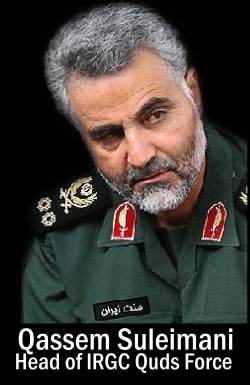
Tensions between Iran and the US have ratcheted up following the liquidation of Gen. Qassem Soleimani
, the former head of the Islamic Revolutionary Guard Corps' elite Quds Force.

The Afghan government, however, has said that it will not allow Afghanistan’s territory to be used against any other nation.
Related:
Bamiyan: 2019-04-05 Islamabad ‘Must’ Change Its Policy Towards Kabul: Khalilzad
Bamiyan: 2019-04-05 120 Civilians Affected By Mines, Unexploded Ordnance Every Month
Bamiyan: 2018-11-27 MPs Split Over Alipoor Arrest
Link


Afghanistan
Afghan census dodges taboo topics
2013-01-06
[Dawn] THERE are two questions Hajera Bashir does not ask as she goes door to door gathering census data in Ghor province in Afghanistan's freezing central highlands: which ethnic group residents belong to, and what language they speak at home.

With these taboo topics set aside, she quizzes families about everything else: their income and how many wives each man has, whether they can read and if their sons and daughters are in school, domestic details such as how they heat their homes, whether they have a toilet and if they keep chickens.

The shy 18-year-old is part of a critical but controversial effort to count the Afghan population for the first time since 1979.

Expected to take at least six years on a slow, province-by-province basis, it is possible only because it sidesteps tangled questions about the country's ethnic balance. Asking about language is avoided because it can be used as a proxy marker for ethnicity.

Still, the complexity of Afghanistan's ethnic politics means any kind of counting is controversial. The first results, from normally calm central Bamiyan province, showed an actual population barely half official estimates. The area is mostly home to Hazaras, a Shia minority who have often been persecuted in Sunni-dominated Afghanistan, and many took the findings as another form of attack.

"Death to the enemies of Bamiyan! The statistics are wrong!" shouted more than 1,000 demonstrators as they marched on UN offices in the small town this summer.

A previous attempt to end the decades-long wait for a count of the Afghan people, in 2008, was scrapped, with the government citing security problems. In December officials even dropped plans to unveil a new estimate of the population.

Although war has often put swaths of the country off-limits to statisticians, bitter ethnic politics have also played a role in slow progress, because of the risks that a population count might reduce the official size of some constituencies or expand those of rivals.

"If a politician sees that the ethnic group to which he or she belongs is less than expected, they will sometimes reject the data," said Abdul Rahman Ghafoori, head of the Central Statistics Office, who has the delicate job of balancing his country's need for decent data against the influence of groups who would rather details remain opaque or unchanged.
Link


Afghanistan
Foreign troops hand over Bamiyan to Afghan police
2011-07-19
[Dawn] International military forces in Afghanistan handed over control of a peaceful province in the centre of the country to Afghan police on Sunday, taking another step in a transition that will allow foreign troops to withdraw in full by the end of 2014.

Bamiyan province is one of seven areas going to Afghan security control this month in a first round of the transition. Another, Panjshir province in the east, began being transferred earlier this month. Both places have seen little to no fighting since the overthrow of the Taliban nearly 10 years ago and barely had any coalition troop presence.

Violence has increased in other parts of Afghanistan since the Taliban began an offensive in April. Afghan and NATO
...the North Atlantic Treaty Organization. Originally it was a mutual defense pact directed against an expansionist Soviet Union. In later years it evolved into a mechanism for picking the American pocket while criticizing the style of the American pants...
troops killed at least 13 Taliban fighters in the east on Sunday, and three NATO troops were killed in roadside kabooms.

The transition to Afghan control will allow international military forces to slowly start withdrawing from Afghanistan until all combat troops are gone in just over three years.

Bamiyan only had a small foreign troop contingent from New Zealand. Bamiyan and Panjshir are the only two provinces that will be handed over in their entirety during this month's transition phase.

Other areas to be handed over are the placid provincial capitals of Lashkar Gah in southern Afghanistan, Herat in the west, Mazer-e-Sharif in the north and Mehterlam in the east. Afghan forces will also take control of all of Kabul province except for the restive Surobi district.

Not all residents of Bamiyan were happy with the handover decision, which they said had resulted in increased violence in the province by snuffies seeking to make the Afghan government look bad.

"From my point of view, but also the point of view of many in Bamiyan, the transition that occurred today was not a good idea at all," said Bamiyan politician Abdul Rahman Shaheedani. "People are very concerned about security in Bamiyan right now.

When several months ago they announced the areas where the first phase of transition would occur, and named Bamiyan, hard boy activities increased."

In Sunday's fighting, Afghan and NATO troops fought an overnight gunbattle with the Taliban and called in an air strike on the building where the fighters were holed up. At least 13 Taliban were killed.

Captain Justin Brockhoff, a front man for the coalition, said the overnight operation targeted a Taliban leader in the Kuz Kunar district of Nangarhar
...on the main road from Lovely Peshawar. The capital is Jalalabad. The population of 1,334,000 consists mostly of Pashtuns with a few Arabs and Pashais...
province. Afghan and coalition troops came under fire and the Taliban refused requests to come out of the building, he said.

The fighting ended on Sunday with a NATO air strike, he said, adding that there were no casualties among civilians or security forces. The Taliban were armed with machine guns, assault rifles and rocket-propelled grenades.

"As Afghan members of the security force attempted to clear the building, they were met with continuing myrmidon fire," Brockhoff said. The coalition and Afghan forces eventually called in an air strike, which "killed several more Islamic fascisti and destroyed the building," he said.

Ahmad Zia Abdulzai, a front man for the Nangarhar provincial governor, said the bodies of 13 snuffies had been found so far. He said the building occupied by the Taliban was a school, which was empty because the students are on summer break.

Also on Sunday, NATO said three of its service members died. One was killed by a roadside kaboom in eastern Afghanistan and
two were killed by a similar device in the south.
Link


Afghanistan
Two suspected Taliban killed in Helmand clash
2007-03-13
NATO and Afghan troops clashed with suspected Taliban insurgents on Monday in southern Afghanistan, shortly before calling in an airstrike on a compound that left two militants dead, a spokesman said. The clash started when militants opened fired and lobbed mortars toward NATO and Afghan troops in the Gereshk district of Helmand province, said Squadron Leader Dave Marsh, a spokesman for NATO’s International Security Assistance Force. Two Afghans and one NATO soldier were lightly wounded in the clash, Marsh said.

A tribal leader said that western forces killed five Afghan civilians in the airstrike in Helmand. The elder, Meera Jan, said civilian houses were hit in the attack. As well as the five people killed, four were wounded, he said. A spokeswoman for NATO troops in Afghanistan said an airstrike had been carried out in the Gereshk district of Helmand province late on Sunday but NATO forces were not involved. A spokesman for a separate US-led force said he had no information about any air strike.
Must have been the Swedish air force on a marketing run for the Grippen.
Meanwhile, during a search operation in neighbouring Kandahar province, Afghan troops arrested a “high-ranking suicide attack coordinator” in Panjwayi district, the ISAF said on Monday. An ISAF statement said that Mullah Mohammad Wali organised suicide attacks in Kandahar and worked for the Taliban.

Separately, New Zealand Prime Minister Helen Clark said on Monday New Zealand would extend its military commitment in Afghanistan to September 2008. New Zealand has had 120 soldiers serving in a provincial reconstruction team in Bamiyan province for 3-1/2 years and their term would be extended for another year, Clark said. “The objective is to ensure that Afghanistan does not revert to being a failed state and again become a haven for terrorists,” Clark said in a statement.

Defence Minister Phil Goff told a press conference the security situation in Bamiyan province was less dangerous than other areas in the country. Under the commitment, New Zealand will also supply a small number of soldiers to help train the Afghan National Army, work at the International Security Assistance Force headquarters and work in a medical unit at Kandahar. A New Zealand frigate will be deployed to the Arabian Gulf in the middle of next year as part of a multi-national maritime security force and four police will also help train local police in Afghanistan.

German Interior Minister Wolfgang Schaeuble said on Monday that Germany would not bow to terrorist threats demanding the withdrawal of its troops from Afghanistan. “We will not be blackmailed,” Schaeuble told RBB radio. He added, however, that the government took seriously threats made at the weekend by two Islamist groups to attack Germany and to execute two German hostages being held in Iraq unless Berlin ended its Afghanistan mission. “We are part of a global target. We should have no illusions that we are as much under threat as Spain, England or other nations,” Schaeuble told RBB.

He said German soldiers were also contributing “to our own security” by helping to stabilise Afghanistan. Germany has almost 3,000 troops in northern Afghanistan, where it commands the NATO-led International Security Assistance Force.
Link


Afghanistan
Air Raid Whacks Taliban Leader
2007-01-29
A NATO air strike destroyed a Taliban command post in southern Afghanistan, killing a suspected senior militant leader, the alliance said yesterday.

Also yesterday, an assailant gunned down an Afghan legislator who, under the former Taliban regime, oversaw the destruction of two Buddha statues carved into a cliff.

Maulavi Mohammed Islam Mohammadi, who was the Taliban's governor of Bamiyan province when the fifth-century Buddha statues were blown up March 2001, was killed on his way to Friday prayers in Kabul, deputy police chief Zulmai Khan said.

Mohammadi was elected in 2005 to represent the northern province of Samangan in Afghanistan's parliament. After he was elected, Mohammadi said he should not be held responsible for the destruction of the statues, which the Taliban considered to be idolatrous. "It was foreigners like Chechens and Arabs with the Taliban who made the decision. They were crazy people," Mohammadi said in an interview at the time. "Even though I was governor, I had no power."

International outcry followed the destruction of the giant Buddhas, which were chiselled into a cliff and famed for their size and location along the ancient Silk Road linking Europe and Central Asia. Archeologists in Bamiyan have been painstakingly collecting the stone remains of the two statues -- and are considering rebuilding them.

In southern Helmand province, a militant leader and his deputies were killed in an air strike Thursday, a NATO statement said. It did not disclose the name of the leader killed.

Later yesterday, a suicide bomber blew himself up outside the offices of an aid group in the capital of Helmand province, Lashkar Gah. A policeman and two civilians were wounded, police said.

NATO has claimed a string of successes against Taliban leaders -- including the killing last month of a top lieutenant of the militia's fugitive chief, Mullah Omar -- after a year of bitter fighting. The air strike occurred outside the town of Musa Qala, where a deal signed between local elders and the Helmand governor, with the support of the British task force based in the province, turned over security responsibilities to local leaders. The deal also prevents NATO-led troops from entering the town.

Before the deal, which has been criticized by some western officials as putting the area outside government control, the town was a centre of fierce clashes between British troops and resurgent Taliban militants. NATO said the air strike did not violate the pact. "This successful air strike took place in the vicinity of Musa Qala but was outside of the area of the agreement between the government of Afghanistan ... and local elders," the NATO statement said.
Link


Afghanistan-Pak-India
Islamists Dismiss Reports of Bin Laden's Death
2005-10-27
Islamists dismissed recent reports on the death of Osama bin Laden “around four months ago”, with the Pakistani newspaper “Awsaf” reporting al Qaeda’s leader had died outside Qandahar in June 2005. Quoting “informed” sources, the article alleged that bin Laden was hiding with a number of his followers in Bamiyan province when his health deteriorated and he was moved to Qandahar where he died and was buried in the “al Shahadah” tomb outside the city.

Repeated appearance by al Qaeda’s second in command Ayman al Zawahiri, on his own, in the last few months, added weight to the rumors, especially as bin Laden has not appeared in any video for over a year.

Muntasser al Zayat, a lawyer defending Islamist extremists in Egypt, told Asharq al Awsat, in a telephone conversation, that security precautions precluded bin Laden from communicating with the media, as al Zawahiri has in the past, adding that “security concerns require the men not to be in the same location”. Less stringent security measures meant al Zawahiri was able to record and smuggle videotaped messages while fears for his life precluded bin Laden from appearing in public, especially as he might have had to change his physical appearance to avoid capture, al Zayat indicated. ‘No one can predict where bin Laden and al Zawahiri are currently living. I believe they are in the least expected place”, he said.

For his part, Hani al Sibai, head of al Maqrizi Center in London, indicated that, in case bin Laden dies, al Qaeda would announce a new leadership was in place and publicly back his successor as it had done when “the leaders of Afghan Arab fighters in the Caucus” Mohammad Atef, also known as Abu Hafs, died in Qandahar in 2001. Al Sibai indicated that al Zawahiri acknowledged the arrests of Abu Faraj al Libbi and Khaled Sheikh Mohammed and Ramzi bin al Shibah so that, “if the reports on the death of bin Laden were true, al Qaeda would publicly announce his death.”

‘In my opinion, the disappearance of bin Laden after his last videotaped message in December 2004 is aimed at encouraging the US military to stop pursuing him”, he added.
Link


Afghanistan/South Asia
Officials Press Pace of Afghan Disarmament
2004-03-12
KABUL, Afghanistan (AP) - Authorities pressed the pace of disarmament for Afghanistan's unruly militias Thursday, pledging to rid the country of heavy weapons in time for summer elections and extending demobilization programs to a former Taliban stronghold. At a ceremony in Kabul, Afghan Ministry of Defense officials formally took possession of the latest batch of armor from a factional militia brigade.
"Yesssh! Mahmoud, lookie! A brand-spanking new beat up old T-55! With rich Corinthian leather!"
Meanwhile, the United Nations said a scheme to disarm fighters and help them find regular jobs would begin in the southern city of Kandahar, once the heart of the hardline Taliban movement, and in central Bamiyan province later this month. The hand-over Thursday of 37 Soviet-built tanks and about 30 other aging armored vehicles means that about one-quarter of all the heavy weaponry in Kabul have been removed from the city and placed in sites guarded by government troops. NATO-led peacekeepers helping organize the transfer expressed hope that Kabul could be free of heavy weapons in time for this summer's national elections. But Deputy Defense Minister Rahim Wardak voiced a loftier goal - rounding up before the vote all the big guns left over from more than two decades of war. "Most of the heavy weapons are already with the (regional militia) corps, so it should be no problem," Wardak told The Associated Press after the ceremony. "It is essential for the security of the country and of the elections."
Naah, what's important is that any Talibanis who pop up get smacked.
More than two years later, the national army has only about 10 percent of its targeted 70,000 men, and warlords and faction leaders - many of them in prominent government posts - still have de facto control of much of the country. Officials say it is vital that commanders in the west and south now follow the lead of those in Kabul and the north - regardless of past enmities.
"You want me to do what?"
"Surrender your heavy weapons."
"You're dreaming. Why would I do that?"
"Do you know what a cluster bomb is?"
"Umm, ... here are the keys to the tank. Drive safe, now!"
Link


Afghanistan
Bamiyan governor rejects thug as security chief...
2003-01-07
The governor of Bamiyan province has rejected the interior ministry's appointment of an alleged murderer as district security chief. Governor Mohammad Rahim Ali Yar flatly refused on Sunday to install Mohammad Mokhtar Ahmadi into the post in Yakawlang district, claiming the man was a criminal who would do nothing to improve security. "He doesn't have a good reputation among the people here," Ali Yar said. "In the pre-Taliban government he killed two innocent men in Yakawlang and he was sentenced to 25 years in prison by the Wahdat Party."
They appointed a murderer as chief of security? Oh, good move...
An investigation was launched into the killings before the Taliban's rise to power in 1996, and local authorities of Wahdat convicted Ahmadi of murder. "But since he had power and men and weapons he didn't go to jail," said the governor, himself a Wahdat party member.
Par for the Afghan course, isn't it?
Minister of Interior Taj Mohammad Wardak, whose ministry made the appointment, downplayed the governor's remarks. "He hasn't rejected him," the minister said, though he added he knew little about the case. "If the ministry of interior appoints someone for the provinces, the governors do not reject them," he added. "We will speak with the governor."
Good idea. And listen when he talks, too...
Link


-11 More