Hello !
| Ahmed Qurei | Ahmed Qurei | Palestinian Authority | Israel-Palestine | Palestinian | 20020215 | |||
| Ahmed Qurei | Fatah | Israel-Palestine-Jordan | 20051214 | |||||
| Ahmed Qureia | Ahmed Qureia | Palestinian Authority | Israel-Palestine | Palestinian | 20020404 |
| Europe |
| Secret Oslo negotiations revealed as Norway releases thousands of previously hidden documents |
| 2026-11-08 |
| [Jpost] In one document reviewed by The Jerusalem Post so far, an unidentified author proposed addressing disagreements over terrorism through a joint declaration condemning future acts. Norway on Thursday released thousands of pages of documents relating to the secret negotiations that led to the 1993 Oslo Accords between Israel and the Paleostinians, publicizing material that had been kept at the home of key Norwegian negotiators Terje Rod-Larsen and Mona Juul. Among the documents reviewed by The Jerusalem Post are confidential diplomatic correspondence detailing disagreements over Israeli security control, private PLO assessments of Syria’s support for Hezbollah and other gangs, and annotated drafts of the agreement showing provisions that were altered or removed before it was signed. The documents, published by Norway’s National Archives and Foreign Ministry, cover the period from 1983 to 2003. Among the documents are Juul and Rod-Larsen’s personal copy of the Oslo Accords, preparatory documents and minutes from the negotiations, strategy papers, correspondence, and records of meetings in Oslo, Copenhagen, and Gay Paree, as well as the signing ceremony in Washington. The collection also includes surveys of living conditions in Gazoo ...Hellhole adjunct to Israel and Egypt's Sinai Peninsula, inhabited by Gazooks. The place was acquired in the wake of the 1967 War and then presented to Paleostinian control in 2006 by Ariel Sharon, who had entered his dotage. It is currently ruled with a rusty iron fist by Hamas with about the living conditions you'd expect. It periodically attacks the Hated Zionist Entity whenever Iran needs a ruckus created or the hard boyz get bored, getting thumped by the IDF in return. The ruling turbans then wave the bloody shirt and holler loudly about oppressionand disproportionate response... and the West Bank. The documents had been kept at the couple’s home before being recovered by Norwegian authorities. Their release follows a police search of the property in February as part of a corruption investigation involving the couple. The investigation is separate from the Oslo archive's historical contents. The Norwegian Foreign Ministry said the release included material that would not ordinarily be part of a public archive, citing the historical significance of the documents and public interest in examining the negotiations. OSLO MEMO REVEALS TENSIONS OVER SECURITY AND TERRORISM Among the documents is a four-page memo marked "STRICTLY CONFIDENTIAL," sent directly from Norwegian Foreign Minister Johan Jorgen Holst to Foreign Minister Shimon Peres on July 27, 1993. It records a 45-minute conversation between Holst and senior PLO negotiator Ahmed Qurei, known as Abu Ala, immediately following the 11th round of secret Oslo negotiations. Holst reported that Abu Ala believed that the recent fighting in Leb ...an Iranian satrapy until recently ruled by Hassan Nasrallah situated on the eastern Mediterranean, conveniently adjacent to Israel... would not derail negotiations and said: "The Syrians sponsor the spoilers of the grinding of the peace processor — Hezbollah and the PFLP-GC." He also said Syria would not seek an open confrontation with Israel. The remarks provide a contemporaneous account of the PLO negotiator’s private assessment of Syria’s support for Hezbollah and the Popular Front for the Liberation of Paleostine-General Command (PFLP-GC), both of which he described as opponents of the grinding of the peace processor. The memo also details disagreements over security arrangements. According to Holst, Abu Ala said Israel was demanding the right to maintain overall security during the interim period, including after Paleostinian self-governance began in Gaza and Jericho. Holst wrote that Abu Ala interpreted this as permitting Israeli forces to retain internal security powers, with Paleostinian police subordinate to Israel even in autonomous areas. THE MEMO RECORDS THE PALESTINIAN RESPONSE: "THIS WAS NOT ACCEPTABLE." Abu Ala nevertheless accepted that Israel would retain responsibility for external security. The distinction between internal and external security was among the disputes still being negotiated less than seven weeks before the accords were signed. Additionally, Holst wrote that Abu Ala believed that Israeli negotiators were influenced by American interests, particularly concerning UN Security Council Resolution 242 and Jerusalem. Holst clarified that Abu Ala was not suggesting that Israel was seeking American support, but rather believed that the US had its own agenda that remained hostile to the PLO. Abu Ala also suggested that PLO chairman Yasser Arafat could issue a public statement addressing terrorism and the PLO charter before the agreement was signed, provided its wording was agreed upon in advance. Another passage describes Abu Ala’s concerns about lawyers' growing involvement in the negotiations. According to Holst, the Paleostinian negotiator said the PLO had brought in legal advisers partly out of concern that Israel’s lawyers could outmaneuver their Paleostinian counterparts. Abu Ala nevertheless argued that the legal disputes were distracting from the political issues and that implementation would ultimately determine the agreement’s significance. "When it is signed, it will be forgotten by everyone," Abu Ala said, according to Holst’s account. He argued that developments on the ground, rather than the agreement's precise wording, would attract attention. A separate document dated August 16, 1993, titled "Where do we go from here? Some reflections on the Norwegian Channel," similarly proposed addressing disagreements over terrorism through a joint declaration condemning future acts rather than attempting to settle disputes over past actions. "The issue of terrorism is a case in point. Definitions differ widely," the unidentified author wrote. The paper also warned that mutual mistrust could complicate the final stages of negotiations, noting that "both sides harbor suspicions that the other side hesitates." DRAFT AGREEMENTS SHOW CHANGES TO JERUSALEM AND PALESTINIAN GOVERNANCE PROVISION Another document reviewed by the Post is a July 26, 1993 draft of the Oslo Declaration of Principles, marked "final positions," containing handwritten annotations in English and Arabic, deletions and proposed changes to the agreement that would be signed less than two months later. The draft explicitly identified Jerusalem, refugees, settlements, security arrangements, and borders as issues Paleostinian representatives intended to raise in future negotiations. In the final signed agreement, those subjects were listed as permanent-status issues without distinguishing between the two sides' negotiating positions. The draft also proposed locating the Paleostinian governing council in Jericho, stating, "The seat of the council will be in Jericho." That provision did not appear in the signed declaration. An annex proposed establishing a Paleostinian police force comprised of locally recruited officers and Jordanian nationals recruited abroad and trained as coppers. The text also called for a gradual transfer of responsibility for internal security and public order to Paleostinian authorities, alongside the possibility of a temporary international or foreign presence. The final agreement retained provisions for Paleostinian policing, but specified different eligibility requirements for personnel recruited abroad, including Jordanian passport holders and Paleostinians with documents issued by Egypt. Another provision in the draft addressed the participation of Paleostinians living in Jerusalem in Paleostinian elections, subject to arrangements agreed upon by both sides. Similar language was retained in the final agreement. The document also proposed safe passage for VIPs between Gaza and Jericho, with the term "VIP’s" circled by hand. The final agreement broadened the provision to cover people and transportation generally. The identities of those responsible for the handwritten annotations, and whether individual changes reflected agreed positions or proposals from one side, remain unclear. NORWEGIAN CABLE DETAILS REPORTED IRANIAN EFFORTS TO OPPOSE OSLO A separate confidential Norwegian diplomatic cable dated November 21, 1993 describes reported Iranian efforts to organize Paleostinian opposition to the Oslo Accords. The Norwegian Embassy in Beirut, then operating from Damascus, reported that Tehran had sought closer cooperation with Paleostinian factions, including Hamas ..one of the armed feet of the Moslem Brüderbund millipede,...and the PFLP-GC. Citing media reports, the cable said Iran ...a theocratic Shiite state divided among the Medes, the Persians, and the (Arab) Elamites. Formerly a fairly civilized nation ruled by a Shah, it became a victim of Islamic revolution in 1979. The nation is today noted for spontaneouslytaking over other countries' embassies, maintaining whorehouses run by clergymen, involvement in international drug trafficking, and financing sock puppet militiasto extend the regime's influence. The word Iranis a cognate form of Aryan.The abbreviation IRGCis the same idea as Stürmabteilung (or SA).The term Supreme Guideis a the modern version form of either Duceor Führeror maybe both. They hate had allegedly earmarked $300 million to organize resistance to the peace agreement and instructed its embassy in Damascus to coordinate opposition activities. The cable also described efforts by Paleostinian opposition factions to undermine the agreement. According to the embassy, Hamas sought to establish an alternative to the PLO, while several other groups called for continued opposition to the accords and the restructuring of the Paleostinian national movement. The document also described meetings involving Paleostinian opposition groups, Hezbollah representatives and Iranian Revolutionary Guards commander Mohsen Rezaei. However, death is not the end. There remains the litigation over the estate... an embassy source who attended a meeting with Rezaei said they did not discuss practical cooperation or financial assistance. The cable did not independently establish that the reported $300 million had been provided or that Tehran’s alleged instructions had been carried out. The Norwegian Foreign Ministry said it had not distinguished between material considered to have archival value and material that did not, or between documents belonging in ministry archives, third-party material, and private records. It said the aim was to make available as much material as possible that could shed light on the historical Oslo process and ensure transparency. |
| Link |
| Israel-Palestine-Jordan | |||||
| Arrest of 'future governor': Gulf monarchies start big game for Gaza | |||||
| 2025-09-14 | |||||
| Direct Translation via Google Translate. Edited. by Leonid Tsukanov [REGNUM] Recently, influential businessman and politician Samir Khalila, who was recently tipped to become the "governor of post-war Gaza", was detained in Ramallah. Local security services carried out the arrest under the pretext of ensuring national security, citing Khalila's "ambiguous" interviews from a month ago. ![]() However, it is much more likely that the Palestinian National Authority (PNA) is thus removing a potential competitor from the board – and at the instigation of influential friends from the Gulf. A WEIGHTY FIGURE Samir Khalila is not only a successful businessman, but also an experienced politician who took part in strengthening the international authority of the Palestinian movement. In particular, he is a co-author of the Protocol on Economic Relations between the Government of Israel and the Palestine Liberation Organization (PLO) of 1994, which ensured the stabilization of the Palestinian economy and the establishment of trade and industrial cooperation. In addition, Khalila held senior positions in the Palestinian government - he was deputy chairman and head of the presidential office under Ahmed Qurei, the predecessor of the current PNA leader Mahmoud Abbas. For several years, he headed the Palestine Stock Exchange. Despite the fact that Khalil's political activity ceased in the early 2000s (when Abbas' supporters took over) and his current activity is concentrated mainly in the private sector, the businessman's weight and authority among Palestinians remains high. This is partly due to strong business connections. For example, Khalila’s associates include the “Palestinian Rothschild” Bashar al-Masri, who maintains good contacts with the Donald Trump administration. So good that al-Masri and his business partners were even considered by Washington for some time as possible builders of the “Palestinian Riviera” on the site of the Gaza Strip. However, as the businessman himself has repeatedly emphasized, he never received any specific proposals from the White House. Overall, it is not surprising that with such a track record and entourage, Khalila’s figure was considered virtually untouchable for a long time. "SECURITY THREAT" Clouds began to gather over Khalila in mid-August 2025, when in an interview with the Arab press he declared his readiness to become the governor of the "Gaza transition period" allegedly with the consent of the United States and "a number of Arab countries." The businessman emphasized that for now he is only "one of the candidates," but his nomination has been agreed upon with the PNA
The latter founded a consulting firm in Canada, through which he established multilateral cooperation. On the one hand, the firm dealt with American officials (the Pentagon, the State Department, and the White House) and Israeli leaders (mainly the Prime Minister's Office), on the other - Arab officials (representatives of Egypt, Jordan, and "several Arabian monarchies"), and on the third - representatives of the Palestinian political establishment. At the same time, Ben-Menashe received instructions from Tel Aviv about which figures would best serve Israel's long-term interests. The correctness of the investigators’ guesses was indirectly confirmed by Khalila himself, who stated earlier in an August interview that he had been contacted by a “Canadian contractor” authorized by the US authorities to negotiate with candidates for governor of Gaza. It became clear that Tel Aviv decided to act not directly, but through loyal forces within the United States. The attempt to rely on an alternative figure is also due to the weakening of pressure in the enclave from various “Bedouin militias” (de facto small armed groups) subordinate to the “Gaza Management Committee” headed by Yasser Abu Shabab. The Committee's loyalists, trained and armed by Tel Aviv and based in close proximity to Israeli checkpoints in the enclave, contrary to the calculations of Israeli strategists, do not enjoy local support and are perceived by the population exclusively as collaborators. In contrast to them, the figure of the retiree who stood at the origins of Palestinian statehood looks much more advantageous. True, the combination did not succeed: Khalila was preemptively arrested by the PNA special services and placed into custody under the pretext of “creating a threat to national security.” BEHIND THE SCENES GAMES Khalila's arrest stirred up the public not only in the Palestinian Authority's area of operation, but also far beyond its borders. And, judging by the somewhat delayed reaction of the participants in the process, the actions of the PNA special services came as a surprise to them. Washington, Tel Aviv and key Arab capitals are maintaining a pointed silence and simultaneously figuring out who exactly is trying to seize the initiative in the behind-the-scenes struggle for the future of Gaza. One of the most likely shadow beneficiaries of Khalila's arrest could be the UAE. Despite the fact that the Emirates is a regional partner and ally of Israel, and also supports the course of establishing a "transitional administration" in the enclave, the appearance in it of a figure so clearly oriented towards the US and Israel poses a threat to the long-term interests of Abu Dhabi, primarily economic ones. The elites in the UAE are convinced that through Khalilu and his cronies, Tel Aviv will quickly squeeze Arab companies out of Palestine, replacing them with American and Israeli firms. It would not be difficult for Abu Dhabi to knock the Israeli creature out of the race, at least temporarily. Especially considering that Ramallah's modern secret services were essentially raised with the participation of advisers from the Gulf. A much more advantageous match for the Emirates is Mohammed Dahlan (also known as Abu Fadi ), a former influential security official and politician, close to the founder of the PLO, Yasser Arafat. Despite the fact that Dahlan has been out of favor with the PNA for more than ten years and lives in Abu Dhabi, where he serves as an adviser to the government, his return to the enclave should, in theory, not cause any difficulties.
On the other hand, the current Palestinian administration, which is striving to return to Gaza at any cost, could have decided on a confrontation itself. Including because it considers the enclave to be part of the territories of a future independent state. And therefore does not intend to "scatter lands". However, Ramallah would not have gotten into trouble without an influential patron. And here it is time for Qatar to enter the scene, which has recently had a grudge against Israel and is looking for ways to obtain satisfaction for the September airstrike on its capital.
Secondly, to strengthen one's own authority within Palestine. To present oneself as the most active and consistent defender of Palestinian interests and thus gain influence not only on individual branches of government, but also on the system of governance as a whole. Finally, Doha will protect its own business interests in Gaza. And given the need to restore the enclave after months of bombing, it will also increase the wealth of the al-Thani family through lucrative investment contracts. True, the question remains open as to whom exactly Qatar will oppose the arrested Khalil and the non-public Dahlan. Finding a worthy figure within the PNA who is capable of gaining street support is becoming increasingly difficult (given the falling ratings of Abbas and his entourage). And there is no time left to cultivate one's own creature from scratch. Related: Ari Ben-Menashe 08/30/2022 Possibly why Jeffrey Epstein is no longer with us Ari Ben-Menashe 12/06/2019 Jeffrey Epstein ‘Found a Niche ‐ Blackmailing American and Other Political Figures' For Foreign Powers Ari Ben-Menashe 11/10/2019 Former Israeli Intel Official Claims Jeffrey Epstein, Ghislaine Maxwell Worked for Israel Related: Yasser Abu Shabab 07/21/2025 Head of anti-Hamas Gaza militia says it’s backed by vast tribal network, not by Israel Yasser Abu Shabab 07/06/2025 Leader of militia in Gaza fighting Hamas admits cooperating with IDF Yasser Abu Shabab 06/30/2025 'Side Targets': Pro-Palestinian Forces in Europe Smash Equipment for Ukraine Related: Mohammed Dahlan 08/12/2024 Mohammed Dahlan, Gaza's leader in waiting? - opinion Mohammed Dahlan 02/15/2024 Exiled Palestinian strongman Dahlan touts Gazan future without Hamas or Abbas Mohammed Dahlan 10/15/2023 Hamas's deception‐and our self-deception | |||||
| Link |
| -Obits- |
| Ahmed Qurei, Oslo Accords architect and former Palestinian PM, dies at 85 |
| 2023-02-24 |
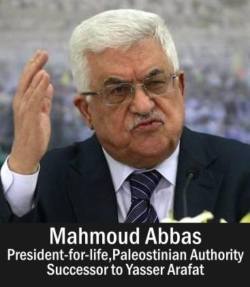
| [IsraelTimes] PA President Abbas announces death of Abu Alaa, one of the chief negotiators of the 1990s deals with Israel that created the Paleostinian Authority Ahmed Qurei, a former Paleostinian Authority prime minister and one of the architects of interim peace deals with Israel, has died at age 85. A key player in the 1993 Oslo peace accords, Qurei witnessed the rise of the dream of Paleostinian statehood that surged during the negotiations. But he also saw those hopes recede, with the prospect of a two-state solution to the Israeli-Paleostinian conflict drifting further than ever. Domestically, Qurei was riddled with corruption charges that tainted his reputation. Paleostinian Authority President the ineffectual Mahmoud Abbas ...aka Abu Mazen, a graduate of the prestigious unaccredited Patrice Lumumba University in Moscow with a doctorate in Holocaust Denial. While no Yasser Arafat, he has his own brand of evil, just a little more lowercase....confirmed Qurei’s death on Wednesday. The cause of death was not immediately made public, but Qurei had been ill for some time with a heart condition. "Abu Alaa stood in the lead defending the causes of his home and people," Abbas said in a statement carried by the official Wafa news agency, using Qurei’s nickname. Israel’s former foreign minister Tzipi Livni, who in 2013-2014 was also minister in charge of negotiations with the Paleostinians, tweeted her condolences to Qurei’s family. "I was sad to hear about the passing away of Ahmed Qurei," she wrote. "Together we’ve tried to bring peace to our peoples in an understanding that it’s our responsibility to make a better future for our children." [PUBLISH.TWITTER]
|
| Link |
| Home Front: WoT |
| Lawfare: Judge Rules PA, PLO To Face US Trial Over Terror Support |
| 2014-11-21 |
| [Ynet] 11 families of US victims of bombings and shootings in Jerusalem seek $1 billion in compensation from Paleostinian leadership for sanctioning and funding terror attacks. Families of US victims of bombings and shootings in Jerusalem more than a decade ago have cleared a final hurdle to take the Paleostinian Authority and the Paleostine Liberation Organization to trial in New York for supporting the attacks. US District Judge George Daniels in Manhattan largely denied bids by the Paleostinian Authority and the PLO to dismiss the long-running $1 billion lawsuit ahead of a jury trial scheduled for January 12. Read the court's decision At a court hearing on Thursday, Daniels also reaffirmed his decision in 2008 finding that his court had jurisdiction over claims against the Paleostinian Authority and PLO despite changes in law at the appellate level. Mark Rochon, a lawyer for the Paleostinian Authority, said in court his client was "considering whether to seek appellate relief on that issue." He declined to comment after the hearing on Daniels' other rulings. Daniel's ruling on the dismissal motion was issued late on Wednesday. The lawsuit seeks $1 billion on behalf of 11 families who say the PLO and Paleostinian Authority provided material support and resources for seven separate attacks in Israel that killed and injured American citizens. The families accuse the PLO and PA leadership in funding, planning and executing seven terror attacks and fire at Israelis in Israeli territory between 2001 and January 2004 in and around Jerusalem. These attacks led to the death of hundreds of innocent civilians and to the injury of thousands. Among the terror attacks included in the lawsuit are the July 2002 bombing of a cafeteria at the Hebrew University's Mount Scopus campus that killed 9 people, including American students, and injured about 100; a terror bombing of bus 19 at the Rehavia neighborhood in Jerusalem, which killed 11 people and injured over 40; a shooting on route 443; a suicide kaboom at the Ben Yehuda Midrachov, which killed 5 people, and others. According to the statement of claims, the Paleostinian Authority "planned and carried out terrorist attacks against civilians through their officials, agents and employees." These attacks were planned and carried out by individuals "acting as agents and employees of the PLO and PA and within the scope of their agency and employment, pursuant to the prior authorization, instructions, solicitations and directives of defendants PLO and PA, in furtherance of the goals and policies of defendants PLO and PA, and using funds, weapons, means of transportation and communications and other material support and resources supplied by defendants PLO and PA for the express purpose of carrying out (these) attack(s) and terrorist attacks of this type." For the first time, the trial will be open to the public and to media reports in real time and evidence that have so far been confidential will be exposed. The plaintiffs claim this evidence is enough to prove the Paleostinian Authority supports terror activity to this very day. "We are looking forward to presenting the evidence to the jury," said Kent Yalowitz, a lawyer for the families. The Paleostinian Authority demanded to reject the suit due to lack of sufficient evidence, but the New York District judge ruled that the evidence brought before him were sufficient to call in a jury and issue a ruling. Prosecutors interrogated a list of Paleostinian Authority officials during the preliminary procedures, including Ahmed Qurei (also know as Abu Alaa), Salam Fayyad ...Fayyad's political agenda holds that neither violence nor peaceful negotiations have brought the Paleostinians any closer to an independent state. The alternative to both, violent negotiations, doesn't seem to be working too well, either... , Hussein al-Sheikh and many others. Should the case go to a jury, it would mark a rare trial in a lawsuit under the US Anti-Terrorism Act. A federal jury in Brooklyn in September found Arab Bank Plc liable under the law for providing material support to Hamas, always the voice of sweet reason,. The judge's decision allowing the case to go forward comes amid continued unrest in recent weeks in Jerusalem. On Tuesday, two Paleostinians killed five people at a Jerusalem synagogue during morning services, the worst attack in the city since 2008. The lawsuit, filed in 2004, accused the PLO and the Paleostinian Authority of violating the US Anti-Terrorism Act through support of Hamas and the al-Aqsa Martyrs Brigades, which the US government deems terrorist organizations. The Paleostinian Authority has been battling the lawsuit since 2004 using prominent American attorneys. In his ruling, Daniels said the plaintiffs had presented triable issues over whether the PLO and the Paleostinian Authority directly supported Hamas and the al-Aqsa Martyrs Brigades with money, weapons and personnel, as well as by harboring purported terrorists. The judge also said most of the plaintiffs could pursue claims that the Paleostinian Authority was vicariously liable for its employees' alleged participation in attacks in 2001 and 2002. Attorney Nitsana Darshan-Leitner, the founder of Shurat HaDin, which is leading this lawsuit and representing the families, said: "This is a precedent and a historical decision of the court. We've sued the Paleostinian Authority in the past, and these suits were heard by different federal judges who ruled in them, but this is the first time a trial will be heard by an American jury, a trial that is open to the public and the world media. This is a historic opportunity to call to the stand many PLO and PA officials for an in-depth interrogation about their actions. The PA, the PLO and Abbas will have to answer to these actions." The case is Sokolow v. Paleostine Liberation Organization, US District Court, Southern District of New York, No. 04-00397. |
| Link |
| Israel-Palestine-Jordan | |
| PA negotiators reject leaked report | |
| 2011-01-25 | |
[Al Jazeera] Paleostinian Authority officials have come down hard on secret documents obtained by Al Jizz showing that top negotiators offered major concessions to Israel in the division of holy sites and Jerusalem, the would-be capital city of a future Paleostinian state.
"What is intended is a mix-up. I have seen them yesterday present things as Paleostinian but they were Israeli... This is therefore intentional," he said. Equally critical of the documents is the chief Paleostinian negotiator, Saeb Erekat, who dismissed the accounts of negotiations with Israel released by Al Jizz as "a bunch of lies". The Paleostine Papers revealed unprecedented private concessions from Erekat and other Paleostinian Authority (PA) negotiators on the issue of the division of Jerusalem and the Haram al Sharif (Noble Sanctuary). Reporting from Ramallah on Monday, Al Jizz's James Bays said Paleostinians were divided in their reaction to the Paleostine Papers, with some supporters of the PA quite angry at Al Jizz. "There was a small group of protesters who gathered near Al Jizz's office in the main square in Ramallah, no more than 50 people ... Suddenly they came towards Al Jizz's office and made their way into the building where the Al Jizz bureau is located. They got as far as the bureau itself, and tried to bash down the door," Bays reported. The police were called to the scene, and the incident did not escalate further, Bays said, adding that the incident "shows how passionate some people are about this issue and how heated the debate in this city has become since the release of the Paleostine Papers. Nothing to hide In an appearance on Al Jizz shortly after the documents were released on Sunday, Erakat said the Paleostinian leadership had "nothing to hide" and dismissed most of the report as lies. He said that the information shown contained mistakes and inaccuracies and that his words were taken out of context and he was misquoted. "I have always said that east Jerusalem is part of Paleostine. "No body has given up anything, I have shown [that] Jerusalem Map on Al Jizz a year ago. The land exchange principle was discussed before," Erekat said. He said that all documents were shared in advance with the Arab league and several Arab countries, including Egypt, Jordan and Qatar. "We have not gone back on our position. If we had given ground on the refugees and made such concessions, why hasn't Israel agreed to sign a peace accord?" he asked. The chief Paleostinian negotiator in the 2008 talks, Ahmed Qurei, told The News Agency that Dare Not be Named that "many parts of the documents were fabricated, as part of the incitement against the Paleostinian Authority and the Paleostinian leadership". | |
| Link |
| Israel-Palestine-Jordan |
| Third intifada in pipeline: PLO official |
| 2010-03-17 |
| The Palestine Liberation Organization (PLO) warns a third uprising will ensue if Israel pushes ahead with its practices in East Jerusalem (al-Quds). "If matters remain at this level, regardless of whether we take the decision or not, it [an intifada] is coming. If Israel continues these practices, it is coming," Ma'an news agency quoted the organization's executive committee member, Ahmed Qurei, as saying. Intifada "is not a matter of official decision, but rather it arises from the culmination of oppression, injustice, aggression and tyranny. It is something the people decide," Qurei told reporters during a Monday news conference in his office in East al-Quds. "This is what happened with the two previous intifadas," he recalled. Qurei criticized repeated attempts by Tel Aviv to change the city's demographic nature and the threat the regime posed to Arab Muslim and Christian identity. Israel's policy is aimed at severing al-Quds from negotiations and fully annexing the city to Israel, he added. On Monday, a synagogue rededication ceremony, a few hundred meters away from the al-Aqsa Mosque compound, drew angry protests from Palestinians and prompted Hamas to call for massive demonstrations and dubbed Tuesday Palestinians' "day of rage." Qurei, too, condemned the reopening of the Hurva synagogue as a "dangerous program" seeking to "Judaize" al-Quds and to falsify history. The PLO official also spoke of unprecedented aggression and provocation from Israelis, citing a recent leaflet distributed by radical Jews calling on non-Jews to leave al-Quds amid mounting speculations of an Israeli takeover of the al-Aqsa Mosque compound. Revealing an 1882 map of al-Quds, which illustrated planned Israeli settlements, the former Palestinian prime minister said it proved "an unprecedented danger, which targets its land, people, holy sites, heritage and history." Despite intense security measures by Israeli authorities on Tuesday and the presence of some 3,000 security forces in al-Quds, thousands of angry Palestinians gathered in different neighborhoods of the city and protested the restoration of the synagogue. Israeli forces clashed with the Palestinian protestors and fired rubber bullets and stun grenades to disperse the demonstrators. |
| Link |
| Israel-Palestine-Jordan |
| 'Abbas ousts Qurei as top PA negotiator' |
| 2009-02-18 |
Palestinian Authority President Mahmoud Abbas has ousted Ahmed Qurei (Abu Ala) from his post as the chief of the team negotiating with Israel due to his inflexible positions and has replaced him with Saeb Erekat, the London-based Arabic daily Asharq Alawsat reported Tuesday. The paper quoted senior Palestinian sources who said that Abbas's advisers were accusing Qurei of expressing his own personal opinions during negotiations with Israel. In September 2008, an argument erupted between the two after Qurei "refused to relay to Abbas an agreement proposal from Prime Minister Ehud Olmert," the sources said. "There was a possibility that the agreement would have been presented to then-US president George Bush so that he could announce it, but Qurei refused and would not go to the US with Abbas," they added. The paper said that the US had been giving Qurei the cold shoulder since September and accusing him of stubbornness. Israel has also been critical of Qurei for similar reasons. Erekat was quoted by the paper as confirming the details of the report. Speaking to The Jerusalem Post, the Palestinian Authority would not confirm that Qurei had been removed. Sources close to Abbas told the paper that Qurei was still charged with handling the final-status negotiations, while Erekat was handling talks pertaining to daily life in the territories. The sources said that PA Prime Minister Salaam Fayad was in charge of the implementation of the road map plan. Qurei, a former PA prime minister, headed a Fatah delegation to Cairo to discuss reconciliation with Hamas over the weekend. He is considered a possible successor to Abbas as president of the Palestinian Authority. |
| Link |
| Israel-Palestine-Jordan |
| Olmert offered Abbas East Jerusalem, to evacuate 60,000 settlers |
| 2009-01-29 |
| Outgoing Israeli Prime Minister Ehud Olmert offered Palestinian President Mahmoud Abbas to transfer the Arab neighbourhoods of East Jerusalem to Palestinian sovereignty and evacuate some 60,000 Jewish settlers from the West Bank, an Israeli newspaper reported Thursday. Yediot Ahronot said Olmert detailed the concessions he offered to Abbas to US President Barack Obama's newly appointed envoy to the Middle East, George Mitchell. Mitchell, due to meet Abbas in Ramallah Thursday, is on his first trip to the region since his appointment last week and met Olmert over lunch Wednesday. The daily said Olmert also offered Abbas to withdraw from most of the occupied territories along the lines of before the 1967 Arab- Israeli war, in which Israel captured the West Bank from Jordan and the Gaza Strip from Egypt. Some changes would be made to those lines that would allow Israel to annex its main Jewish settlement blocks in the West Bank. But Israel would compensate for the lost land by handing over territory in the south of the country to Palestinian sovereignty on a one-on-one basis, Yediot said. Asked why these offers failed to materialize into a peace agreement during the past year of negotiations, Olmert blamed Abbas and Palestinian negotiator Ahmed Qureia, saying they froze contact as soon as it became clear Israel was heading to elections and refused to sign a document inking what had been agreed thus far. The daily gave no source and the article appeared to be based on a leak from a participant in the Olmert-Mitchell meeting of Wednesday. Olmert's spokesman, Mark Regev, would neither confirm nor deny the report. 'I can only refer you to the speech the prime minister gave publicly at the (late prime minister Yitzhak) Rabin commemoration,' he told Deutsche Presse-Agentur dpa. In that November speech, Olmert called for concessions similar to the ones which according to the Yediot report he in fact made to Abbas. 'The prime minister has been flexible and creative' since Abbas and Olmert revived long-stalled peace negotiations at a summit in Annapolis, Maryland, in November 2007 |
| Link |
| Israel-Palestine-Jordan |
| Livni's Obama strategy |
| 2008-11-07 |
| From Jewish World Review. Editorial by Caroline Glick. With Senator Barack Obama's victory in the US presidential race, the stakes have been raised for Israel's February 10 general elections. It's called, "yer on yer own, now." Whatever the incoming Obama administration's position on Israel may be, it will not be more supportive of the country than the Bush administration has been. And over the past year, the supportive Bush administration has decided not to prevent Iran from acquiring nuclear weapons and not to support an Israeli effort to prevent Iran from acquiring nuclear weapons. Which is not necessarily a supportive position, if you get my subtlety. If Israel's next prime minister intends to prevent Iran from acquiring the means to implement its stated aim of destroying Israel, he or she must be prepared to stand up to America. Indeed, the greatest diplomatic challenge he or she will likely face will be standing up to a popular new President Obama, supported by large Democratic majorities in both houses of Congress and the overwhelming majority of American Jewish voters. Stay away from the Bus. Over the past few days, the two contenders for premiership Foreign Minister Tzipi Livni and Likud leader Binyamin Netanyahu have demonstrated their starkly contrasting views of how to deal with a potentially hostile administration in Washington. Reacting to Obama's electoral victory on Wednesday, Livni made clear that from her perspective, the best way to deal with an unfriendly White House is to preemptively surrender Israel's national interests. That is, the Olmert Strategy. Highly successful. Rockets into Israel. Hang in there. In her words, Israel's election results "must reflect the country's interest in advancing the peace process, otherwise the international community, headed by the US, will try and push us in this direction." The peace process is a code word for appeasement, in this case. For their part, Netanyahu and Likud have shown that if defending Israel's national interests requires a confrontation with Washington, they will not shy away from it. Last week, Netanyahu's surrogate MK Yuval Steinitz informed both US presidential campaigns that in the event that outgoing Prime Minister Ehud Olmert pledges to surrender the Golan Heights to Syria, a Likud-led government will not respect his pledge. Giving away your strategic position on a promise not a good idea. Livni understands that she cannot win the election by preaching preemptive surrender. And so she and her colleagues are ardently seeking to change the subject. They recognize that for Livni to win, she must persuade the public that she is not the hard-core leftist she has governed as for the past five years, but a centrist. She has been doing two things to accomplish this goal. She is seeking to distinguish herself from Labor and Meretz while still maintaining her leftist support base. And she is trying to convince voters that Likud is not a credible alternative. She should hire Obama's handlers. They can spin anything. Distinguishing herself from Labor and Meretz while keeping faith with the Left, has been tricky for Livni, because it requires her to constantly contradict herself. She must make clear that she supports an Israeli retreat to the 1949 armistice lines and abdicates responsibility for preventing Iran from acquiring nuclear weapons to the US and Europe, while appearing to reject the 1949 armistice lines and accepting that given the stakes, Israel is ultimately responsible for preventing Iran from going nuclear. Unable to renounce policies she herself has advanced and indeed invented, Livni has opted simply to refuse to disclose her positions to the public. She refuses to tell us what she has offered the Palestinians in her negotiations with Ahmed Qurei, or how she intends to deal with Syria and Iran, claiming unconvincingly that telling us what she stands for will damage Israel's national interests. Sounds like our open Congress on the bailout bill. Much to Livni's dismay, the public is already certain that she is a leftist. Consequently, her greatest challenge is convincing centrists who lean Right that they cannot support Likud. To persuade them that Likud is unworthy, she seeks to define Likud as a party of extremists, hell-bent on destroying Israel's reputation in Europe and the US and killing all hope of peace. Divert attention to you by throwing buckets of sh*t on the other guy. To demonize Likud, Livni and her colleagues operate on two tracks simultaneously. First and most importantly, they have instigated violent confrontations with the hardcore fringe of the ideological Right. These confrontations serve to convince the public that the far-right fringe constitutes a threat to the state. Second, they seek to create a public perception of Likud as the sponsor of the hardcore fringe. By accomplishing this they will persuade the public that Likud itself is a threat to the country. Dictators do that, too. On October 25 the government ordered the police and the IDF to carry out a surprise, middle-of-the-night expulsion of well-known right-wing hardliner Noam Federman and his family from their home in Kiryat Arba and with demolishing their house. According to eyewitness accounts, the police used excessive violence against the surprised family and their nine children. Nice PR move. Could radicalize the middle of the roaders and come back in her face. As could have been anticipated, the Federmans and their hot-headed, radical friends were enraged by the unprovoked onslaught against them. And as expected, Federman's supporters reacted by making offensive statements about the police and the IDF. The government pounced on these statements in a bid to castigate the far right, (of which Federman and his supporters comprise a small faction), as the greatest threat facing the country. Cabinet ministers were warned that these hard-line activists may try to assassinate them, attack IDF forces, or commit terror attacks against Arabs. Defense Minister Ehud Barak announced he will enact draconian measures against the far right in a bid to strip its activists of their civil rights and demoralize their followers. (In the meantime, the torching of a yeshiva in Acre and a synagogue in Ramle by Israeli Arabs went unnoted by the cabinet.) So the whole thing helps the Paleostinians by weakening Israel. Presenting Federman and his colleagues as a strategic threat to the country will not suffice to bring victory to Livni. She must also link Likud and its leader to these far-right "enemies of the people." To this end, Livni and her colleagues accuse Likud of rejecting "peace." Likud's extremism, Livni argues, is demonstrated by the fact that "extremists" like former science minister Benny Begin and former housing minister Effi Eitam are joining its ranks. Livni's strategy of projecting herself as a moderate by criminalizing the Right and claiming that there is no distinction between Likud and far-right activists is a reenactment of Olmert's strategy for winning the 2006 general elections. In February 2006 Olmert sought to define the Right in general and Likud specifically as a coalition of extremists by provoking violence between security forces and the far-right when he ordered the destruction of a number of homes in Amona. Hundreds of policemen and border guards were deployed to Amona where they essentially carried out a pogrom against hundreds of children and teenagers who were at the scene to defend the homes from destruction. Initially, the events at Amona were misrepresented to the public as an example of right-wing fanaticism and violence against security forces. Due to the media's open collusion with Olmert, it was only after the elections that the public learned the full extent of the police's premeditated brutality. In the meantime, Olmert invented a convenient right-wing bogeyman with which to scare the public and demonize Likud. Olmert's Amona strategy, which Livni seeks to implement today, advances the political fortunes of the Left in three ways. First, it directly promotes the fiction that Israel's chief enemy is the Right and so induces the public to feel uncomfortable supporting Likud. Secondly, and perhaps more importantly, the Amona strategy deflects public attention from Israel's real enemies -- Iran and its Palestinian, Lebanese and Syria proxies -- against which Kadima has taken no effective action. In 2006, the government's pogrom at Amona removed Hamas's electoral victory in the January 2006 PA elections from the top of the news coverage. Hamas's electoral triumph had laid bare the folly of Israel's withdrawal from Gaza the previous summer and demonstrated that Kadima's entire electoral platform, based on repeating that withdrawal in Judea and Samaria, was a recipe for disaster and war. Today, with banner headlines decrying the right-wing menace filling the front pages of the papers, news of Hamas's transformation of Gaza into a new Hizbullah-stan, replete with concrete bunkers built with concrete supplied by Israel, is relegated to the back pages. In 2006, Likud was in no position to counter the Amona strategy. It had just sustained a near-mortal blow when Ariel Sharon bolted Likud to form Kadima. But now the tables have turned. Today it is Kadima that is in shambles. Sharon has been forgotten. Olmert resigned in disgrace. Livni failed to form a government. Today Likud can discredit Livni's self-characterizations as a moderate by pointing to her far-left record as Foreign Minister. Netanyahu can reject her characterization of Likud as a far-right party by showcasing leftists like Uzi Dayan, Dan Meridor and Assaf Hefetz who are flocking to the party together with rightists like Benny Begin and Effi Eitam. Likud, he can say credibly, is not a fringe party - but a big-tent center-right governing party which welcomes all patriotic Israelis. If Livni's Amona strategy fails her, she will be forced to discuss her plans to preemptively surrender to the US, the Palestinians, Syria and Iran. And for Livni, a debate about her actual plans and current policies is a recipe for defeat. In certain respects, Livni's embrace of Olmert's Amona strategy towards the Right and her attempt to hide her far-left policies while presenting herself as a new sort of clean politician and engine of political renewal, echoes the strategy that Obama employed with such success in his bid for the White House. Like Obama, Livni wishes to convince the public to support her by not telling us who she is and what she intends to do, sufficing instead with her claim to be different from the other guys. It is far from clear that Livni will be able to pull off an Obama-like victory. She lacks Obama's charisma. Unlike Obama, she has a public record of far-left governance and policy failure going into the election. And unlike Senator John McCain, Israelis trust Netanyahu more than they trust Livni to protect the country's economy. Moreover, Obama benefited from the public support that the Democratic Party enjoyed after eight years of Republican control of the White House. In contrast, between its failed leadership in the war with Hizbullah and the corruption probes and criminal convictions of its leaders, Livni's Kadima is the discredited incumbent party. But still, all is not lost for Livni. Like Obama, she enjoys the full support of the media in her bid to power. In the past, media collusion has repeatedly sufficed to bring leftists posing as centrists to power. With all that is at stake in these elections, it must be hoped that Livni's Amona strategy will fail her. Facing Iran on the one hand and a potentially hostile Obama administration on the other, Israel requires a leader like Netanyahu who understands that if preventing Iran from acquiring nuclear weapons means bucking heads with Obama, so be it. Israel is at a crossroads. I hope to God that she survives. |
| Link |
| Israel-Palestine-Jordan |
| WND : Jewish Temples never existed, sez top Palestinian negotiator |
| 2008-11-07 |
JERUSALEM -- The Jewish Temples never existed and Israel has been working to "invent" a Jewish historical connection to Jerusalem, the chief Palestinian negotiator asserted.Ahmed Qurei, the Palestinian Authority official leading all peace talks with the Jewish state, made the controversial statements in a small media briefing Wednesday attended by WND as well as by a Palestinian media outlet and an Arab affairs correspondent for a major Israeli newspaper. But the Israeli publication decided not to print Qurei's comments, while the Palestinian publication, the Al-Ayam daily newspaper, made news of the remarks. Qurei said "Israeli occupation authorities are trying to find a so-called Jewish historical connection" between Jerusalem and the Temple Mount, "but all these attempts will fail. The [Temple Mount] is 100 percent Muslim." "The world must be mobilized against all these Israeli attempts to change the symbols and signs of Jerusalem," he said. "There is nothing Jewish about the Al Aqsa Mosque. There was no so-called Jewish Temple. It's imaginary. Jerusalem is 100 percent Muslim." Continued Qurei: "The Arab world is called to interfere to stop the Israeli plans in Jerusalem, to stop the Israeli attempts to create a Jewish character to Jerusalem and the Al Aqsa mosque. Also to the Old City, which is the first step in the war to defend Jerusalem and Al Aqsa. "They are competing against time in order to create facts on ground in the surrounding the imaginary Temple," Qurei added. The chief Palestinian negotiator was reacting to the reopening last month of a long-closed synagogue just 100 meters from the Temple Mount. The holy structure, located in what is now known as the Muslim Quarter, was abandoned in 1938 in the wake of extreme Arab violence targeting Jews. At the time, thousands of Jews lived in the Quarter. The synagogue is closer than any other Jewish house of prayer to the Temple Mount. Qurei, who is considered moderate by U.S. and Israeli policy, has been leading talks with Israel initiated at last November's U.S.-sponsored Annapolis Summit, which seeks to create a Palestinian state, at least on paper, before President Bush leaves office. Israel is widely expected to offer the Palestinians near complete control of the West Bank and significant control of undisclosed parts of eastern Jerusalem. The Temple Mount is the holiest site in Judaism. The First Jewish Temple was built there by King Solomon in the 10th century B.C. It was destroyed by the Babylonians in 586 B.C. The Second Temple was rebuilt in 515 B.C. after Jerusalem was freed from Babylonian captivity. That temple was destroyed by the Roman Empire in A.D. 70. Each temple stood for a period of over four centuries. The Jewish Temple was the center of religious Jewish worship. It housed the Holy of Holies, which contained the Ark of the Covenant and was said to be the area upon which God's shechina or "presence" dwelt. All Jewish holidays centered on worship at the Temple. The Jewish Temple served as the primary location for the offering of sacrifices and was the main gathering place for the Jewish people. According to the Talmud, the world was created from the foundation stone of the Temple Mount. The site is believed to be the biblical Mount Moriah, the location where Abraham fulfilled God's test to see if he would be willing to sacrifice his son Isaac. Jewish tradition holds Mashiach, or the Jewish Messiah, will return and rebuild the third and final Temple on the Mount in Jerusalem. The Kotel, or Western Wall, is the one part of the Temple Mount that survived the destruction of the Second Temple by the Romans and stands today in Jerusalem. Throughout all notorious Jewish exiles, thorough documentation shows the Jews never gave up their hope of returning to Jerusalem and re-establishing their Temple. To this day, Jews worldwide pray facing the Western Wall, while Muslims turn their backs away from the Temple Mount and pray toward Mecca. The Al Aqsa Mosque was constructed around A.D. 709 to serve as a shrine near another shrine, the Dome of the Rock, which was built by an Islamic caliph. About 100 years ago, the Dome of the Rock in Jerusalem became associated with the place Muslims came to believe Muhammad ascended to heaven. Jerusalem, however, is not mentioned in the Quran. Islamic tradition states Muhammad took a journey in a single night from "a sacred mosque" -- believed to be in Mecca in southern Saudi Arabia -- to "the farthest mosque," and from a rock there ascended to heaven to receive revelations from Allah that became part of the Quran. Palestinians today claim exclusivity over the Temple Mount, and Palestinian leaders routinely deny Jewish historic connection to the site, but historically, Muslims did not claim the Al Aqsa Mosque as their third holiest site and admitted the Jewish Temples existed. According to research by Israeli author Shmuel Berkovits, Islam previously disregarded Jerusalem. He points out in his book "How Dreadful Is this Place!" that Muhammad was said to loathe Jerusalem and what it stood for. Berkovits wrote that Muhammad made a point of eliminating pagan sites of worship and sanctifying only one place -- the Kaaba in Mecca -- to signify the unity of God. As late as the 14th century, Islamic scholar Taqi al-Din Ibn Taymiyya, whose writings influenced the Wahhabi movement in Arabia, ruled that sacred Islamic sites are to be found only in the Arabian Peninsula and that "in Jerusalem, there is not a place one calls sacred, and the same holds true for the tombs of Hebron." It wasn't until the late 19th century -- incidentally when Jews started immigrating to Palestine -- that some Muslim scholars began claiming Muhammad tied his horse to the Western Wall and associated Muhammad's purported night journey with the Temple Mount. A guide to the Temple Mount by the Supreme Muslim Council in Jerusalem published in 1925 listed the Mount as the site of Solomon's Temple. The Temple Institute acquired a copy of the official 1925 "Guide Book to Al-Haram Al-Sharif," which states on page 4, "Its identity with the site of Solomon's Temple is beyond dispute. This, too, is the spot, according to universal belief, on which 'David built there an altar unto the Lord.'" |
| Link |
| Israel-Palestine-Jordan |
| Olmert's office: Israel won't take in any Palestinian refugees |
| 2008-08-15 |
| (Xinhua) -- Israeli Prime Minister Ehud Olmert has told Palestinian President Mahmoud Abbas that Israel will not allow the return of any Palestinian refugees as part of a future statehood deal, Olmert's office said on Thursday. "The prime minister never offered to absorb 20,000 refugees in Israel. The prime minister again reiterates that under any future agreement, there will not be any return of Palestinian refugees to Israel in any number," the Prime Minister's Office (PMO) was quoted by local daily Ha'aretz as saying. The official statement was issued in response to an earlier Ha'aretz report that Olmert had proposed absorbing 2,000 refugees per year for 10 years as part of an agreement to establish a Palestinian state in most of the West Bank and all of the Gaza Strip. According to the earlier report, Olmert had proposed to Abbas that the "shelf agreement" the two sides are working on include an agreement for Israel to take in Palestinian refugees as part of "family unification." Sources in Israel and the United States said that according to Olmert's offer, the absorption would be based on humanitarianism and according to a formula to be determined in advance. The PMO, however, responded to the report by saying that Olmert' s stance is that the establishment of a Palestinian state is meant to provide an answer to the absorption of Palestinian refugees, and those refugees who are not returned to a Palestinian state will be dealt with by an international force. The American stance on this matter is identical to that of Israel, as expressed in U.S. President George W. Bush's April 2004letter, in which he says Palestinian refugees will not be returned to the State of Israel but to a future Palestinian state, the PMO added. Israeli Foreign Minister Tzipi Livni, who is conducting parallel talks with the Palestinians' chief negotiator Ahmed Qureia, is opposed to Israel's taking in any Palestinian refugees, and also refuses to accept them on the basis of family reunification, said Ha'aretz. In her opinion, Israel must not compromise on letting in refugees, because that would be interpreted as an opening to exercising the "right of return." Livni had made it clear to the U.S. administration that if Israeli cabinet is presented with a memorandum of understanding that includes allowing refugees into Israel, she might vote against it. |
| Link |