Hello !
| Africa Horn |
| Tigray and Hell: Civil War Breaks Out Again in Ethiopia |
| 2026-10-07 |
| Direct Translation via Google Translate. Edited by Leonid Tsukanov [Regnum] In Ethiopia, leaders of the rebel Tigray People's Liberation Front (TPLF) and allied groups have declared war on the federal government and seized several strategic infrastructure facilities in Tigray state and surrounding provinces. ![]() Although Ethiopian federal forces were subsequently able to recapture some of the opposition's gains, they have yet to fully stabilize the situation. Against this backdrop, Addis Ababa is seeking instigators of the conflict not only within the country but also abroad. DEFROSTING THE OLD CRISIS Over the past few months, tensions have gradually escalated between Addis Ababa and the armed opposition leadership. Both sides have repeatedly accused each other of violating the 2022 Pretoria Agreement, which ended the two-year conflict between the center and the autonomous region. In May 2025, the TPLF made a public demarche and restored the previously dissolved regional administration, appointing the movement's chairman, Debretsion Gebremichael, as the local president. This created a public counterweight to the Interim Regional Authority, governed from Addis Ababa. In the particularly volatile regions of Ahmar and Tigray, limited clashes and skirmishes have become more frequent, and in August, a group of TPLF militants attempted to break through into Sudanese territory, but were stopped by armed forces. Despite this, the Ethiopian government insisted that the situation remained under control. Nevertheless, in reality, the conflict was approaching another acute phase. One of the most obvious signs was the unification of seven major rebel groups into a military-political coalition on September 21. It was called the "Ethiopian People's Alliance for Survival" and included the "Tigray People's Liberation Front" (TPLF) and the "Amhara Fano National Movement", which had previously fought among themselves. In addition to them, the alliance included groups from Oromia, Afar, Benishangul-Gumuz and the Somali region, which made it possible to create a basis for an offensive along a broad front line against government forces. The Alliance members declared the strategic goal of cooperation to be the removal of the government of Prime Minister Abiy Ahmed, whom they accuse of attempting to “erase the identity of the peoples of Ethiopia,” and the creation of a transitional administration. Addis Ababa viewed these statements as a deliberate escalation—previous similar alliances had been formed by opponents shortly before the start of major campaigns—and began gradually concentrating additional forces near the rebel areas. The Alliance managed to act preemptively. On September 23, armed opposition units, under the pretext of a "defensive war," launched a large-scale offensive in Tigray and quickly took control of Mekelle Airport, the region's key air hub. Later, the rebels also captured the Shire and Axum airports and several major road junctions, completely cutting off Tigray's communications with the rest of the country. The rebels launched an offensive against government positions in the neighboring Afar and Amhara regions, successfully driving federal forces out of some settlements. SHORT-LIVED DOMINANCE The military alliance in Tigray gave the TPLF a temporary opportunity to seize the initiative, creating pressure on several front lines and forcing the Ethiopian federal forces to spread their forces over long distances. For the first few days, Alliance flying squads wedged themselves into the gaps between government forces and quite effectively attacked their flanks, as well as cutting off important communications. During one of the raids, the rebels even managed to destroy the field headquarters of the Ethiopian National Defense Forces and capture two senior commanders from the 61st Division of the 803rd Corps. However, the Alliance began to be gradually torn apart by internal contradictions, which the Tigray opposition agreed to temporarily forget until the overthrow of Ahmed's government. In particular, the "Gumuz People's Democratic Movement," which was allegedly intended to attack federal positions from the north and west, declared no grievances against Addis Ababa that would necessitate the creation of an armed wing. Elders, however, called reports of joining the "Alliance" "incitement to a major war" and promised to find those who spread this "rumor." The situation is even more interesting for the Ogaden National Liberation Front, which has effectively split in two: some of its factions have declared their allegiance to Addis Ababa and have sent supporters to help the TPLF, while others have declared their loyalty to Addis Ababa and will remain neutral in this war. The remaining groups, one after another, began to appeal to the TPLF with appeals and complaints, demanding that numerous territorial, ideological, and financial disputes between the factions be resolved “on the shore.” This significantly slowed the advance on the capital and gave federal forces the opportunity to regroup. By September 27, government troops had already launched an offensive, driving the rebels out of several major cities and forcing them to retreat in the Sama, Sekota, and Alamata regions. Over the next few days, the Alliance lost almost a third of the territory gained in the initial stages of the campaign. And in early October, federal forces recaptured Mekele, the capital of the Tigray region, forcing the rebels to retreat northwest. However, the TPLF leaders have no intention of engaging in global cooperation. Moreover, they are seeking sophisticated ways to remind the central authorities that their reach is long. On October 1, Tigray opposition supporters launched several suicide drones toward the capital, attempting to strike local military and industrial facilities. SEARCH FOR SPONSORS Ethiopia's central authorities are convinced that Tigray erupted with the help of outside interests. Addis Ababa has placed the primary blame on Eritrea, with which relations have teetered on the brink of open conflict for many years. Already on the second day after the fighting began, Ethiopian Army Chief of Staff Birhanu Jula stated that Eritrea was financing and supporting the armed alliance that had formed in Tigray and was inciting it against Addis Ababa in order to curb Ethiopia's development. Afar Governor Awol Arba went even further. He accused the Eritrean armed forces of invading the region and claimed they were trying to cut the road connecting Djibouti and Ethiopia. Although there is no official confirmation yet of the participation of Eritrean special forces in fighting on the rebel side, harsh measures were taken against their neighbor in advance. In early October, Ethiopia closed its embassy in Asmara and expelled ten Eritrean diplomats. Eritrea responded by announcing the severance of diplomatic relations. However, Eritrea is not the only country on Ethiopia's list of potential enemies. Sudan has also received its share of accusations. Specifically, the Prime Minister's Office claims that Sudan provided a space for contacts and coordination between Addis Ababa's opponents, and that several meetings of the leaders of the new "Alliance" took place in Port Sudan several weeks before the fighting began. Here, Ethiopia makes the reservation that Sudan could hardly be the main sponsor of the opposition in Tigray, including because it is forced to spend a significant portion of its resources on containing its own civil war. Finally, Ethiopia considers Egypt an indirect stakeholder. For Cairo, the potential destabilization of Addis Ababa represents a chance to disrupt the commissioning of the Grand Ethiopian Renaissance Dam, a megaproject that threatens to alter the course of the Nile and, consequently, deplete the Arab Republic's agricultural land. However, Addis Ababa believes that, despite the “machinations of its neighbors,” it is still capable of winning the war in Tigray in a short time. |
| Link |
| Africa North |
| The Aswan Turn: How Moscow Won the Battle for Africa Against the US and Britain |
| 2026-07-20 |
| Direct Translation via Google Translate. Edited by Kirill Semenov [REGNUM] On July 19, 1956, US Secretary of State John Foster Dulles bluntly told the Egyptian ambassador in Washington: The United States was withdrawing its offer to loan Egypt a loan for the construction of the first phase of the Aswan Dam. The Americans had rescinded the agreement concluded just six months earlier. Britain followed suit. This triggered Egypt's "turn" toward Moscow and became one of the key episodes in the history of the West and the USSR's struggle for Africa. ![]() From 1914 to 1952, Great Britain was the ruler of Egypt. At the beginning of World War I, the British seized the Ottoman Empire's holdings on the Nile. Until 1922, the world's oldest country was officially a protectorate of the British Empire. Then, London declared its possession de jure "independence," but in essence, the Kingdom of Egypt remained a British colony. A British military contingent was stationed at the Suez Canal, which was jointly controlled by Great Britain and France. The first low-head dams on the Nile (including the 53-meter-high Aswan Dam) were built by the British in the early 20th century to boost Egyptian agriculture profits for London firms. By 1952, Alexander Gibb & Partners had developed a design for a new Aswan High Dam, several dozen meters higher. But in July of that same year, 1952, the Young Officers' Movement overthrew King Farouk. General Mohammed Naguib was considered the leader of the conspirators (he officially headed the new regime), but the driving force behind the coup was 34-year-old Lieutenant Colonel Gamal Abdel Nasser. The monarchy was abolished, making Egypt the first internationally recognized republic in the Arab world and a model for young officers in neighboring countries. The republican regime "nullified" British control and initially pursued a multi-vector policy, building relationships with both Washington and Moscow. Part of US President Dwight Eisenhower's team believed that Egypt could be firmly anchored within the US sphere of influence, given that the first head of the Revolutionary Command Council, Naguib, had persecuted the local Communist Party. Neighboring Israel, which emerged in 1948 under the joint auspices of the USSR and the US, was more oriented toward the Americans in 1950. But in 1954, General Naguib was ousted from power by the less predictable Nasser. Secretary of State Dulles viewed him with suspicion, considering him a "reckless and dangerous nationalist." In reality, Nasser acted pragmatically. As declassified documents and memoirs, including the work of Nasser's advisor Mohammed Heikal, attest, Cairo sought American arms and economic aid. CAIRO MAKES A CHOICE But in February 1955, Britain, seeking to punish Egypt for its out-of-control behavior, canceled the arms contract. Just a month later, a Czechoslovak trade delegation arrived in Cairo. Czechoslovakia served as a hub for Soviet arms shipments to Third World countries. In September 1955, Egypt and Czechoslovakia signed a contract worth $400 million at the time ($5 billion today), under which the Arab Republic received 230 modernized T-34s, 200 BTR-152s, and 150 MiG-15s and MiG-17s. Under the same deal, Poland sold Egypt six submarines and two destroyers. The Warsaw Pact countries were clearly guided by Moscow. Two months after the "Czechoslovak deal," in December 1955, Dulles, on behalf of the White House, announced that the United States, together with Britain, would provide Egypt with nearly $70 million in aid (equivalent to $875 million in today's money) for the construction of the Aswan Dam. This was sealed with an agreement in February 1956. But in July, Washington abruptly backtracked. Dulles attributed the demarche to "difficulties in agreeing on financial details." In reality, it was an attempt to "bring Nasser to his senses," who by that time had recognized China and established diplomatic relations with Beijing. The plan, apparently, was for a new coup. But Nasser had already firmly established his grip on power. And then, in July 1956, he nationalized the Suez Canal—a blow to the interests of the British (and, by extension, the French), who still controlled this critically important artery. In the fall, Britain, France, and Israel, who had joined them, attacked Egypt. This was a rare instance in which the United States did not support its partners. The United States and the USSR essentially found themselves on the same side of the barricades with Cairo. Eisenhower was dissatisfied with the actions of British Prime Minister Anthony Eden and French Premier Guy Mollet, who carried out the military operation without consulting the White House, especially during the US election campaign. The White House also distanced itself from Israel, which at that time was not yet considered a strategic partner in the region by Washington. But Soviet political and military assistance at a critical moment proved a more profitable investment than American "carrot and stick." Nikita Khrushchev decided to finance and build the Aswan Dam—the project began in 1960 with the participation of Soviet loans, equipment, and specialists. Ultimately, this undermined the US position and rendered American blackmail untenable. As researcher Raymond Garthoff noted, Washington's abandonment of the project was a significant geopolitical miscalculation. The USSR, rushing into this breach, did not give the Americans a chance to win back on more favorable terms. Egypt found itself within the Soviet sphere of influence for the next 20 years. This success became the basis for expanding the Soviet presence in Africa. ALGERIA, GUINEA, AND EVERYWHERE ELSE Europeans built only the infrastructure that supported the export of raw materials from the colonies. Railways and highways ran exclusively from mines or plantations to ports, severing the internal connectivity of the territories. Energy production served only Western concessions. The West deliberately maintained backwardness, failing to develop processing industries or domestic infrastructure. The former metropolitan powers maintained this policy even after the colonies declared independence. Moscow offered another option: development assistance in exchange for loyalty (which also included the possibility of a military presence). The USSR played a significant role in Algeria, where the war for independence against France was raging. The National Liberation Front (FLN) initially focused on supporting Western leftist forces. However, in March 1956, the French Communist Party voted in parliament to grant "special powers" to Guy Mollet's government for action in Algeria. This move significantly limited the FLN's ability to gain support in Europe and opened the door to cooperation with Moscow. The Soviet Union deployed diplomatic and material support to the FLN. At the UN, Moscow blocked France's attempts to classify the Algerian conflict as an internal matter, seeking recognition of the Algerians' right to self-determination. The USSR became one of the first countries to de facto recognize the FLN and open an office in Moscow. Supplies of weapons and equipment went through Tunisia, Morocco and other countries, often with the assistance of other socialist states. After Algeria gained independence, Soviet involvement was not limited to political support. A gigantic steel mill was built in Annaba, with the direct participation of Soviet specialists. For Paris, this was the final blow to the colonial model. The former colony gained the opportunity to produce its own steel, breaking the long-standing monopoly of European industrial concerns. Guinea is another example. In 1958, in a referendum proposed by Charles de Gaulle, the country was the only one to vote against association with France and achieved immediate independence. Paris imposed a massive blockade: all equipment, down to telephone exchanges and light bulbs, was removed from the country, financial accounts were frozen, and technical assistance was cut off. The USSR promptly recognized Guinea and sent humanitarian aid, including grain. Soviet specialists participated in restoring communications, building roads, creating energy capacity, and exploring bauxite deposits. Unlike the French, who exported the raw material, the USSR helped Guinea establish a base for its primary processing. The airport in Guinea's capital, Conakry, has become an important hub capable of handling military transport aircraft. Since 1971, ships from the Baltic and Black Sea fleets have been stationed off the republic's coast—ostensibly to protect vessels from our fishing fleet. The Republic of Guinea became a rear base for leftist guerrillas from neighboring Portuguese Guinea (now Guinea-Bissau). Conakry served as a transit point for arms, ammunition, and food supplies for rebels in another Portuguese colony, Angola, for the Moscow-aligned MPLA movement. When the 1974 revolution in Portugal itself brought down the world's oldest colonial empire, Angola and Mozambique gained independence. In both countries, a proxy war unfolded between the Soviet and Western blocs: Moscow supported the leftist regimes of the MPLA and FRELIMO parties, while the United States and South Africa stood behind the rebel groups (UNITA in Angola, RENAMO in Mozambique). The USSR provided its allies not only with military protection, including the deployment of Cuban troops, but also with extensive civilian aid. Soviet specialists restored hospitals destroyed by the war, built schools, and assisted with agricultural mechanization and the integration of power grids. In Ethiopia at the same time, in the mid-1970s, the Egyptian scenario was reproduced. The country was one of the key American footholds in the region: the US supplied weapons, trained the officer corps, and conducted intelligence. In 1974, the Derg military regime came to power under Mengistu Haile Mariam, who himself had studied in the US and had ties to the Americans. The new government, by inertia, oriented itself toward Washington and attempted to retain military aid from there. But the Jimmy Carter administration began blackmailing the new leadership with unacceptable conditions. It was the same reflex Dulles had in 1956: refuse aid and wait for the new regime, out of desperation, to accept American demands. The culmination came with the Ogaden War of 1977–1978, when Somali leader Siad Barre, previously a Soviet ally, attacked Ethiopia, which was also increasingly turning toward the USSR and was potentially a more valuable military-strategic ally than Somalia. Moscow made a sharp turn: it severed relations with Mogadishu and launched a large-scale operation to rescue the regime in Addis Ababa. Thousands of Cuban troops, Soviet weapons, and military advisers were deployed to the country. Ethiopia retained its territorial integrity and became Moscow's main ally in East Africa for the next 15 years. Soviet engineers built dams (including Genale Dawa), roads, industrial plants, and agricultural facilities, integrating disparate regions into a unified economic space. In parallel with infrastructure projects, the USSR implemented a major program for training national elites—from engineering to political and military personnel. The events of 1956 became the "matrix" for Africa's further pivot toward the USSR. The former colonial powers were unwilling to offer the African Continent an attractive development model. The Americans were let down by their "Atlantic solidarity." An orientation toward Moscow proved more advantageous (indeed, mutually beneficial)—even if it meant swearing allegiance to the ideas of Marxism-Leninism. Modern Russia, in building ties with African countries, is building on the foundations laid during that period. Infrastructure, economic, and educational ties established between the 1950s and 1970s continue to influence the configuration of relations. The proven idea of a joint fight against neocolonialism is being complemented by a new concept of a multipolar world. The lesson of 1956 is that countries in the Global South respond to offers of infrastructure development, technological cooperation, and respect for their sovereignty, rather than to financial constraints and political ultimatums. Russia, returning to the African continent with new projects in nuclear energy, logistics, and security, is developing this area based on historical experience that has proven its effectiveness and relevance. |
| Link |
| Africa Horn | |
| Jubaland officials report that 17 Shabab militants were killed and several others captured during a raid in Jilib town | |
| 2026-01-06 | |
Text: Jubaland’s intelligence agency conducted a nighttime operation in Jilib town, led by Jubaland’s Gashan units with support from Danab commandos. The raid targeted Hargeysa Yarey village and Jilib town, which is considered to be Al-Shabab’s de facto HQ in Somalia.
Related: Jilib: 2025-12-23 Jubaland’s Hanqadh intelligence forces move against Al-Shabaab remnants in Badhaadhe Jilib: 2025-12-16 Strategic town Camsuma and surrounding villages have fallen to Jubaland and SNA Danab forces Jilib: 2025-12-07 The end of Al-Shabaab in southern Somalia may be approaching | |
| Link |
| Africa Horn |
| ONLF accuses Ethiopian Army officer of killing 4 in Kebri Dehar city |
| 2023-06-21 |
| [GOOBJOOG] Æthiopia’s Ogaden National Liberation Front (ONLF) has claimed that an Æthiopian National Defense Forces (ENDF) officer indiscriminately fired at civilians Kebri Dehar city, in Somali regional state, killing at least four people. In a statement via tweeter, the opposition party further claimed that three of the four victims killed by the soldier were its members, while the remaining one was a local official of the ruling Prosperity Party (PP). According to the ONLF, two others were also injured in the incident which took place this morning. "This is no isolated incident — last May, a similar terror struck the same town, injuring two young lives. Today, the rampage continued unabated for over an hour, leaving 8 more victims in its wake before the perpetrator was stopped after damage," OLNF said, and called on "the federal government and the Æthiopian army for immediate, concrete, and effective actions to cease these violations." It further said that "absence of definitive action against these assaults could risk inciting rebellion among the Somali people. "The message is clear: Enough is enough. Our patience shouldn’t be mistaken for weakness." The party did not provide the names of victims," the ONLF’s statement adds. |
| Link |
| Africa Horn |
| Ethiopia cancels Chinese oil explorer contract over unfulfilled ultimatums |
| 2022-09-23 |
Consequences because China is asshole. [Garowe] POLY-GCL Petroleum Group Holding Limited- a Chinese-based oil and gas exploration firm has had its canceled by the Æthiopian government over unfulfilled ultimatums.According to Takele Uma Banti, Æthiopia’s Minister of Mines & Petroleum, the Chinese firm was issued with a list of conditions that they were supposed to meet in order to continue exploring the oil and gas Ogaden Basin, in the Somali regional state. The government earlier this year issued a letter of an ultimatum with a list of conditions to POLY-GCL Petroleum Group Holding Limited that were to be met by the company relating to its activities in the oil resource-rich region. According to a statement by on "Takele Uma Banti’s Twitter post "In accordance with the successive notices the Ministry has issued in the past and in full compliance with the PPSAs and the laws of the land, the termination has now been fully effected.1/2." The Ministry warned the company that failing to comply with the ultimatum will result in the "termination of the PPSAs without a need for further notice." Takele further added that "As long as the financing that would enable to develop the oil and gas fields the Ministry is open for mutual and expeditious settlement." POLY-GCL has been exploring petroleum & natural gas in the Ogaden basin since 2013. On June 28, 2018, it officially started crude oil production tests in the Hilala oil fields in the presence of regional officials and representatives of the federal government. The Chinese firm was praised as an important milestone in the history of oil & gas exploration in Æthiopia with Prime Minister Abiy terming it a successful venture for the country. Four years later the government issued a warning letter to the company citing its failure to meet the government’s plans. |
| Link |
| Africa Horn |
| Somalia's cabinet absolves ONLF as terrorist group |
| 2022-01-24 |
| [Garowe] Somalia's cabinet on Sunday approved a resolution rescinding a decision that recognized Ogaden National Liberation Front [ONLF] as a terror organization, a move that had previously created a rift between the group and the government of Somalia. During the administration of former Prime Minister Hassan Ali Khaire, the government of Somalia subjected ONLF to scrutiny following differences between the group and the regional leadership of the Somali region in Æthiopia. From 2017 onwards, the group has been treated we snuffies in Somalia but has been fighting to clear its name. And on Sunday, the Somali cabinet also declared rendition on ONLF commander Abdikarim Qalbi Dhagah on August 28 to Æthiopia "illegal". During voting, 21 ministers voted in favor of ONLF while one voted against and another one abstained. ONLF has been fighting the administration of Somali region President Mustafa Omer, who is accused of mistreating the group. In a tweet, ONLF welcomed the decision adding that the cabinet did "justice" to the group. The group also termed the resolution by Somalia's cabinet as a landmark adding that the Ogaden region will forever cherish it. "The Cabinet of Somalia has rescinded the decision of the previous Cabinet in 2017 which decreed that ONLF was a terrorist organization and the rendition of Abdikarin Sh Muse -An EC member was legal. Now The Cabinet acknowledged the miscarriage of justice that occurred," read the statement. "ONLF commends The PM of Somalia and his cabinet. This is a historic landmark decision that the Somali people in Ogaden will cherish for centuries to come. This is a lesson to those who transgress against the just rights of peoples." Æthiopia closely works with outgoing President Mohammed Abdullahi Farmaajo of Somalia and the group has been critical of the leadership of Prime Minister Abiy Ahmed. ONLF has been battling to seize power in the Somali region popularly known as Ogaden. Related: Ogaden National Liberation Front: 2018-11-30 ONLF Senior Leadership To Arrive In Ethiopia On Saturday Ogaden National Liberation Front: 2014-06-09 Al Shabaab denies ties with Ethiopian rebels Ogaden National Liberation Front: 2014-02-04 Two police officers arrested over abduction of Ethiopian officials |
| Link |
| Africa Horn |
| ONLF Rebel Group Abandons Arm Struggle |
| 2019-02-04 |
| [RADIOSHABELLE] The Ogaden National Liberation Front ...the Turkic paramilitaries intended to replace with their native jihadi ferocity all the highly trained Turkish soldiers Sultan Erdogan I the much belovedhas jailed in the last few years for not worshipping the ground he walks upon. The Uighurs and so forth who did not join Al Nusra or ISIS seem to have ended up here... (ONLF) in Æthiopia will be fully abandoning arm struggle in the coming few days, says a top Somali region official. The Front has agreed to fully disarm and engage in a peaceful political dialog by fully abandoning its decades old arm struggle strategy, according to Mustafa Mohammed Omar, the recently appointed Deputy President of Somali region of Æthiopia. Mr. Mustaffa, who took over the leadership of Somali region from Abdi Illey a few months ago told the state broadcaster ‐ ETV that I the coming few days the ONLF will be fully disarmed. It is indicated that The Front made the decision following the agreement recently reached with the federal government to abandon the arm struggle and fully focus on peaceful political discourse. "...Because of the political change in Æthiopia and they are convinced that the current condition is conducive for them to advance their political struggle peacefully...In the coming three four days they will fully move their force to the government and the issue will be resolved," Mustafa said. So far many of the gang members are already disarmed voluntarily because they are convinced that there is a space for them to pursue peaceful political discourse in Æthiopia. The people in Somali region of Æthiopia have been suffering for long and deserve peace and development, according to Mustafa. |
| Link |
| Africa Horn |
| ONLF Senior Leadership To Arrive In Ethiopia On Saturday |
| 2018-11-30 |
| [RADIOSHABELLE] A 20-member delegation composed of big shotship of the Ogaden National Liberation Front (ONLF) will arrive in Æthiopia on Saturday. Among members of the delegation include chair of the Front, Mohammed Umar, according to Spokesperson of ONLF. The Front’s army last week returned to the Somali regional state from their base in Eritrea ...is run by the People's Front for Democracy and Justice (PFDJ), with about the amounts of democracy and justice you'd expect from a party with that name. National elections have been periodically scheduled and cancelled; none have ever been held in the country. The president, Isaias Afewerki, has been in office since independence in 1993 and will probably die there of old age... after the ONLF had reached an agreement with the government of Æthiopia. The government and the Front signed a peace deal in the Eritrean capital Asmara last month. The two sides reached a historic deal that allowed the ONLF to undertake peaceful political struggle in Æthiopia. |
| Link |
| Africa Horn |
| Kenya Puts Bounty In Hunt For Suspected Al Shabaab Members |
| 2017-10-09 |
| [RADIOSHABELLE] The Government has in the last two years placed over Sh100 million bounty on heads of about 35 wanted terror suspects. The money is for reward on information leading to arrest of most wanted Al-Shabaab ... Somalia's version of the Taliban, functioning as an arm of al-Qaeda...militia. While some suspects have either been placed in durance vile Please don't kill me! or killed by security agents in Kenya and neighbouring Somalia, many still remain in hiding. A security bigshot privy to the Anti-terrorism operations told Sunday Standard that the bounties have had a great impact in tracking some terrorists. Mohammed Mohamud alias Mohammed Kuno, a Kenyan al-Shabaab leader is said to have led the heinous Garissa University College massacre in which 147 people were killed in April 2015. He holds the highest bounty at Sh20 million. The suspect, also known as Dulyadin Gamadhere, hails from the Ogaden tribe in Garissa County. He has been linked to several terror attacks in the country, including the September 2013 Westgate Shopping Mall raid in which 67 people were killed. |
| Link |
| Africa Horn |
| Backgrounder: 'Gentle' Ex-Teacher Accused of Masterminding Kenya Massacre |
| 2015-04-05 |
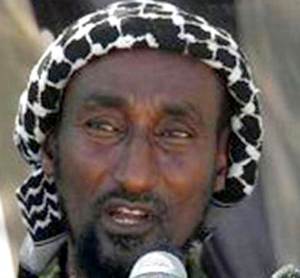
[AnNahar] Kenyan police have named homegrown myrmidon Islamist Mohammed Mohamud, a soft-spoken former teacher, as the alleged criminal mastermind of the massacre of 148 people in a university in Garissa.Known also by the alias "Kuno", as well as "Dulyadin" and "Gamadhere" -- meaning "long armed" and "ambidextrous" -- the alleged Shabaab member is also wanted in connection with a string of recent cross-border killings and massacres in Kenya's northeastern border region. Police have offered a 20 million shilling ($215,000, 200,000 euro) bounty for information leading to his capture. Mohamud is a Kenyan national and an ethnic Somali -- like more than two million other Kenyans or some six percent of the population. The minority mainly lives in the country's vast, impoverished and arid northeast, where Garissa is one of the largest towns. Kenya's ethnic Somali region is also claimed by the Shehab as part of Somalia itself, and has long been lawless, including the brutal secessionist 1963-1967 "Shifta war". While Mohamud, thought to be in his late 50s, did not take part physically in the Garissa attack, students who survived the massacre described the attackers as men like him: speaking Kenya's Swahili language well, with some suggesting they may have been Kenyan too. One of those tossed in the clink Youse'll never take me alive coppers!... [BANG!]... Ow!... I quit! of suspicion of supporting the gunnies include a Tanzanian -- found hiding in a ceiling with grenades -- and a university security guard, a Kenyan ethnic Somali, according to the interior ministry. Mohamud was reportedly born in Æthiopia into the powerful Somali Ogaden clan, which controls the region where Æthiopia, Kenya and Somalia meet. Photographs show a slender man with a short beard. Kenyan police sources say he was a teacher and then headmaster of a madrassa in Garissa, but later became radicalized and crossed the mostly non-existent border into southern Somalia to join the Islamic Courts Union, a precursor to the Shabaab. An AFP correspondent who met him in the Somali capital Mogadishu in 2008 and 2009, when the majority of the city was under Shabaab control, said Mohamud was a well-known and hardline commander. He commanded a much feared Islamist unit in Mogadishu called the "Jugta-Culus" -- or "heavy strikers", who carried out some of the toughest fighting. Mohamud, however, also appeared in person as educated as well as "quiet and gentle". He appeared in several propaganda films showing Shabaab battles in southern Somalia, and later was a commander in the southern Somali Ras Kamboni militia, under the warlord Ahmed Madobe, a former Islamist commander turned Kenyan ally. In the murky world of Somali gangs, politics and clan loyalties, Madobe's forces helped Kenyan forces seize the key port of Kismayo in 2012. While Mohamud is on the run, Madobe now leads southern Somalia's Jubaland region. But under pressure on their home soil, the Shabaab have reached into Kenya to carry out attacks and find recruits among disaffected youth in the Moslem-majority coastal and northeast regions. In November, the Al-Qaeda-affiliated group grabbed credit for holding up a bus outside Mandera, separating passengers according to religion and murdering 28 non-Moslems. Ten days later, 36 non-Moslem quarry workers were also massacred in the area. A Shabaab statement on Friday warning Kenyans of further bloodshed, said the gunnies carried out the Garissa attack in Dire Revenge for the "systematic persecution of the Moslems in Kenya". Attacks cited include Kenya's 1984 Wagalla massacre, when Kenyan troops trying to put down local conflict killed an unknown number of people - officially less than a hundred, while others claims up to 5,000 people. Cash rewards for other Shabaab commanders -- offered by the U.S., and unlike Mohamud's bounty, in the millions of dollars -- are believed to have led to information that have resulted in a series of air strikes in Somalia to assassinate them. |
| Link |
| Africa Horn | |||||
| Al Shabaab denies ties with Ethiopian rebels | |||||
| 2014-06-09 | |||||
| MOGADISHU -- Al Qaeda linked Al Shabaab group has denied it maintains links with Ethiopian ONLF rebels following reports of coordinated insurgency against Ethiopian-AMISOM peacekeepers in southern Somalia, Garowe Online reports. Speaking with Somali media, Al Shabaab operations spokesman Abdiazis Abu Muscab said the purported relations between Al Shabaab and the faction operating in Eastern Ethiopia, ONLF are nonexistent.
A spokesman for Ogaden rebels has strongly contested remarks by Tool, saying they operate inside Ethiopia. | |||||
| Link |
| Africa Horn |
| ONLF, Al Shabab fought against Somalia Army in Bakool region |
| 2014-06-05 |
The upshot of this article is that a non Al Qaeda group in the Pgaden region is helping an Al Qaeda group against the Somali government.Here is what Wikipedia sez. Here is what the ONLF sez about themselves. The Al Qaeda-linked group of Al Shabab and the Ogaden National Liberation Army [ONLF] fought against Somalia National Army and the African Union Forces in Bakool region in recent weeks' fierce battle that killed more than 40 people, according to Bakool Governor Mohamed Abdi Tool. The governor said the ONLF which is an armed militia that fought against Ethiopia crossed into Somalia and helped the militant group in Aato district near the Ethiopian-Somali border. "We have credible information about ONLF's involvement in the fight last week," Mr Tool said. Al Shabab group carried out a deadly attack on army bases in Aato village last week. The joint forces of Somalia and Ethiopia then launched a massive operation on several towns where the militants were hiding. If confirmed, this is the first direct battle by Al Shabab and ONLF carried together on Somalia Army bases in Somalia. Al Shabab is a jihadist militia based in Somalia. In 2012, the group joined the Al-Qaeda network as a cell but ONLF is a separatist rebel group fighting to make the region in eastern Ethiopia (known as Ogadenia) an independent state. |
| Link |