Posted by: Whiskey Mike ||
06/06/2026 14:56 Comments ||
Top||
#9
The Beguiling Piling: A Low, Slow Soliloquy
"All alone and for many a year
Have I pined here! *sheds creosote tear*
Finally, some beaming monkey,
It seems, finds me hunky?
She's cheerful... but hardly a peer."
JNIM militants looting weapons from captured Malian military bases. This provides the militant group with a steady stream of military grade hardware, enabling them to expand operations across the Sahel. pic.twitter.com/5pDZ4v9h0v
— Defense News Nigeria (@DefenseNigeria) June 5, 2026
JNIM militants looting weapons from captured Malian military bases. This provides the militant group with a steady stream of military grade hardware, enabling them to expand operations across the Sahel.
As the ADF is chased from one area, it seeks refuge in quieter zones, such as those in Mambasa and Bafwasende, which now pose significant risks to residents.
SUMMARY
The Allied Democratic Forces (ADF),
…also known as ISCAP — ISIS in the Central Africa Province…
operating in the eastern Democratic Republic of the Congo (DRC), have forcibly displaced hundreds by destroying 12 villages in Tshopo province.
The militants are currently located near these villages, and the local population, including displaced persons, remains without government aid, with schools and hospitals shut down. Tryphen Mabikinyambey, a provincial parliament member, has urged the Congolese government for intervention.
The ADF is being pursued by a coalition of Congolese and Ugandan forces but has sought refuge in less volatile regions. Recent violence attributed to the ADF, including the deaths of 21 individuals and mass kidnappings, has caused widespread fear and halted economic activities in Beni territory, where 40 people have been killed in three days.
The militants continue to threaten local populations, intensifying the region's instability.
NEW | IS claimed responsibility for IS Sahel Province’s (ISSP) activity in northwestern Nigeria for the first time last week, but the attacks were not ISSP’s first attacks in the area. The claims likely aim to demonstrate the organization’s resolve and strength in the region… pic.twitter.com/JppqjuJx4g
— Critical Threats (@criticalthreats) June 5, 2026
Text:
IS claimed responsibility for IS Sahel Province’s (ISSP) activity in northwestern Nigeria for the first time last week, but the attacks were not ISSP’s first attacks in the area.
The claims likely aim to demonstrate the organization’s resolve and strength in the region despite recent losses from US-Nigeria operations in northeastern Nigeria against IS West Africa Province.
[IsraelTimes] Police intercept pro-Palestinian activists, though no arrests reported; in separate incident, London hotel probes ‘Free Palestine’ messages on TV screens in rooms of two Jewish guests
British police blocked pro-Paleostinian activists from installing a statue of imprisoned Paleostinian political leader and terror convict Marwan Barghouti in London’s Parliament Square on Wednesday.
The action was organized by the Free Marwan Now campaign, which advocates for Barghouti’s release from Israeli prison, where he has been held since 2002.
Footage showed activists wearing high-visibility jackets carrying the statue.
Police intervened during the attempt to raise the statue at the square, activists said. No arrests were immediately reported.
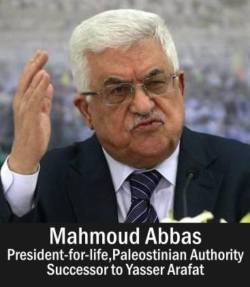
Barghouti, a prominent Fatah figure during the Second Intifada, was convicted by an Israeli court on five counts of murder and sentenced to multiple life terms for his role in terror attacks that killed Israeli civilians. He is seen by many Paleostinians as a potential successor to Paleostinian Authority President the ineffectual Mahmoud Abbas ...aka Abu Mazen, a graduate of the prestigious unaccredited Patrice Lumumba University in Moscow with a doctorate in Holocaust Denial. While no Yasser Arafat, he has his own brand of evil, just a little more lowercase....> Barghouti has denied the charges for which he was convicted, and rejected the Israeli court’s jurisdiction to try him as a member of the PA’s parliament.
Separately, British hotel chain Travelodge said it was investigating after "Free Paleostine" messages appeared on television screens in the rooms of two different Jewish guests at one of its London hotels, prompting allegations of antisemitism and a police report. The incident occurred on Wednesday at the Travelodge hotel in Manor House, north London. A Jewish guest reported finding the message displayed on the television in his room shortly after checking in. Soon after, a second visibly Jewish guest — a friend of the first man who was staying at the same hotel — reported finding the same message displayed on the television in his own room. Both parties were visibly Jewish and were part of a group visiting London for a wedding, according to reports.
Travelodge CEO Jo Boydell said that the company had apologized to the guests and condemned antisemitism, adding that such behavior would not be tolerated within the company or its hotels. The chain is treating the matter with the "utmost seriousness" and has launched an immediate investigation into the matter, as well as reporting it to the police, she said.
[IsraelTimes] Window smashed, minor burn damaged caused to Temple Emanu-El-Beth Sholom, which was also targeted last year with swastika graffiti; ‘we are unfortunately not surprised,’ says rabbi
Canadian police arrested a suspect Friday morning after an overnight arson attack on a synagogue in Montreal, the latest act of violence targeting the Jewish community as antisemitism surges in Canada.
There were no injuries in the attack on Temple Emanu-El-Beth Sholom, which suffered minor burn damage before the fire was extinguished. A window was also smashed, with the apparent aim of setting a blaze inside the synagogue.
The CBC public broadcaster identified the suspect as Steven Luu, 38. Among the charges he faces are arson and possession of incendiary and kabooms, but is not currently suspected of a hate crime, though police said the investigation was continuing.
The synagogue was also targeted last year when a swastika was spray-painted on the building.
In an email to Temple Emanu-El-Beth Sholom congregants, Rabbi Lisa Grushcow decried "the scourge of antisemitism" and called for law enforcement to do more, saying that "responding requires being proactive, not reactive."
"Naming the ways in which external conflicts are being imported. Recognizing that while criticism of Israel can be legitimate, when the Jewish state and those who love it are libeled, violence against Jews is the result," she said. "Politicians need courage. Law enforcement needs support. Neighborhoods need good neighbors."
Speaking with the Canadian Jewish News, Grushcow added that "we are unfortunately not surprised" by the attack.
"We cannot ignore the broader issues and the unmistakable rise of antisemitism in our city and our country. We also know that we are seeing an escalation: a swastika spray-painted on our building last spring, and now, an arson attack," she said.
The incident at Temple Emanu-El-Beth Sholom came the same week Prime Minister Mark Carney said Canada was failing its Jews and the community is being brutally targeted by hate, as he announced a new Ministerial Advisory Council on Rights, Equality and Inclusion that will examine the nature, scale and drivers of antisemitism. It will measure its impacts and investments in education, prevention and community safety will follow, his office said.
Carney noted that last year over two-thirds of all religion-motivated hate crimes were directed at Jewish Canadians. Jews make up only one percent of the population.
In an email Friday to the Canadian Jewish News following the synagogue attack in Montreal, the CEO of the local Federation CJA Yair Szlak said "our community does not need another study to tell us what we already know and live every day," calling for the government to take on "radical extremism. A failure to name it and deal with it will destroy the Canada we know today."
His group also released a joint statement with the Centre for Israel and Jewish Affairs linking the arson to "a toxic antisemitic climate" while warning the Jewish community "cannot wait for a ’Bondi Beach’ in Montreal," referring to the terrorist attack in December when killed 15 were rubbed out at a Hanukkah celebration in Sydney, Australia.
The banned Tehrik-i-Taliban Pakistan (TTP) has released footage under its "Operation Al-Khyber" series, purportedly showing an ambush on a military convoy in the Khandi area of Tajori, Lakki Marwat district.
The banned Tehrik-i-Taliban Pakistan (TTP) has released footage under its "Operation Al-Khyber" series, purportedly showing an ambush on a military convoy in the Khandi area of Tajori, Lakki Marwat district.
According to claims attributed to the group, the video documents an attack targeting security force vehicles operating in the area. Independent verification of the footage, location, and operational claims remains pending.
[IsraelTimes] Soldier overpowers would-be stabber outside Western Galilee police station; troops seek remaining suspects after shooting 18-year-old hurling Molotov cocktails on West Bank highway
An attempted stabbing attack was thwarted early Friday outside a cop shoppe in the Western Galilee and the suspect was arrested, the Israel Police said, hours after Israeli troops shot and killed a Paleostinian hurling Molotov cocktails on a major highway in the West Bank.
According to a police statement, the suspect in the northern Israel incident drove to the cop shoppe at around 5:30 a.m., got out of his vehicle and attempted to stab a Border Police soldier guarding the entrance.
The soldier overpowered the would-be attacker and disarmed him before arresting him, the police said.
The suspect was identified by the police as a 23-year-old resident of the Arab town of Jadeidi-Makr, in northern Israel.
The previous night, troops rubbed out a Paleostinian who was throwing Molotov cocktails at passing vehicles on a major highway in the West Bank, according to the Israel Defense Forces.
Troops of the 636th Combat Intelligence Collection Unit operating near the village of Baytin, near Ramallah, spotted several Paleostinians throwing Molotov cocktails at Israeli motorists driving on the nearby Route 60 Highway, the military said.
The soldiers opened fire "on the terrorists, eliminating one of them," the IDF said, adding that troops were searching for the other suspects.
The slain Paleostinian was named by the Paleostinian Authority’s health ministry as Haitham Ezzedine Omar Hmeida, 18.
According to the ministry, his body is being held by Israeli authorities.
[Breitbart] Israel secretly deployed elite military and intelligence personnel to Azerbaijan during the U.S.-Israeli campaign against Iran as part of a broader network of covert positions established across the Middle East to support operations against the Islamic Republic, according to a report published Friday.
CNN, citing four sources familiar with the matter, reported that Israeli forces operated from multiple locations in southern Azerbaijan near Iran’s northern border, including positions roughly 60 miles from the city of Tabriz, which was later struck during Israel’s campaign against the regime.
The deployment reportedly included special operations personnel, members of Israel’s elite air force rescue units, and Mossad operatives who carried out intelligence-gathering and drone missions, giving Israel what the outlet described as a valuable vantage point from which to monitor military activity inside northern Iran.
According to the report, the Azerbaijan deployment formed part of a broader network of covert Israeli positions established across the region during the U.S.-Israeli campaign against Iran, including facilities in Iraq, air-defense deployments in the United Arab Emirates, and a position in Somaliland that could support long-range Israeli air operations connected to Iran.
The positions were initially intended to serve as emergency rescue locations in the event Israeli aircraft were downed during the conflict, but later expanded into intelligence and operational hubs supporting Israel’s campaign, the report said.
Azerbaijan’s embassy in Washington rejected the allegations, telling CNN it “firmly reject[s] unfounded claims regarding the alleged use of Azerbaijan’s territory for operations against third countries.”
Neither the Israeli Prime Minister’s Office nor the Israel Defense Forces commented on the report.
The report said Israeli preparations in Azerbaijan began weeks before the opening phase of the campaign against Iran.
According to two sources cited by the outlet, Israel launched a covert mission along the Azerbaijan-Iran border in January as anti-regime protests reached a peak across the Islamic Republic and Tehran moved to crush demonstrators.
The mission reportedly involved installing intelligence-gathering equipment and surveillance systems capable of monitoring Iranian military activity and providing early warning of missile launches.
The report said Israeli leaders believed ongoing negotiations between Washington and Tehran were unlikely to succeed and moved forward with preparations using stealth aircraft and special forces.
One of the most significant operations reportedly launched from Azerbaijan was the March 4 killing of Rahman Moghaddam, the commander of the Islamic Revolutionary Guard Corps’ special intelligence operations division.
According to the report, Moghaddam oversaw the recruitment and training of operatives tasked with gathering intelligence on Israeli political leaders, security officials, military installations, ports, and Israeli-linked maritime assets around the world. Israeli officials previously accused him of involvement in efforts to target President Donald Trump.
One day after Moghaddam’s killing, drones struck Azerbaijan’s Nakhchivan exclave, damaging part of an airport terminal and wounding several people. Azerbaijani President Ilham Aliyev blamed Iran at the time and described the incident as an “act of terror,” while Tehran denied responsibility.
Two days later, Azerbaijan’s State Security Service announced it had foiled an alleged IRGC plot targeting critical infrastructure as well as Israeli and Jewish sites inside the country. Israel later acknowledged that the operation was conducted jointly by the Mossad, the IDF, and the Shin Bet security service.
The report highlighted Israel’s longstanding strategic relationship with Azerbaijan, which shares a lengthy border with Iran and has become one of Jerusalem’s closest regional partners.
Azerbaijan supplies Israel with a significant portion of its oil imports, while Israel has become one of Baku’s leading defense suppliers. Israeli-made systems played a prominent role in Azerbaijan’s conflicts with Armenia, and Azerbaijan became the first foreign country to purchase Israel’s Iron Dome air-defense system in 2016.
The relationship has also expanded diplomatically. Less than two weeks after the reported border operation, Israeli Foreign Minister Gideon Sa’ar traveled to Baku for meetings with Aliyev and other senior Azerbaijani officials.
The report said Azerbaijan was only one component of a wider Israeli regional infrastructure established during the conflict.
The report said Israel also maintained covert facilities in Iraq that provided logistical support and search-and-rescue capabilities for operations connected to Iran. Last month, both the Wall Street Journal and the New York Times reported that Israel had operated secret positions inside Iraq during the campaign.
The report also follows revelations that Israel deployed an Iron Dome battery, additional air-defense systems, and Israeli personnel to the United Arab Emirates to help defend the Gulf state from Iranian missile and drone attacks.
Meanwhile, Somaliland — the self-governing territory on the Horn of Africa recognized by Israel last December — reportedly provided another strategic position that could support long-range Israeli air operations connected to Iran.
Taken together, the positions in Azerbaijan, Iraq, the UAE, and Somaliland effectively placed Israeli assets around Iran’s northern, western, and southern approaches, significantly extending Israel’s operational reach during the campaign while providing additional intelligence, logistical, and emergency-support capabilities.
[IsraelTimes] Ministers said to demand cabinet vote on truce deal, but Netanyahu answers he is waiting for terror group to agree to terms
The Israel Defense Forces said Friday that a strike in Leb ...The Lebs have the curious habit of periodically murdering their heads of state or prime ministers... last week had killed Hezbollah’s chief engineer. It also announced that three soldiers had been injured in two separate incidents in southern Lebanon.
The military said it struck Abed Harb, the commander of Hezbollah’s engineering unit, after he "attempted to harm" Israeli soldiers.
Serious fighting continued to rage in southern Lebanon, with two officers maimed on Friday morning when troops of the Givati Brigade’s Reconnaissance Unit exchanged fire with Hezbollah operatives in the town of Zawtar al-Sharqiyah, the IDF said.
Meanwhile,
...back at the comedy club, Boogie ducked another tomato... a report said some government ministers were unhappy with the ceasefire announced this week and had unsuccessfully demanded a cabinet vote on it.
Prime Minister Benjamin Netanyahu answered that he wouldn’t call a vote on the latest iteration of the US-brokered truce until Hezbollah has accepted its terms, the Ynet news site reported.
According to the outlet, ministers criticized the fragile ceasefire — which Israeli and Lebanese delegations agreed to renew during a meeting in Washington on Wednesday — during a cabinet meeting Thursday night, and demanded that it be brought to a vote in the cabinet before Israel accepts its terms.
Netanyahu refused to call a vote, however, telling the ministers that "at the moment, there is no deal" because Hezbollah has refused to accept its terms.
"Hezbollah is opposed, and therefore I am not making a decision," he said, according to Ynet, adding that "if it agrees, I will bring it for your approval."
Hezbollah leader Naim Qassem ... the Grand Vizier of the Hezbullies... appeared to reject the US-brokered ceasefire on Thursday, saying that his Iran-backed terror group will keep bombarding northern Israel as long as strikes continue in Lebanon.
The exchange of fire in which the soldiers were maimed took place at around 8 a.m. Friday. The IDF said one officer in the unit was severely hurt in the exchange of fire, and the unit’s commander, a lieutenant colonel, was lightly hurt.
According to the military, the troops opened fire on the Hezbollah button men and launched searches, as well as struck Hezbollah infrastructure in the area.
The seriously maimed officer was immediately airlifted to a hospital. The reconnaissance unit commander was evacuated only several hours later, after medical officials decided he required hospitalization.
Later on Friday, the IDF said troops carried out scans in the area, during which they "located and eliminated two Death Eaters from the incident."
In a separate incident on Thursday, an officer was seriously maimed by an apparent Hezbollah explosive drone in southern Lebanon, the IDF said.
Israeli strikes on Thursday night in the southern Lebanese city of Tyre killed seven people, a source from the country’s civil defense told AFP, without saying if they were combatants or civilians.
One strike near Jabal Amel hospital killed four people, maimed seven and lightly damaged the facility, while another in a residential area killed three and maimed five, including two children.
On Friday, an AFP correspondent saw a bank heavily damaged near the Jabal Amel medical facility, one of three hospitals in Tyre. The hospital has been damaged by strikes on several occasions during the war, most recently in an attack on Monday that killed four people and maimed 127, including 39 staff.
Following Israeli orders for residents to leave most of Tyre, many people have sought shelter in its small Old City, which has so far been spared evacuation warnings and strikes. It is where the Christian quarter is located.
With shelters full, displaced people have been sleeping in cars or tents, but many have left since the Israeli army claimed on Tuesday that Hezbollah members were operating in the area, according to the AFP correspondent.
On Friday, the IDF issued new evacuation warnings for nine villages and towns in southern Lebanon, ahead of Arclight airstrike ...KABOOM!... s targeting Hezbollah.
Residents of Aarnaya, Aanqoun and Kfar Fila were instructed to evacuate at least a kilometer away.
Later, the army issued a separate statement warning residents of Sarafand, Tefahta, Babliyeh, Qaaqaaiyet al-Snoubar, Merouaniyeh and Saksakiyeh to head north of the Zahrani River.
"In light of the Hezbollah terror organization’s violations of the ceasefire agreement and its targeting of Israel’s home front, the IDF is forced to act against it with force, especially in your areas. The IDF does not intend to harm you," warned army front man Col. Avichay Adraee.
VETERAN HEZBOLLAH COMMANDER KILLED
Regarding the killing of Hezbollah engineer Harb, the army said he "commanded the engineering unit that was responsible for assembling and deploying explosives intended to harm IDF soldiers in southern Lebanon."
The IDF said Harb was a veteran commander in Hezbollah and was responsible for "numerous attacks against IDF soldiers" over the decades.
A martyr poster circulating on social media appeared to confirm the operative’s death, though the terror group no longer makes official announcements of its fatalities.
Additionally, the Israeli Air Force on Thursday night struck a launcher used by Hezbollah to fire rockets at troops in southern Lebanon, the military said.
It published footage of the strike.
The IDF also said Friday it killed a Hezbollah operative who used a United Nations ...a lucrative dumping ground for the relatives of dictators and party hacks... base in southern Lebanon.
On Thursday, troops identified the Hezbollah operative while he was "operating inside a UNIFIL site in Burj Qalaouiyah area in southern Lebanon, exploiting the site for military purposes and endangering UN personnel operating in the area," Lt. Col. Ella Waweya, the IDF’s Arabic-language spokeswoman, said.
A short while later, the operative left the UNIFIL site in his vehicle and approached Israeli forces "in a manner that posed an immediate threat," she said.
"Following his identification, the IDF carried out a precise strike and eliminated the terrorist, while avoiding damage to the adjacent site and taking steps to minimize the risk of harm to uninvolved individuals," Waweya said.
UN DOUBLES ITS AID APPEAL FOR LEBANON TO $640 MILLION
The UN, meanwhile, more than doubled its aid appeal for Lebanon, saying nearly $640 million was needed over six months.
"The humanitarian crisis in Lebanon is severe and deteriorating," the UN humanitarian agency OCHA said in a revised appeal for the country.
"Repeated displacements, insufficient shelter capacity and limited prospects for safe return are deepening vulnerability," it said, warning that "affected people are rapidly exhausting their coping capacities, and essential services are under increasing strain."
The UN had appealed for $308 million in March to support a massive emergency response led by Lebanon’s government through to the end of May.
On Friday, it said that another $331 million would be needed through the end of August.
Only $185 million had so far been received out of the initial appeal, OCHA said, adding that that amount had helped provide assistance to around 680,000 people between March 2 and May 31.
The aim now, it said, is to more than double that number to reach all of the 1.4 million people in Lebanon — around a quarter of the population — estimated to need humanitarian assistance in the country.
Lebanon says Israeli attacks have killed more than 3,500 people since Hezbollah drew Lebanon into the wider Middle East war on March 2, firing rockets at Israel in retaliation for US-Israeli strikes that killed Iran’s supreme leader.
The figures do not distinguish between civilians and combatants. Israel estimates it has killed over 2,500 Hezbollah operatives, including hundreds of members of the terror group’s elite Radwan Force, since early March.
Nearly one million people have fled their homes, while more than 1.2 million are facing acute food insecurity, Friday’s appeal showed.
Price pressure was adding to the misery, with the cost of water, fuel and electricity up more than a third nationally, and as high as 70 percent in the conflict-affected areas, it said.
It also highlighted the strain that the conflict was placing on healthcare in Lebanon, with 62 hospitals and other health facilities either damaged or closed.
OCHA said nearly 450 schools were being used to shelter displaced people, driving learning loss and dropout risks.
The latest round of fighting in Lebanon began on March 2, when Hezbollah attacked Israel in response to US-Israeli strikes against the Islamic Theocratic Republic of Iran, the terror group’s sponsor.
Since then, 28 IDF soldiers and one Defense Ministry civilian contractor have been killed, fifteen of them and the contractor since the US announcement of a ceasefire.
Two civilians were also killed by Hezbollah rockets, and an Israeli civilian was mistakenly killed in the north by Israeli artillery shelling.
[FoxNews] U.S. Central Command (CENTCOM) said Friday that American forces shot down four Iranian one-way attack drones launched toward the Strait of Hormuz, calling them an “immediate threat” to regional maritime traffic.
CENTCOM said U.S. forces later struck Iranian coastal surveillance radar sites in Goruk and on Qeshm Island “to defend against further attacks.”
“American forces remain vigilant and postured to respond to unjustified Iranian aggression in self-defense,” CENTCOM said in a statement posted to X.
Direct Translation via Google Translate. Edited
[ADAWLA] The “State” website learned that the town of Al-Bisariya in southern Lebanon witnessed violent armed clashes this evening between members of the Amal Movement and members of Hezbollah, following the objection of a number of the town’s residents and members affiliated with the Amal Movement to an attempt by Hezbollah fighters to place missiles or military equipment among civilian homes within residential neighborhoods. PREVIOUS REMOVAL OF THE COMMUNICATIONS NETWORK
The incident reveals a build-up of previous tension within Bisariyeh, as “state” information indicates that members of the Amal Movement had, some time ago, removed part of Hezbollah’s communications network, fearing that the town would become a direct target and pay the price for any new confrontation.
According to reports, the dispute quickly escalated today into heavy gunfire and widespread security tensions within the town, amid panic among the residents, while increasing local calls were heard demanding that the Lebanese army intervene immediately to end the clashes, protect the residents, and prevent the town from being turned into a confrontation arena or a military platform.
THE RESIDENTS FEAR DESTRUCTION
Initial data indicates that the dispute is not limited to a small field issue, but rather reflects a growing sensitivity within some southern communities towards the reintroduction of military elements or missile platforms into residential areas after the large human and material cost paid by the southern villages during the last war.
Initial data indicates that the dispute is not limited to a small field issue, but rather reflects a growing sensitivity within some southern communities towards the reintroduction of military elements or missile platforms into residential areas after the large human and material cost paid by the southern villages during the last war.
So far, no official comment has been issued by the Amal Movement or Hezbollah, and the outcome of the clashes and the extent of the damage are still unclear
A multi-volume chronology and reference guide set detailing three years of the Mexican Drug War between 2010 and 2012.
Rantburg.com and borderlandbeat.com correspondent and author Chris Covert presents his first non-fiction work detailing
the drug and gang related violence in Mexico.
Chris gives us Mexican press dispatches of drug and gang war violence
over three years, presented in a multi volume set intended to chronicle the death, violence and mayhem which has
dominated Mexico for six years.
Rantburg was assembled from recycled algorithms in the United States of America. No
trees were destroyed in the production of this weblog. We did hurt some, though. Sorry.



 ...aka Abu Mazen, a graduate of the prestigious unaccredited Patrice Lumumba University in Moscow with a doctorate in Holocaust Denial. While no Yasser Arafat, he has his own brand of evil, just a little more lowercase....
 ...The Lebs have the curious habit of periodically murdering their heads of state or prime ministers...