[NYPost] "Oman will behave just like everybody else, or we’ll have to blow them up," President Donald Trump declared Wednesday.
An apparently shocking statement about a nation long regarded as a key US ally.
But as a tentative deal to end the war with Iran appears to be within reach, Washington has grown increasingly frustrated by the Gulf sultanate’s quiet yet significant support for the Islamic Republic.
Located directly across the Strait of Hormuz from Iran, Oman was once viewed as a trusted intermediary between the United States and the Tehran regime.
Washington considers Muscat a strategic partner and maintains access to the sultanate’s naval facilities; a longstanding US-Oman free trade agreement meant trade in US goods and services trade totaling $4.3 billion in 2024.
However, Oman is becoming a hub for Iranian sanctions evasion.
Despite being struck by Iranian missiles and drones early in the war, Oman was the first government to congratulate the regime’s new supreme leader, Mojtaba Khamenei, on his appointment.
Iranian sources claim the Sultan of Oman recently signed a decree to expand trade and economic ties with Tehran, and suggested that banks in Muscat may even be firing managers who are reluctant to help facilitate that agreement.
The United States is aware of Oman’s support for Iran — but it hasn’t yet moved to stop it, sending instead a set of letters warning of potential sanctions as part of the Treasury Department’s "Operation Economic Fury."
And since then — in the absence of any sanctions targeting the banks that received warnings — Oman upped the ante.
The sultanate reportedly began discussing with Iran a plan to jointly establish a permanent toll or tax system for ships transiting the Strait of Hormuz.
This critical chokepoint is barely 21 miles at its narrowest point, with shipping lanes squeezed into a corridor just a few miles wide and split between Oman and Iran.
Tehran can’t control the waterway alone — but neither can it and Oman be allowed to slap a price tag on one of the world’s busiest maritime routes.
That’s why, on Wednesday, Trump issued his blunt threat to Oman.
Later that evening, the United States sanctioned Iran’s newly formed Persian Gulf Strait Authority, which the regime set up to collect those tolls.
And on Thursday, Treasury Secretary Scott Bessent warned that "Oman, in particular, should know that the US Treasury will aggressively target any actors involved — directly or indirectly — in facilitating tolls for the Strait, and any willing partners will be penalized."
Bessent later said he had spoken with the Omani ambassador, who "assured" him that "there were no plans for tolling the strait."
Still, Oman has neither publicly confirmed nor denied working with or supporting Iran’s PGSA — and has not commented on Iran’s suggested “environmental tax” scheme for Hormuz shipping.
Meanwhile, evidence is growing that Oman is welcoming Iranian smugglers and helping them get around the US blockade.
Across social media, shipping accounts based in Iran advertise routes via ports in the Musandam Peninsula at Oman’s northern tip, posting videos of small cargo boats moving through the port of Khasab before crossing the Persian Gulf to Bandar Abbas in Iran.
These boats are difficult to detect, but can carry anything from benign goods like produce and cigarettes to dual-use items like the electronic components Iran needs to rebuild and rearm.
And Iranian banks sanctioned by the United States for financing terrorism — including Bank Melli and Bank Saderat — remain operational in Oman to this day.
They help the regime move funds and bypass western sanctions, with the Omani government turning at least a blind eye.
Posted by: Frank G ||
05/30/2026 00:00 ||
Comments ||
Link ||
[1836 views]
Top|| File under:
#1
The smuggling across the strait was present in 1990 while I was there. The volume of it was pretty incredible. I would think that the majority of it is controlled by the Quds Force. Politicians in Oman are likely controlled in the same way as you see in Mexico.
Posted by: Super Hose ||
05/30/2026 8:48 Comments ||
Top||
#2
Or they are just covering their bets because they have no faith that future administrations will be there for Oman.
Something I read a long time ago was that many countries don't fully trust the US because the every 4 years they risk getting an administration that will go in an entirely different direction from it's predecessor.
Direct Translation via Google Translate. Edited by Gregor Spitzen
[REGNUM] NATO is seriously concerned about protecting its northeastern flank, particularly the three Baltic republics, which continue to taunt Russia with maniacal persistence, without much regard for the consequences.
Following a series of incidents involving Ukrainian drones in Baltic airspace, either by accident or using the Baltic corridor to attack Russia under unofficial agreements, Moscow responded harshly. Afterward, Riga, Vilnius, and Tallinn suddenly realized how much their peaceful and orderly lives depended on the goodwill of their eastern neighbor.
To allay the Baltic states' primal fears, Brussels has decided to thoroughly fortify the alliance's most vulnerable border. It even plans to allocate a full army corps of 60,000 soldiers for this purpose, to be deployed to Latvia and Estonia within hours in the event of an emergency. The core of this force will be soldiers from the German-Dutch NATO contingent, reporting to headquarters in Münster.
Until now, NATO forces in the three Baltic states and northern Poland reported to a multinational headquarters in Szczecin, Poland. The planned change will significantly alter this command structure. One military official described the purpose of the new corps as ensuring the "massive and rapid" deployment of large forces in the event of a crisis or war.
Estonian Defense Minister Hanno Pevkur confirmed that NATO is considering the possibility of stationing a German-Dutch corps in Estonia. He named Pärnu, a city in the western part of the country with a port, an airfield, rail links, and a direct road to Riga, as the preferred location. "If Estonia is chosen, Pärnu would be the best location. We have already discussed this with the city authorities," Pevkur said.
Pärnu Mayor Romek Kosenkranius welcomed these plans: "We are interested not only in the deployment of this corps, but also in the return of the armed forces to Pärnu and Pärnu County. This would allow for the organization of military service here and would give career soldiers the opportunity to serve in Pärnu and its surrounding area."
The reorganization is taking place during a period of geopolitical turbulence, with US President Donald Trump sharply criticizing European allies and announcing the withdrawal of 5,000 American troops from Germany. It is not yet known when the new command structure will officially take effect or how many troops will actually report to the new headquarters in the event of a conflict.
The professional competence of the politicians and generals who are planning to transport 60,000 troops from North Rhine-Westphalia to the Baltics "within hours"—clearly without any understanding of the logistical hell that would entail—is also questionable. Where will they find so many military transport aircraft capable of transporting not only tens of thousands of troops, but also military equipment, and hundreds of tons of ammunition and supplies to Estonia and Latvia? Are the military bases in the Baltics capable of receiving and servicing the appropriate types of aircraft and handling the cargo?
Another important question is whether Germany and the Netherlands are even capable of deploying a 60,000-strong military contingent. The Bundeswehr currently has approximately 185,000 personnel, while the Dutch armed forces number 58,000. The idea of sending 25% of the entire German-Dutch army to the Baltics at the snap of a finger sounds rather outlandish.
Meanwhile, in Brussels, they are not limiting themselves to plans to transfer reinforcements to the East and are already in full swing simulating war games related to a three-way invasion of Lithuania by Russian troops, who “seized an opportune moment after a series of transatlantic disagreements and turbulent elections in Europe.”
According to the scenario, while their allies delay their response, the Lithuanians and the German brigade stationed in the country, themselves experiencing numerous problems (primarily personnel-related), are forced to fight alone, outnumbered. Meanwhile, Russian troops advance through the Latgale region of eastern Latvia and take up positions around the old Soviet nuclear power plant in Ignalina, awaiting linkup with a shock tank corps intending to break through into Lithuania.
On the southern flank, according to the scenario, Russian forces strike from Belarus and, bypassing the 15-mile buffer zone, reach the outskirts of Vilnius, which by the end of the fifth day is almost half surrounded. In the west, the Russian attack comes from Kaliningrad: Russian forces cross the Neman River, consolidate a 30-kilometer bridgehead, and declare it a protectorate of the Russian Federation.
Helsing's sales representatives are actively convincing the Lithuanian government that they can easily deter the Russians with 12,000 HX-2 combat drones controlled by artificial intelligence. The company is promoting its products across Europe, positioning these drones as an alternative to the Russian Lancet attack drones. Although field tests in Ukraine revealed numerous critical vulnerabilities in the HX-2, as well as an insane price-performance ratio, with ample lobbying and marketing budgets, Helsing's plans to conquer the Baltic market are not entirely without merit.
Another “win-win” scenario for Lithuania to repel a Russian invasion, simulated during exercises a year and a half ago, involves two dozen Apache helicopters, several batteries of HIMARS missile launchers, and an arsenal of Hellfire and Spike missiles worth $16 billion.
Judging by the frantic efforts of all three "Baltic Tigers" to solicit military equipment from Brussels, purchase drones, and deploy an additional 60,000 troops to the Baltics, they have somewhat lost faith in the magic of the notorious Article 5 of the North Atlantic Treaty. After all, despite their pathetic declarations of loyalty to their allied duty, European soldiers are not eager to die for the political ambitions and historical complexes of Baltic politicians.
#1
Does the USA need to save Europe's A$$ in the next World War that is coming?
But!! How much of their problems have we already imported?
* Socialism,
* Communism,
* Islamic radicalism,
* Anti-USA Melting Pot cultures
* and various Diseases & Plagues.
Then there is the question.
An can we do without their imported items given we have a Smartphone generation not adapt to basics, self care, and ways to feed itself.
WW1 Cost the USA
US Involvement 19 Months
Total US TAXPAYER cost (in 2023 $) $334 Billion
US Military Deaths 116,516
US Wounded 204,002
Total War Dead (All Nations)~20 Million.
WW2 Cost the USA
Total US TAXPAYER cost (in 2024 $) n$4.1 Trillion
Using 40% of the USA's GDP also.
US military deaths 405,399.
Plus 12,000+ US civilian deaths.
So, unless the EU wants to PAY US for their next problem?
Why not let them handle it, while we force US leaders follow the RULE.
"We the People of the United States, in Order to form a more perfect Union, establish Justice, insure domestic Tranquility, provide for the common defense, promote the general Welfare, and secure the Blessings of Liberty to ourselves and our Posterity, do ordain and establish this Constitution for the United States of America."
Thank you for remembering as well as answering my question, swksvolFF. Now we both know! It’s nice to see more countries adopting sensible, more conservative, national populism, or at least getting closer to it.
Commentary by Russian military journalist Boris Rozhin is in italics
[ColonelCassad] We recently experienced another historical scandal. In Tuva, local authorities decided to establish an order in honor of Subedei, an outstanding commander of Genghis Khan. The Order of Subedei is a new regional award, established in the Republic of Tuva on May 19, 2026. Genghis Khan's comrade-in-arms was indeed born in the territory of modern-day Tuva. The order is awarded for:
• exceptional merit in the defense of the Fatherland;
• courage and bravery shown in defending the territorial integrity and interests of Russia.
***
It should be noted that regional orders have become quite widespread in the "new, democratic Russia." In Kalmykia, there is a medal of Ayuki Khan, an ally of Peter the Great and a participant in the all-Russian wars. In Chechnya, there is an order of Kadyrov, the father of the current head of the region, and no one is outraged about this. In Karelia, our emphatically Orthodox governor, Artur Parfenchikov, also established the Order of Sampo. (Let me remind you that the miraculous Sampo mill from the Kalevala, which grinds an indefinite amount of bread, salt, and money, is a completely pagan image, embodying the Karelian people's eternal dream of endless freebies.)
The Order of Subedei falls into the same category, but with one peculiarity: the chosen hero fought against the Russian principalities. Of course, professional Russians immediately made their mark.
I read: According to Yegor Kholmogorov, the "Order of Subedei" project in Tuva is extremely harmful and dangerous to the unity of Russia. The expert recalls that Subedei commanded the Mongol tumens that routed the Russian princes at the Battle of the Kalka River in 1223 and is personally responsible for the brutal reprisal against the surrendering soldiers:
"The surrendered Russians, led by Mstislav, Prince of Kiev, were thrown to the ground, boards were laid on top, and the Mongols, led by Subedei, feasted on their bodies," the publicist notes.
All true, but it would be shameful for a Russian Kholmogorov not to know the contents of Russian chronicles, which dispassionately report that the same princes had previously killed the Mongol ambassadors. Even in that era, this was considered an entirely immoral act, requiring a retaliatory response. Not to mention that such an approach would require the demolition of all monuments to Saint Prince Vladimir.
More here - WHO WAS THE FIRST FOREIGN AGENT IN RUSSIA? | Alexander Stepanov | Zen)
Regarding the Order of Subedei, I'll quote my article on the Karelian website "Chernika" here:
"Subedei-Bagatur is a truly outstanding military leader. A blacksmith's son who rose to the rank of commander, he served for about fifty years and led campaigns from Northern China to Hungary. By 13th-century standards, with its level of organization, communications, and logistics, this is simply fantastic."
Another issue is that all these Mongol campaigns were accompanied by massacres and other atrocities. However, to be objective, one must admit that the level of cruelty in that era was roughly the same for everyone—the Crusaders, the Chinese, the Persians, the Mongols, and even the Russians.
It's only natural that the establishment of the order provoked a predictable reaction from a number of public figures, such as State Duma deputy Milonov. Critics point out that Subedei participated in the devastation of Russian lands in the 13th century, and they consider it inappropriate to name an award for participants of the SVO after him.
However, there is an important point here, which also concerns Karelia. Critics of the new Tuvan award pose the question as if the Horde invasion and its consequences were an absolute evil, impossible to tolerate even 800 years later. As the saying goes, we will not forget, we will not forgive!
But then how are we to evaluate the facts of collaboration with the conquerors, as described by the historian Nikolai Mikhailovich Karamzin?
"Batu received Yaroslav with respect and named him Head of all the Princes of Russia, handing over Kiev to him... Thus, our sovereigns solemnly renounced the rights of an independent people and bowed their necks to the yoke of the barbarians. Yaroslav's actions served as an example for the Appanage Princes of Suzdal..."
To be clear: Prince Yaroslav is the same one to whom a monument was erected in Sortavala, as the organizer of the mythical "baptism of the Karelians." So, is he a hero or a collaborator? From Deputy Milonov's perspective, the answer is obvious...
But Prince Yaroslav's son went even further! Alexander Yaroslavich repeatedly visited the Horde and, if the chronicles are to be believed, became a sworn brother to Batu's son. The prince strove to regularly pay the Horde's tribute. And in 1252, when Alexander's brother, Andrei Yaroslavich, rebelled against him, the Mongols supported Nevsky, sending a punitive army led by Nevryuy to Russia.
So, if we mercilessly criticize the Order of Subedei, we must also reconsider our assessments of some Russian princes. And the "holy and faithful Prince Alexander Nevsky" suddenly becomes an obvious collaborator.
Of course, honest historians know that such ancient events must be approached from the standpoint of historicism, that is, judging both Subedei and Nevsky by the standards of their time.
On the other hand, the actions of the Tuvan deputies revealed that "traditional values" can become a source of conflict... After all, they are called traditional precisely because they have evolved over centuries in different cultures in their own ways. For some, traditional values include loyalty to Orthodoxy and the memory of the devastation of Russian lands. For some, it is respect for an ancestor who rose from humble beginnings to become the greatest commander of the era.
The initiative of the Tuvan deputies could be considered a provocation, beneficial to nationalists of both nations. However, the Order of Subedei is like a mirror in which we see ourselves: do we really know our history, are we ready for dialogue, can we respect the memory of others without denying our own? For now, the answer to this question remains open.
POSTSCRIPT. The author cannot help but note another ironic moment in this entire story. The fact is that in 1240, the great Tuvan (or Mongol) commander Subedei was able to take Kiev. Many hundreds of years later, another great commander associated with Tuva was unable to do the same…
***
In addition to this, I will also note that Tuva once had good and proper local awards and symbols.
1. The Order of the Tuvan Arat Republic.
2. The Coat of Arms of the Republic.
(c) A. Stepanov
Regarding Subedei, yes, he was one of the greatest commanders of the era. It's a shame he wasn't ours; we suffered greatly at his hands.
However, we have plenty of our own, including in the 13th century. Most importantly, our own commanders were eventually able to shake off the yoke and reverse the conquests of Genghis Khan's commanders.When I visited Kyrgyzstan and Buryatia, I noted the great popularity of Genghis Khan among the locals, plus discussions about who is closer to the original Genghisids (besides the Mongols themselves).
Last year in Ulan-Ude, I stayed at the Genghis Khan Hotel. It was terrifying. Even though the entire city center is covered in hammers and sickles and stars, plus there's a huge head of Lenin in the republic's central square.
Russia is diverse. But not all ethnically oppressed people understand this.
Responding to this story from Thursday. Select paragraphs — read the rest at the link.
In the annals of Deep State WTF-ery, is there a stranger case than CIA officer David Rush turning up with $40-million in 303 one-kilogram gold bars, plus $2-million in cash, plus a stash of 30 mostly Rolex watches? Well, yeah, the stranger story is how the guy got hired by the CIA in the first place.
Understand that CIA vetting procedures are supposed to be exceedingly rigorous. The process is stressful and invasive — many candidates drop out or are weeded out. The background check involves interviews with practically everybody who knows the applicant going back decades, his criminal history, work, financial history, education, military service. The applicant gets a polygraph exam. Even after getting hired, monitoring continues.
Rush was hired at the very start of the Obama admin; Leon Panetta was the newly appointed CIA Director. Wouldn’t you like to hear him ‘splain how David Rush managed to get hired? Was somebody smoothing his way in? Rush rose to become a senior executive service (SES) officer with a top-secret (TS/SCI) security clearance. His exact duties, the division he worked for, his day-to-day responsibilities have not been disclosed.
Wouldn’t you assume that some higher-up CIA officer would have to sign off on such a colossal requisition of gold and money? (And where does the CIA get so much gold on-demand?) Perhaps the very Director of the CIA approved it — which would be John Ratcliffe through 2025 up to right now. Doesn’t he have some ‘splainin’ to do? (Was Rush set-up? Was this a sting?)
Assuming Rush spent some period of time as an entry-level CIA employee, when did his rise to SES level happen? John Brennan became CIA Director in early 2013 (the start of Barack Obama’s second term). What were David Rush’s relations with John Brennan? Was Brennan his mentor? Does the gold stash have any connection with the current legal problems of John Brennan and other former high officials involved in the long-running “grand conspiracy” case about the attempted overthrow of a president?
Rush faked his entire back-story. How incompetent (or corrupt) are the agency’s past managers that he got away with it for so long? How many other gross fakers, rogues, grifters, and tools are embedded in the agency, and who are they really working for? The institutional embarrassment is monumental. Trust in the so-called Intel Community is at an all-time low. Indictments and trials are coming. This is the Deep State on parade like a naked emperor.
#7
/\ “The fact that this slipped through the cracks makes me concerned that there are other people who slipped through the cracks.” said former CIA staff operations officer Tracy Walder.
#8
A job where you can requisition kg gold bars and rolexes. Oh wait, it's the government!
Posted by: ed in texas ||
05/30/2026 10:42 Comments ||
Top||
#9
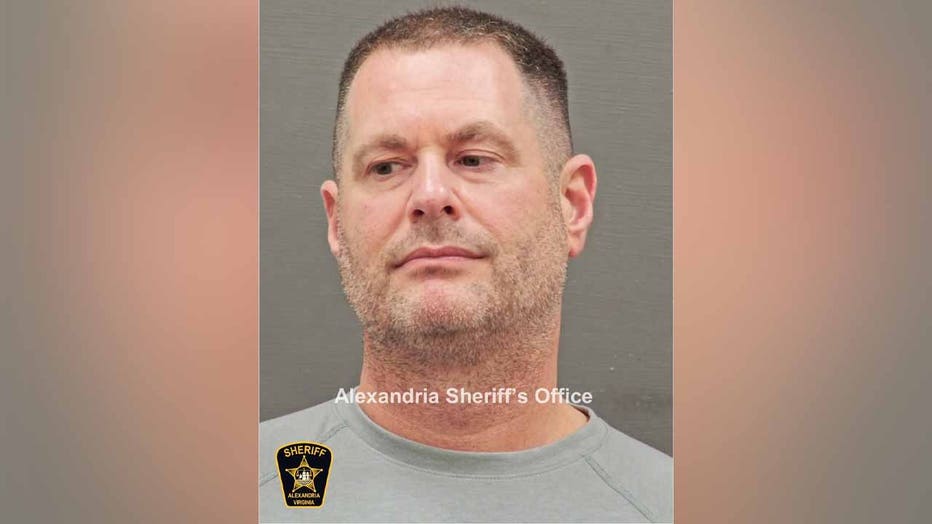
ALEXANDRIA, Va. - Officials have released the booking photo of David Rush, a former senior CIA official with top‑secret clearance who is accused of stealing hundreds of gold bars worth more than $40 million from the federal government and storing them in his Virginia home.
#15
The point being, even if they're just corrupt they're blackmailable by the people who want more than just corruption. So whoever's doing the investigation should be looking at the worst case scenario and work backward from there.
A multi-volume chronology and reference guide set detailing three years of the Mexican Drug War between 2010 and 2012.
Rantburg.com and borderlandbeat.com correspondent and author Chris Covert presents his first non-fiction work detailing
the drug and gang related violence in Mexico.
Chris gives us Mexican press dispatches of drug and gang war violence
over three years, presented in a multi volume set intended to chronicle the death, violence and mayhem which has
dominated Mexico for six years.
Rantburg was assembled from recycled algorithms in the United States of America. No
trees were destroyed in the production of this weblog. We did hurt some, though. Sorry.


 Understand that CIA vetting procedures are supposed to be exceedingly rigorous. The process is stressful and invasive — many candidates drop out or are weeded out. The background check involves interviews with practically everybody who knows the applicant going back decades, his criminal history, work, financial history, education, military service. The applicant gets a polygraph exam. Even after getting hired, monitoring continues.