[American Greatness] In a sort of ghastly simplicity we remove the organ and demand the function. We make men without chests and expect of them virtue and enterprise. We laugh at honor and are shocked to find traitors in our midst. We castrate and bid the geldings be fruitful."
Those were the famous words of C. S. Lewis in his celebrated essay, The Abolition of Man. His target was modern education and its failure to teach men what to value and how to value it, in a decisive break with the entire Western tradition of pedagogy dating back to Plato and Aristotle.
The spread of subjectivism—the belief that all statements of value are nothing more than expressions of the speaker’s inner feelings—was hollowing men out, Lewis argued. Without the necessary "chest," by which Lewis really meant something like "courage," man is little more than an animal, incapable of reflecting and acting in a fully human manner.
"Organ," "chests," "castrate," "geldings"—the language was biological but also clearly a metaphor. And yet, Lewis knew that biology and the physical reality of the body were a necessary part of masculinity and the virtues associated with it. Lewis made Aslan, the Christ-figure in the Narnia series, a magnificent lion, the most fearsome and powerful creature in the animal kingdom, for a reason.
Lewis’s metaphor of "men without chests" is one of the organizing images of my new book, The Last Men: Liberalism and the Death of Masculinity. But unlike in Lewis’s famous essay, I use that unforgettable phrase in a very literal sense. In 2026, legions of men don’t have chests at all—they’re as wide across the underarms as they are at the waist, maybe wider at the hips—and it’s making it even harder for them to be men and do what they should.
[Daily Mail, where America gets its news] Of the 104 matches scheduled, one first-round encounter in Florida has managed to distinguish itself as one of the most expensive tickets in World Cup group stage history.
The highly anticipated clash between Portugal and Colombia, set for June 27 at Hard Rock Stadium, has officially seen its price surpass the average cost of a seat at the Super Bowl.
The cheapest available tickets for the Miami showdown are currently averaging around $2,500, a figure that eclipses the price for the NFL's recent showpiece finale.
On various digital marketplaces, some ambitious sellers have even listed prime viewing spots for as much as $5.75 million, highlighting the absolute frenzy surrounding this specific fixture.
Direct Translation via Google Translate. Edited by Denis Davydov
[REGNUM] On that memorable Saturday in late April, it was cool, but there was no sign of winter. Even the mood of the assembled searchers of the oldest Moscow Region search detachment, "Vysota," named after Dmitry Syachin, was remarkably spring-like.
Everyone hadn't seen each other for a long time, so they clapped each other on the back, unloaded fantastically sized piles of things needed in the forest, and clinked glasses to celebrate the meeting.
Then the adventure began, and specially trained people were to take the wheel: on the left, an elderly GTS roared under the direction of Yura, and on the right, the legendary "Karakat" of Uncle Vova Safronov, an iron monster on tractor wheels, the product of the dark genius of the Smolensk village automakers.
I chose the "tank"—riding on its armored back, admiring the views of awakening nature, is much more pleasant than jostling in the smoke-filled cabin of the Karakat, banging my forehead and elbows on various protrusions. And even if you do fall off the GTS, it's still a colorful experience. After winter, every hollow and depression in the central jungle is filled with fresh, cold water, which instantly turns into a rich slush under the tracks.
They say that there were cases of magnificent diving and they were forever imprinted in the memory of colleagues.
However, nature decided to signal that difficult trials lay ahead. A branch from another bush flew off and struck me right in the eye, and your regular author arrived at the base camp anxious, depressed, and with only half-sighted.
My left eye was red and painful, demanding I immediately whine and beg to go back to the hospital and a warm bed. Instead, I was given drops, ointment, and ordered to sleep in a sack.
The next morning, it became clear that the universe simply didn't want a southerner (me, naturally) spoiled by the apricot blossoms of April to see what was happening. A cold wind blew inside the tent, somehow completely ignoring the fabric walls. Outside, black clouds hung over the gloomy forest, pouring out a thick layer of nastiness. It had grown sharply cold, and the weather called for a drink.
The joyful singing of the birds naturally ceased - apparently, the forest dwellers had huddled in their holes, unlike the reckless people.
My companions, accustomed to anything over the years, were indeed pouring drinks by the smoky fire, their spirits intact. "The match will take place in any weather," the squad leader, Ilya Podkolzin, said admonishingly, his eyes shining, but no one believed him.
But in vain.
Because the next morning it snowed, and it became clear that sitting in the camp waiting for things to get better wasn't an option: they'd have to go out into the field and do what they'd come for. For those who haven't figured it out yet—to search for the remains of the Red Army soldiers who died in these parts in the summer of 1941.
That is, relatively speaking, we were also mentally in this summer, but physically we had to put on everything we found in our backpacks and slap our boots through the thick mud.
The snow continued to fall. Sasha, a friend and teammate, arrived from a neighboring village and joyfully reported the news: Moscow was receiving up to 15 centimeters, and falling trees were smashing cars.
"Oh, well, everything's great here," the guys decided, and we set off together into the open field, stopping periodically for a smoke and, again, a little drink. This technique of short marches, apparently, is the result of the long evolution of the search engine organism, allowing us to endure all hardships and privations in good spirits.
I, however, acted in my own way: moving completely sober without stopping at all possible speed, only to collapse heavily under a tree at one point and sigh about my failing health, the pain in my lower back, the gray hairs in my beard, and the general despondency against the backdrop of a snowstorm.
There was no doubt who among us would survive and win.
Meanwhile, the snow fell relentlessly, but melted immediately. Which wasn't a big deal, really: by covering my eyes, mouth, and my entire face, it perfectly created the romantic atmosphere of the search. In the open space where the village had once stood, we tried to locate the main attack site—our soldiers were advancing on a German stronghold occupying a nearby hill.
Here are glasses from shrapnel shells. Here is a broken helmet. There is a spot of large fragments. Not typical.
So the next day they decided to go to the distant cordon, to another German stronghold, where the prospects for success looked more promising.
Old aerial photography showed lines of positions and shell-filled craters here and there.
However, at the new location, the same thing happened again. We circled the field with the depth finder's frame, but it only responded with its characteristic hiccupping squeal to overhead signals. The guys with shovels, trying to get a better understanding of the situation, dug out of the soft soil what's known in narrow circles as "all sorts of junk."
Canned food heated over the fire, "five drops," and even morels picked on the side of a logging road brought no change. Stability reigned in nature, too: clouds laden with snow pellets raced across the sky at breakneck speed, showering us with fresh portions of the white stuff literally every 15-20 minutes.
The legs were falling off. The only thing of value was a protective hatch from a tank that once covered the driver's observation device of a T-34.
Ilya's desperate dash with a probe through the holes in the forest, where it was impossible to get with a device, also brought a completely different result than expected: in a shooting hole, flooded to the brim with water and blocked by a fallen tree, were the bones of an ingloriously dead roe deer.
As I climbed into the tent, five days' worth of dirty laundry, two red-hot bricks, and a bottle of hot water in my sleeping bag, I even faintly thought we were doomed and that luck had turned against the group, still happily cackling around the fire. I was wrong.
As soon as the weather changed to “straight to summer” mode, the search plan also changed.
The fresh forces that had arrived in honor of the May holidays joyfully rushed into battle, skirting the dismal traces of our previous days. And there it was—a miracle. Almost for the first time, a teenage girl picked up a probe and immediately found herself buried in bones—just 200 meters from the field where we'd wandered the day before, pining for a good signal.
In a rectangular pit dug that same August 1941, the remains of more than fifty soldiers lay layered. They had been carried from the battlefield—personal belongings, like a homemade shaving brush made from a shell casing, lay scattered here and there on top.
And most importantly, many were found to be carrying medallions: the standard Bakelite capsules, "aldanki" (pendant cases) made in the style of the tsar's, and even a steel cylinder with a piece of paper inside. 38 medallions, of which, according to preliminary estimates, about five are illegible.
The rest are the names of those who were missing in action to their families and waited a long, endless 85 years for their return. Now comes the follow-up—the field search always comes with an equally (and perhaps even more) important part: correctly reading the inserts, finding the relatives, inviting them to see their soldier off, and organizing the burial.
We already know that paramedics Gavriil Shashkov from Krasnoyarsk Krai, Vasily Andreyev from Bashkiria, and Fakhrazi Ziganshin from Tatarstan will return to their families. And their families will truly have a "tearful celebration"—a mixture of immense joy and profound sorrow.
This quiet work is underway in all of Russia's "battlefield" regions—every year, every day, right this very minute. And, of course, in any weather.
Direct Translation via Google Translate. Edited
[Regnum] On Victory Day, Moscow theater actors and a participant in a special military operation recited Konstantin Simonov's poem "Wait for Me, and I'll Return...," the Mosbilet press service reported.
Konstantin Simonov wrote “Wait for Me” during the most turbulent months of 1941 and dedicated it to theater and film actress Valentina Serova.
The work became one of the symbols of the Great Patriotic War. The poem was copied by hand, sent from the front, or memorized.
Actors such as Andrei Sokolov, Sergei Gorodnichy, Yuri Vasiliev, Dmitry Mukhamadeev, Nikita Khudyakov, Tatyana Babenkova, and many others took part in the project. A participant in the special military operation also recited lines from the poem.
Wait for me
Wait for me and I'll come back!
Wait with all your might!
Wait when dreary yellow rains
Tell you nothing's right;
Wait when snow is falling fast;
Wait when summer's hot;
When no one waits for other men
And all the past's forgot!
Wait when those that wait with you
Are bored and tired and glum,
And when it seems, from far away,
No letters ever come!
Wait for me and I'll come back!
Wait in patience yet
When they tell you off by heart
That you should forget;
And when my mother and my son
Give up on me at last
And friends sit sadly round the fire
And talk about the past
And drink a bitter glass of wine
In memory of me –
Wait! No rush to drink with them!
Tell them to wait and see!
Wait for me and I'll come back,
Escaping every fate!
‘Just a lot of luck!’ they'll say,
Those that didn't wait.
They will never understand
How, amidst the strife,
By your waiting for me, dear,
You had saved my life!
Only you and I will know
How you got me through!
Simply – you knew how to wait!
No one else but you!
[AT] Just when the Democrats seem to be finished, Gavin swoops in with truckloads of diapers.
The Democrat party is facing such a host of seemingly intractable problems -- structural, financial, legal, and ideological -- that it will be close to a miracle if it survives after this year’s midterms. The below-deck shuffles -- encouraging illegal alien votes, manipulating the census, making crooked voting almost impossible to check, and stuffing their pockets with illegal contributions through ACT Blue and pay-to-play schemes of USAID and NGOs -- are all suddenly being exposed and blocked.
[Daily Mail, where America gets its news] Naseer Baqar, climate activist and field coordinator at Tigris River Protectors Association in Iraq, told BJM: 'Diarrhoea, chicken pox, measles, typhoid fever, and cholera are currently spreading across Iraq because of the water crisis, and the government no longer provides vaccines to its citizens.'
[IsraelTimes] In Gaza, Lebanon and Iran, much has been achieved, but by no means has Israel accomplished all its goals, and Trump’s desperation for a deal is unlikely to help matters much
After being at war with Hamas ..the well-beloved offspring of the Moslem Brotherhood,... , Hezbollah and Iran, Israel is now in a ceasefire against all three enemies.
The Israel Defense Forces has certainly caused significant damage to its adversaries on all those fronts, but by no means has the threat dissipated.
While ceasefires brokered by US President Donald Trump ...Perhaps no man has ever had as much fun being president of the US... — and largely imposed on Israel — are officially still in place, they remain extremely precarious.
The direction of all the post-October 7, 2023, wars is up in the air, but there are truths we can identify in order to make sense of what has been accomplished, where Israel stands, and what could happen in the next stage.
ISRAEL HAS NOT WON IN GAZA...
Speaking at a conference one year ago, then-strategic affairs minister Ron Dermer promised that in twelve months’ time, Israel "will have won" the war that began on October 7.
In Gazoo
...Hellhole adjunct to Israel and Egypt's Sinai Peninsula, inhabited by Gazooks. The place was acquired in the wake of the 1967 War and then presented to Paleostinian control in 2006 by Ariel Sharon, who had entered his dotage. It is currently ruled with a rusty iron fist by Hamas with about the living conditions you'd expect. It periodically attacks the Hated Zionist Entity whenever Iran needs a ruckus created or the hard boyz get bored, getting thumped by the IDF in return. The ruling turbans then wave the bloody shirt and holler loudly about oppression and disproportionate response... , Prime Minister Benjamin Netanyahu and other top Israeli officials have been consistent about the aims of war, beyond the return of all the hostages — "that Hamas can no longer act, that it no longer has governance or military capacities and that Gaza cannot be a threat to Israel."
"Hamas will be disarmed — either the easy way or the hard way," Netanyahu threatened on another occasion.
None of those aims has been achieved. Hamas continues to hold almost half of Gaza’s territory, but more importantly, governs virtually every Gazook.
And its leaders say openly they won’t give up their weapons. "Criminalizing the resistance, its weapons, and those who carried it out is something we should not accept," senior Hamas leader Khaled Mashaal said in February, only the latest in a series of Hamas officials to make clear that talk of disarmament is a fantasy.
Since then, Nickolay Mladenov, leading Trump’s Board of Peace, has been talking with Hamas leaders for weeks, and gave the group until April 11 to accept the Board’s proposal for it to gradually hand over all of its arms.
Instead, the terror group submitted a counteroffer to the Board of Peace, insisting that the issue of its weapons only be addressed as part of a framework culminating in the establishment of a Paleostinian state.
Hamas is showing no sign of loosening its grip on Gaza, and there is no evident path to removing it as the most powerful force in the Strip. Israeli officials might engage in the occasional palaver about going back to war in Gaza, but there is absolutely nothing indicating that a return to high-intensity combat against Hamas is a possibility anytime in the foreseeable future.
...OR IN LEBANON...
Hezbollah, hammered by Israeli liquidations and a limited ground invasion, agreed to a humiliating ceasefire in November 2024. Under the terms of that truce, Hezbollah was required to vacate southern Leb ...The Leb civil war, between 1975 and 1990, lasted a little over 145 years and produced 120,000 fatalities. The average length of a ceasefire was measured in seconds. Only one of those statements is an exaggeration.... and be replaced by the Lebanese military, as well as give up its weapons.
A new, anti-Hezbollah government came to power in the wake of the ceasefire, which tasked the Lebanese army with disarming Hezbollah by the end of the year. Far less capable than Hezbollah, the Lebanese Armed Forces has done some work in clearing some sites of weapons in southern Lebanon, but has not touched the bulk of the group’s arsenal in the rest of the country.
Still, the assessment in Israel was that Hezbollah was so badly beaten, it would remain cowed for the foreseeable future. After all, it didn’t do anything during the 12-day war in June 2025.
But Iran’s Revolutionary Guards quietly rebuilt Hezbollah’s military command, plugging gaps with Iranian officers and changing the command structure.
Hezbollah surprised Israel by showing its renewed fighting spirit, jumping into the US-Israeli war with Iran ...a theocratic Shiite state divided among the Medes, the Persians, and the (Arab) Elamites. Formerly a fairly civilized nation ruled by a Shah, it became a victim of Islamic revolution in 1979. The nation is today noted for spontaneously taking over other countries' embassies, maintaining whorehouses run by clergymen, involvement in international drug trafficking, and financing sock puppet militias to extend the regime's influence. The word Iran is a cognate form of Aryan. The abbreviation IRGC is the same idea as Stürmabteilung (or SA). The term Supreme Guide is a the modern version form of either Duce or Führer or maybe both. They hate JewsZionists Jews. Their economy is based on the production of oil and vitriol... on March 2, firing hundreds of rockets and drones at northern Israel.
Israel responded by sending thousands of troops into Lebanon in a steadily expanding offensive. Many saw this as the opportunity to finally deal Hezbollah the fatal blow Israel failed to deliver in 2024.
When Trump imposed a halt to the campaign against Iran, Israel insisted that it would keep fighting Hezbollah, and that now it could shift its full focus on the resurgent group.
IDF Chief of Staff Lt. Gen. Eyal Zamir described the fight against Hezbollah as the military’s "primary combat zone."
And Netanyahu insisted in early April that the Iran ceasefire "does not include Lebanon."
Less than two weeks later, it did. Trump announced a 10-day ceasefire in Lebanon, and Netanyahu was left to defend his willingness to agree to the truce by pointing out how much Israel has done in weakening Hezbollah over the last two years.
Trump then announced a three-week extension to the ceasefire, amid efforts to get Lebanon’s President Joseph Aoun to Washington to meet directly with Netanyahu.
Israel is still fighting Hezbollah in southern Lebanon, and on Wednesday carried out its first strike in Beirut in nearly a month.
Yet nothing Israel is doing is putting Hezbollah’s survival as a political force or military organization in danger. If anything, the dynamics since the Iran war have been working in Hezbollah’s favor.
Before the campaign, Israel had the legitimacy to attack Hezbollah across the country, while the Shiite group took its lumps quietly. Now Israel has limits on where it can operate due to the ceasefire, while Hezbollah is striking Israeli troops with increasing bravado.
And no peace agreement is about to emerge between the Lebanese state and Israel. Aoun can’t even agree to meet Netanyahu, given the Hezbollah threat of violence.
...OR IN IRAN
On the first day of Operation Rising Lion, Netanyahu said that "the goal of the operation is to put an end to the threat from the Ayatollah regime in Iran."
The core of that effort was to target the nuclear and ballistic missile program.
Though Netanyahu didn’t lay it out explicitly as a war aim, it was clear that he hoped — even expected — that the regime would fall. Israel, he said, would "create conditions that will enable the brave Iranian people to cast off the yoke of this murderous regime."
"This operation will continue as long as necessary," Netanyahu promised.
Iran’s military and leadership were badly damaged, without a doubt.
But US intelligence assesses that Iran likely still has access to around 70 percent of its pre-war ballistic missile stockpiles, and around 60 percent of its missile launchers.
Iran’s nuclear program, hit hard in June 2025, wasn’t set back in any meaningful fashion this time around. American assessments indicate that the time Iran would need to build a nuclear weapon has not changed since last summer. Iran’s 440 kilograms of highly enriched uranium remain in the country, with no agreement or plan to remove it.
Moreover, military capabilities can be rebuilt, especially if — in the context of an agreement with the US — money is flooding into a country that has consistently shown it will prioritize rearmament over the welfare of its citizens.
Nor are there any indications that the regime is facing collapse. It has shown coherence and stability, and now even Netanyahu has stopped talking about the Iranian people rising up.
An agreement with Trump would cement the regime’s standing even further and allow it to start easing economic pressures facing the public.
Netanyahu himself admitted that Israel "has more goals to complete," in a video statement released after the ceasefire between the US and Iran took effect.
Trump section can be read at the link, but the reporter thinks he does not want to fight anymore.
THERE WILL BE NO RELIEF FOR ISRAEL’S RESERVISTS
Faced with enemies on its borders that aren’t going anywhere, Israel has chosen the most manpower-heavy response.
It isn’t looking to defeat Hamas or Hezbollah on the battlefield through a sharp and decisive ground campaign. For years, that approach guided tiny Israel in its wars against Arab armies, allowing reservists to get back to their jobs and families after wars that lasted only weeks, at most.
Instead, Netanyahu has chosen the strategy of buffer zones over Israel’s borders — in Gaza, Lebanon, and in Syria. Each one needs multiple brigades to maintain, on top of demands along the border and in the West Bank.
That burden, as it has since October 7, 2023, falls on reservists as well as active-duty formations. Reserve brigades are carrying out their sixth extended deployments in 2.5 years, making it impossible to get back into routine at home, school, or the office.
And the major potential reservoir of ground troops isn’t going to be tapped either. Some 80,000 ultra-Orthodox men aged between 18 and 24 are currently believed to be eligible for military service, but have not enlisted. The IDF has said it urgently needs 12,000 recruits — mostly combat troops — due to the strain on standing and reserve forces caused by the multi-front war of recent years.
A coalition bill that would ostensibly increase military conscription in the Haredi community ultimately enshrines continued exemptions for full-time yeshiva students. Even that flawed legislation faces an uncertain future.
According to a Haredi news site, Netanyahu recently requested that ultra-Orthodox lawmakers agree to put off the unpopular legislation until after the 2026 elections, telling senior ultra-Orthodox lawmakers in a private meeting that his coalition does not have a majority to push the bill through.
#1
It's called "mowing the grass" and "buying time". The current situation: wherein Globalists rule Europe (and parts of USA), whereas the whole world needs Arab oil, cannot last for ever.
p.s. The main purpose of recruitment of Haredim is not to solve IDF's manpower problems but to break their sects. These who served rarely return to the sect.
[YouTube] 🎬CHAPTER MARKERS:
0:00 🚨 The Most Important Summary of Islam Online
0:44 ⚔️ Muhammad, War & Slavery
3:25 🇺🇸 Jefferson, Barbary Pirates & Islam
4:24 ☪️ Moderate vs Fundamentalist Muslims
7:24 🏛️ Christian Nations Becoming Muslim
7:53 📜 The Origins of Muhammad
10:08 👁️ The Cave Revelation
12:08 🕌 Medina, Politics & Power
14:51 ✡️ The Jews of Medina
16:01 🌍 Immigration, Expansion & Dawa
18:15 ⚖️ Sharia, Halal & Haram
19:06 ✝️ Christianity vs Islam
20:34 📖 Quran, Hadith & Islamic Law
21:34 ⚔️ Sunni vs Shia Explained
22:55 ☢️ Iran, the Mahdi & End Times
24:07 📣 Why This Clip Must Go Viral
A multi-volume chronology and reference guide set detailing three years of the Mexican Drug War between 2010 and 2012.
Rantburg.com and borderlandbeat.com correspondent and author Chris Covert presents his first non-fiction work detailing
the drug and gang related violence in Mexico.
Chris gives us Mexican press dispatches of drug and gang war violence
over three years, presented in a multi volume set intended to chronicle the death, violence and mayhem which has
dominated Mexico for six years.
Rantburg was assembled from recycled algorithms in the United States of America. No
trees were destroyed in the production of this weblog. We did hurt some, though. Sorry.


 [American Greatness] In a sort of ghastly simplicity we remove the organ and demand the function. We make men without chests and expect of them virtue and enterprise. We laugh at honor and are shocked to find traitors in our midst. We castrate and bid the geldings be fruitful."
 [AT] Just when the Democrats seem to be finished,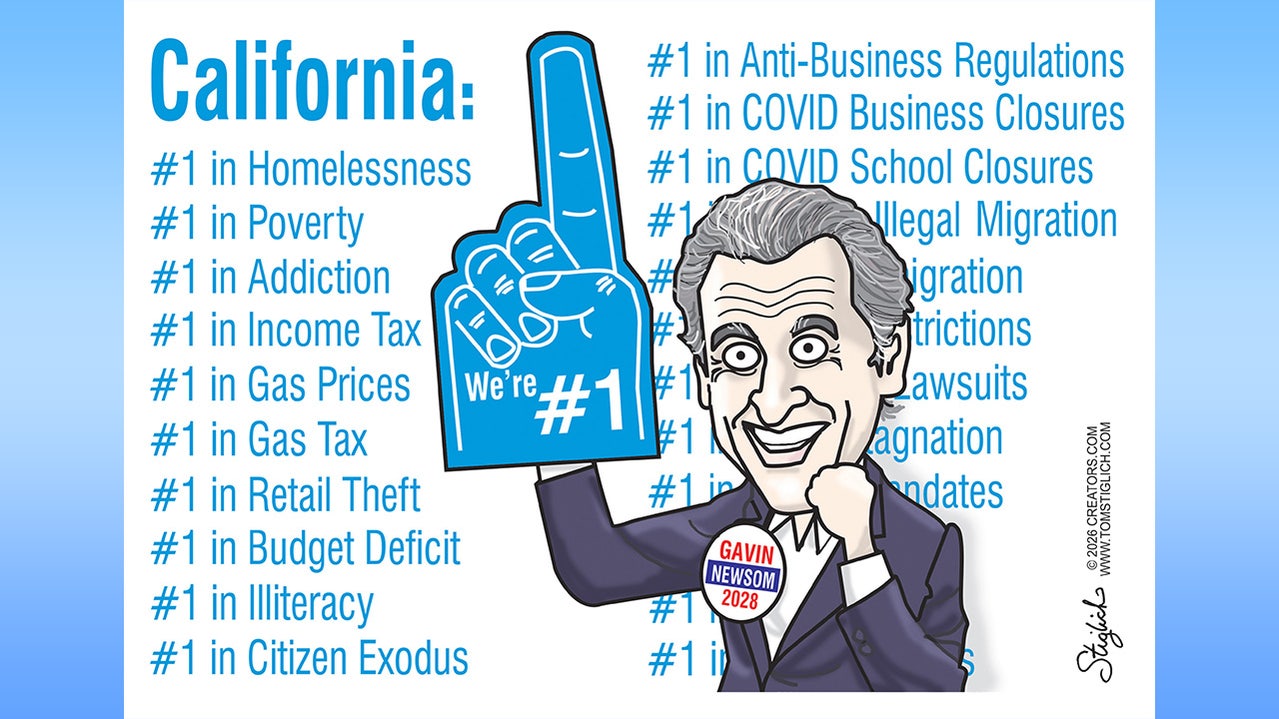
 ..the well-beloved offspring of the Moslem Brotherhood,...