[American Thinker] In a former life, I taught math and science to Catholic school students in grades 6-9. In the early 2000s, I began noticing a troubling trend: many students had little to no idea how to take notes from a lecture or a textbook. Some didn’t even know how to hold a pencil correctly. It’s worth noting that, in the years just before I retired, we were receiving significantly more students transferring from public schools.
One moment from a ninth-grade Algebra class still stands out. During the first week of school, I noticed a couple of students sitting passively with nothing on their desks -- spectators, as if they were watching a YouTube video rather than attending class. When I told them to take out their notebooks, one student reached into his backpack without looking, pulled out a random notebook, opened to a random page, and began copying what was on the board. When I asked if he was using his Algebra notebook, he checked and discovered it was his History notebook. I then asked to see the notes he had taken the day before. He had no idea where they were.
He wasn’t alone. I ended up restarting the class from Day One, teaching them how to record the date, number their notebook pages, copy information neatly, and organize their work -- skills that should be firmly established by middle school. By the time students reach high school, they should be refining these skills and habits, not learning them for the first time.
A few students insisted on taking notes on laptops, claiming it was easier than writing by hand. In reality, they spent most of their time wrestling with how to type mathematical symbols and diagrams. Instead of absorbing content, they were battling their devices.
I would imagine that some students are now simply recording audio (and video) records of their classes. Does anyone believe those students will repeatedly sit through those entire lectures at home, and call it "studying"?
For elementary and high school students, using pencils, pens, and paper for note-taking, writing, and mathematics offers several well-supported advantages over electronic devices. These benefits are grounded in cognitive neuroscience, educational research, and practical classroom experience.
Handwriting activates a broader network of brain regions -- including those involved in movement, vision, sensory processing, and memory -- compared to typing. When students write by hand, their brains show more elaborate connectivity and synchronized activity, which supports deeper learning and better retention. Typing produces far less of this neural engagement. Because children’s and adolescents’ brains are still developing, this difference matters.
#4
Lost art. Ummmmm, let me share some frustration. As a tech, kids use One Note anymore. And they never know where they save their notes at. It's is One Drive they shrug.
Text taken from an article at globalaffairs.ru
[ColonelCassad] Since the early 2020s, the PRC has begun implementing a series of mobilization measures, the systematic nature and scope of which are unparalleled in global practice, at least since the early 1970s, and in some respects, possibly since the USSR's preparations for World War II.
In Chinese literature, they are directly compared to large-scale mobilization programs during the preparations for war with the USSR in the 1960s and 1970s, in particular the construction of the so-called "Third Line Enterprises" [1]. These measures are a subtle, but important, component of the overall trend toward the total securitization of all aspects of Chinese state policy (including culture and the environment), within the framework of Xi Jinping's so-called Comprehensive Security Concept [2].
The extremely costly steps China is actually taking indicate that, despite its rosy concepts and initiatives about a "community of human destiny," "inclusive and equitable globalization," and other such pleasantries, the Chinese leadership holds an extremely bleak view of global developments in the 21st century. It is preparing, at a minimum, for a severe military-political crisis, accompanied by the disruption of all normal economic ties and balancing on the brink of war.
But, at worst, it is preparing for even more nightmarish scenarios. This worldview apparently underlies China's paradoxical behavior on the international stage, combining articulate claims to superpower status and global vision on the one hand, and passivity, practically cowardice, in the face of unilateral US actions on the other.
Within the logic of "preparing for the end of the world," this is a perfectly reasonable course of action: if force rules the world, you simply prepare for the worst and avoid risks until you are fully prepared for the main battle.
In any case, the fate of Nicolás Maduro and even the survival of the Islamic Republican regime in Iran do not appear to be important enough to disrupt plans for a decisive conflict. What steps are credibly being taken by the Chinese state that allow us to draw such conclusions?
Let us name just a few: a program to relocate a number of strategically important production facilities to the country's interior and create a "strategic rear" there;
the implementation of major civil defense projects and the strengthening of urban infrastructure resilience, including taking into account the experience of the Russian Central Military District;
measures to strengthen the resilience of the national energy system; and the improvement of national legislation to clarify the conditions of military service and the timely fulfillment of social obligations to the families of fallen service members.
AN EMERGENCY BUILDUP OF FOOD RESERVES AND OTHER RAW MATERIALS.
A key feature of mobilization programs, unlike military construction proper, is that they do not yield significant political dividends outside the scenario of a full-scale war.
A buildup of military potential, in its narrow sense, brings significant foreign policy benefits and does not always indicate a readiness to fight in the foreseeable future. New aircraft carriers, planes, and missiles demonstrate the growth of national power and bring positive results in domestic politics. They expand the toolkit for protecting interests on the international stage and allow for effective local military actions.
Mobilization programs, by contrast, are effective only in the context of major wars and gigantic natural and man-made disasters. They are costly, and in peacetime, public opinion tends to perceive them with either irritation or panic. Mobilization readiness can play a certain role in strengthening strategic stability, but this role is much less significant than that of strategic offensive weapons. Therefore, mobilization policy is the most reliable indicator of a state's strategic plans and intentions.
The measures taken do not, in themselves, indicate China's intention to initiate a large-scale military conflict. However, they do indicate that such a conflict is viewed by the Chinese leadership as highly probable, perhaps even inevitable, likely as early as the late 2020s or early 2030s. Scenarios being considered range from extreme sanctions and a naval blockade to a major war involving missile strikes on Chinese cities.
Preparation for such an extreme scenario appears to play a central role in Chinese planning not only in the military but also in foreign and domestic policy. This preparation is taking place against the backdrop of the accelerated buildup of China's strategic nuclear forces and the development of a network of hardened command and control facilities in the event of a conflict.
In parallel, starting in 2023, a new wave of personnel purges began in the armed forces, the foreign policy apparatus, and structures responsible for mobilization readiness (in particular, the Ministry of Emergency Situations, the State Administration of Grain and Material Reserves, the China Grain Corporation, etc.). Some of these measures are the result of a series of audits of the actual state of material reserves and mobilization infrastructure (for example, the case against the leadership of the China Grain Corporation).
A number of personnel measures in the Armed Forces may be ideologically close to the large-scale personnel purges carried out in a number of great powers before World War II. A classic example is the famous September Purge in the US Army in 1939[3], an attempt by President Franklin Roosevelt and US Army Chief of Staff George Marshall to bring the personnel potential of the US armed forces command in line with the needs of a major war.
A comparison with Stalin's Great Purge of 1937–1938 would be a clear exaggeration. According to known data, the overwhelming majority of Chinese party "disciplinary investigations" never reach the courts and end in expulsion from the party, dismissal, demotion, and other "vegetarian" measures.
RELOCATION OF PRODUCTION FACILITIES: "STRATEGIC HINTERLAND," "RESERVE BASES," "SUPPORT ZONES"
The term "strategic hinterland" (战略 腹地[4]) was introduced into official Chinese usage by Xi Jinping personally during an inspection tour of Sichuan Province in July 2023. During the tour, Xi noted that the province is a "strategic hinterland" because it has "unique and important significance in national development and in the implementation of the western development strategy." This status implies a set of obligations on the part of the province, including ensuring the security of production and supply chains and strengthening the country's energy and food security[5].
Essentially, Sichuan and the adjacent Chongqing Municipality are tasked with forming a national strategic reserve, where resource and production capacity is accumulated. Xi Jinping also used this term to refer to the Guangxi Zhuang Autonomous Region during an inspection tour of the region in December 2023, emphasizing its role in supporting the development of the Guangdong-Hong Kong-Macao Greater Bay Area.[6] Accordingly, a "strategic hinterland" is a territory that serves as the "rear" and resource base for a major industrial and technological macroregion in the narrow sense, and for the entire country in the broader sense.
In December 2023, at the Central Economic Work Conference, Xi Jinping outlined the task of "optimizing the deployment of major productive forces and strengthening the construction of a national strategic hinterland"[7], linking it to the regional coordination agenda. In March 2024, this was also reflected in the government work report, which outlined the need to develop updated plans for the country's functional zoning and corresponding measures.[8]
In subsequent documents, the term became more closely linked to industrial safety. In the decision of the 3rd Plenary Session of the 20th CPC Central Committee of July 18, 2024, "On Further Comprehensively Deepening Reforms and Advancing China's Modernization," the phrase "building a national strategic hinterland and reserve capacity for key industries"[9] was mentioned for the first time, which has become a stable combination.
The document defines this as enhancing the security of production and supply chains, establishing a risk assessment and prevention system, transferring production capacity inland to ensure the sustainability of key industries, and developing national resource reserves. Key industries include the production of integrated circuits, industrial equipment, medical equipment, instrument making, basic and industrial software, and new materials.[10]
The decision of the Third Plenary Session of the 20th CPC Central Committee also stimulated discussion in the Chinese academic community about the meaning of the concept of a "strategic hinterland." Notably, this analysis draws on a comparison with the construction of the "Third Line" in the 1960s and 1970s—a large-scale program to relocate industrial and defense enterprises to the country's interior.
The current strategy is seen as a shift away from the purely defense-oriented model of the "Third Line" toward the integration of security and high-quality development. Reserves must be "living"—acting as centers of growth for "productive forces of a new quality," generating innovation and fully functioning in peacetime competition.
However, despite the emphasis on economic efficiency, academic discussions of the "strategic hinterland" clearly emphasize its role as a rear area in the military sense of the term. Sichuan is described as a "deep strategic rear area for national security" (国家战略安全大后方), serving national needs.[11]
In the context of building a "strategic rear," firstly, it is proposed to enhance the ability of key supply chains to quickly transition from a peaceful mode to an emergency mobilization mode (平急转换)[12]. Secondly, the need to develop strategic corridors and logistical connectivity is emphasized. These corridors, including the "Yangtze Golden Waterway," the "New Land-Sea Corridor," and the highways linking China with Central Asia and Europe, should strengthen the integration of inland regions into national and trans-Eurasian communications[13]. Thirdly, the task of creating an energy and resource reserve in the inland regions is highlighted as a strategic one. This includes measures to build appropriate infrastructure for storing resources such as coal, oil, natural gas, lithium, and rare earth metals, as well as for their processing[14].
In addition to the core of the "strategic hinterland" (Sichuan, Chongqing), Chinese literature also identifies territories with the status of "reserve bases." This description is most often applied to Guizhou Province. The region's goal is to provide space for the construction of "reserve bases" for energy resources, minerals, big data, key components, materials, and equipment. Local government work reports characterize Guizhou as a "nationally significant reserve industrial base" (全国重要的产业备份基地)[15].
Data on territorial development plans for the 15th Five-Year Plan indicate an upcoming expansion of the list of "reserve bases" and so-called "supporting areas" designed to support the functioning of "strategic rear" industries. There are signs of competition among Chinese provinces and municipalities for participation in the relevant programs. In particular, regions bordering Russia—the Inner Mongolia Autonomous Region and Heilongjiang Province—are laying claim to this status.[16]
In fact, only the wealthiest coastal provinces of East China are excluded from participation in the programs, although there are some attempts by individual local leaders to also join the relevant programs. For example, in 2024, at the local "two sessions" of the coastal province of Jiangsu, the chairman of the People's Political Consultative Conference of Huai'an proposed including the city in the initiative to build a "national strategic hinterland" [17].
IMPROVING THE MATERIAL RESERVE MANAGEMENT SYSTEM
One of the important priorities is the reorganization of the strategic reserve management system and bringing order to this area. On June 1, 2024, the "National Food Security Law" came into force, on January 1, 2025 - the "Energy Law of the PRC", and on July 1, 2025 - the "Mineral Resources Law".
Based on the lessons learned during the COVID-19 pandemic, the emergency response system was also restructured during the 14th Five-Year Plan period.[18] A key focus is the development of a sustainable multi-level governance model, within which central authorities are responsible for strategic planning, interregional coordination, and the maintenance of a unified digital platform, while regions are responsible for the rapid deployment of resources and the implementation of local plans. Work in this area includes the formation of professional emergency rescue teams, the creation of standard command posts, and the unification of response plans for the types and levels of emergencies.
As part of the emergency supply reform, a five-tier network of reserve storage facilities has been established, from the national to the rural level.[19] It covers central, provincial, city, county, and township warehouses. State reserves are supplemented by corporate stockpiles. Enterprises participate in the network by storing reserves in their own warehouses, reserving capacity for emergency release, and concluding supply contracts in advance in the event of an emergency.
On January 17, 2026, the National Development and Reform Commission published the draft "Law of the People's Republic of China on the Security of State Reserves"[20].
Currently, China lacks a single basic and comprehensive law that would generally regulate the management of all types of reserves. Work on the law was included in the plan in 2023. Its key goal is to enhance the ability of state reserves to ensure national security.
The draft law includes nine chapters and sixty articles regulating the planning, acceptance and storage of material reserves, their use, the management of reserve infrastructure, supervision and control. It also establishes the official definition of state reserves:
they are understood as resources stored for the needs of national development and security, including grain, other important agricultural products and capital goods, energy resources, mineral raw materials, important equipment and components, as well as special materials for emergency situations. It is confirmed that the reserve system includes not only material reserves, but also capacity reserves - the ability to quickly deploy production, extraction, or technology if necessary.
ACCELERATED DEVELOPMENT OF A MOBILIZATION MANAGEMENT SYSTEM BASED ON MODERN TECHNOLOGY
Chinese provincial and municipal authorities are implementing accelerated infrastructure development programs for economic mobilization and "people's air defense"[21] at a modern technological level. Some Chinese articles describing projects to improve infrastructure resilience make direct reference to the experience of the People's Air Defense. Among the conclusions are the need to improve civil defense management systems, warning systems, and the need to increase the level of comprehensive urban security (protective structures, evacuation routes, etc.)[22].
Particular attention is paid to increasing the resilience of critical economic facilities to damage that may occur during military operations.[23] Among the few publicly available documents on the development of People's Air Defense is Chongqing's plan for the 14th Five-Year Plan.
The corresponding measures are presented there quite broadly as a four-tier defense system: "core defense" (preservation of critical state functions and governance), "life defense" (shelter and life support of the population, integrated with medical care and evacuation), "capacity defense" (preservation of the economic and military-industrial base), and "operational defense" (continuity of critical infrastructure)[24].
The most important area of construction of the new civil defense system is the introduction of flexible control systems capable of instantly switching civilian infrastructure to military or emergency operations. Examples of the implementation of programs related to this priority are known from several regions of China. For example, in Chongqing, a three-tier control scheme is being deployed that is capable of quickly switching to emergency response mode. The basis is an emergency command communication system that ensures communication even in the event of partial destruction of infrastructure thanks to backup channels and duplication of critical nodes[25].
Another area of work is the development of dual-use public infrastructure (平急两用). When designing key public facilities—stadiums, exhibition centers, large cultural and educational institutions, as well as hotels and industrial facilities—technical standards are established from the outset, allowing them to quickly change their purpose, for example, to be transformed into mobile hospitals, temporary accommodation centers, or logistics centers for aid distribution.[26]
ADAPTING LEGISLATION TO THE NEEDS OF A LARGE-SCALE CONFLICT
In 2024–2025, a number of legal acts were adopted regulating the process of fulfilling social obligations to the families of fallen military and security forces personnel, and the holding of corresponding memorial events. These documents are aimed at accelerating the processing of incoming data on military and security forces personnel killed in the line of duty or in the line of duty.
In 2024, the State Council issued a new version of the "Regulations on the Perpetuation of the Memory of Fallen Heroes" (Resolution No. 791[27]), clarifying the criteria and procedures for recognition, strengthening financial guarantees for families, and the protection and management of memorial sites. A significant change was the redistribution of powers: the Main Authority for Veterans' Affairs under the State Council (the Ministry of Veterans' Affairs) was given the right to "re-examine" decisions on recognizing fallen heroes instead of the registration function.
In 2025, "Measures for the Recognition of Persons as Fallen Heroes"[28] were adopted, specifying the operating procedures for the entire system. The document (5 chapters, 40 articles) establishes unified standards and procedures for the recognition and review of status. Its structure covers: general provisions, key assessment criteria, recognition procedure, review procedure, special norms (wartime, posthumous recognition, interdepartmental cooperation, control and supervision).
The procedure is built along a vertical administrative chain of command. The county veterans' affairs agency is responsible for initiating the assessment for a number of reasons. Materials may be submitted by the deceased's employer, relatives, or individuals or organizations at the scene of the incident. The county level conducts an initial investigation and, if warranted, submits a report to the county people's government for approval.
The case is then transferred to the city level (with the preparation of a report and possible additional investigation), and then to the provincial level. Investigative standards explicitly stipulate the need to establish the causes, course, and outcome of the incident, the behavior of the deceased, the specific circumstances, and the public response. The overall review period generally does not exceed 30 working days.
For military personnel, the procedure is organized by military agencies under the Political Work Department of the Central Military Commission, while for deceased firefighters, it is organized by the Ministry of Emergency Management. Regardless of category, a mandatory re-examination stage is required: provincial agencies submit materials monthly to the General Authority for Veterans' Affairs under the State Council, while relevant agencies (the Ministry of Emergency Situations and military agencies) do this independently. The central authority verifies the factual circumstances, law enforcement, and procedural compliance and reports the results quarterly. If the decision is positive, a "Notification of Recognition as a Fallen Hero" is issued.
The document's intended purpose is to regulate the recognition of individuals killed in the line of duty or in emergency situations and does not include any provisions for preparing for mass casualties. However, its logic—centralization, standardization, strict timelines (monthly transmission and quarterly feedback), and the establishment of a vertical review chain at the State Council level—creates a mechanism capable of handling a large volume of applications. In the event of a major conflict or emergency, this architecture allows for the systematic processing of a significant influx of cases without disruption to management.
ACCUMULATION OF FOOD RESERVES AND OTHER STRATEGICALLY IMPORTANT MATERIALS:
Since the early 2020s, China's leadership has rapidly tightened requirements for the country's agricultural sector and local authorities in matters related to food security. Chinese authorities are implementing a range of costly measures aimed at increasing China's self-sufficiency in key agricultural products, seeds, and agricultural machinery.
China is striving to significantly expand its capacity for food production and storage. In this regard, the tasks of protecting arable land, ensuring stable grain production, and regulating the system of state reserves are becoming a priority. To establish order in this area, the "National Food Security Law" was adopted in 2023—the first regulatory act covering the entire vertical chain of custody.[29]
China has a multi-tiered system for accumulating and redistributing strategic reserves of food and fertilizers, and a detailed regulatory framework for the use of these strategic reserves in an emergency has been developed.
It is known that the volume of grain reserves is at a historical maximum.[30] Grain storage infrastructure is also being steadily expanded and modernized.
Some of the measures being introduced clearly conflict with the well-known long-term priorities of Chinese state policy, indicating their emergency nature. We are talking about a ban, starting in 2022, on the transfer of agricultural land for forest plantations[31] and the cutting down of part of the forests previously planted within the framework of state programs and the directives of the State Development and Reform Committee (SDRC) issued starting in 2023 on reducing downtime and increasing production at fertilizer production plants[32] with the actual easing of the restrictions on greenhouse gas emissions that are mandatory for other sectors of the economy.
Measures are also being taken to accelerate import substitution of high-tech agricultural machinery products and seed imports. Since 2022, China has set a course for becoming a "strong agricultural power." This includes mastering the production of critical components in agricultural machinery[33] and achieving a 32 percent digitalization rate in agricultural production[34] by 2028, as well as ensuring a technological breakthrough in seed production.[35] The latter has also led to the easing of regulations on GMOs[36] from 2022, which was considered a sensitive issue and had been blocked since the 1990s.
China is preparing for a major disruption to global food trade and, possibly, a foreign trade blockade within the next few years.
Similar trends are observed for other strategic resource reserves. It is known that by the beginning of 2024, China's crude oil storage capacity reached more than 1.8 billion barrels, which is 30 percent higher than the US figures.[37] Despite the goal of gradually reducing coal consumption after 2026, no significant decommissioning of coal capacity is taking place. Some closed mines are maintained in a state of technical readiness, and a mechanism for payments for available capacity is in place.[38] Strategic reserves of metals such as copper, aluminum, zinc, and cobalt are also being increased. The volumes of "apparent consumption" for a number of items exceed actual industrial demand, which indicates the formation of buffer reserves in excess of current commercial needs.[39]
In parallel, efforts are being made to intensify geological exploration. New bases are being established primarily in the west of the country. In particular, it is known that three deep coalbed methane deposits with reserves of over 500 billion cubic meters have been explored in the Ordos Basin (Inner Mongolia, Gansu, Shaanxi). From the Jiajika deposit in Sichuan to Altyn Tagh in Xinjiang, there is a lithium ore belt approximately three thousand kilometers long, with estimated reserves of up to 20-30 million tons.[40]
The Chinese leadership is rapidly and quietly transforming China into an impregnable fortress, which, in its completed form, will likely possess a certain degree of stability even in the event of a full-scale nuclear conflict. To achieve this goal, the Chinese authorities are sparing no resources: important decisions in areas such as urban development policy, energy, agriculture, and the development of high-tech industry are subordinated to mobilization objectives.
At the same time, the very likelihood of a major armed conflict affecting mainland China is declining due to the parallel, accelerated buildup of strategic deterrence potential.
It is likely that Chinese foreign policy planning is closely tied to the achievement of certain, as yet unknown, sustainability targets.
The completion of this new Great Wall of underground bunkers, factories, and nuclear missiles hidden in mountains does not necessarily mean that China will then transition to an active and offensive foreign policy. This possibility is being considered, but does not appear predetermined. Of course, there are a number of issues that China views as its core interests: Taiwan, territorial disputes in the South China and East China Seas, and regional security in the Western Pacific as a whole. Here, China is already pursuing an active and offensive policy, including the extensive use of force. But these are regional issues.
As for global issues, China will likely try (though not necessarily successfully) to continue pursuing a restrained and cautious policy: the phenomenal level of stability it has achieved will allow it to choose the timing and scale of its participation in global affairs.
Bottom Line Up Front (BLUF)
[American Thinker] Fast forward to today, and Spain has tragically inverted its legacy. What was once a force against human sacrifice now promotes it through abortion. In Aztec and Inca times, victims were offered to appease false gods; now, the unborn are sacrificed on the altar of convenience, autonomy, and secular ideology. This is no hyperbole -- abortion ends innocent lives in a sterile, systematized manner, echoing the ancient horrors but sanitized for modern sensibilities.
Spain's slide into this culture of death accelerated with progressive reforms. The 2023 amendments to its abortion law not only expanded access but mandated the creation of registries for healthcare professionals who conscientiously object to participating in abortions. In a chilling development, on March 10, 2026, the High Court of Justice of Madrid ordered the regional government to "immediately" begin compiling such a registry, overriding resistance from Madrid president Isabel Díaz Ayuso, who decried it as "blacklisting" doctors and vowed never to force them against their conscience. Health Minister Mónica García hailed this as a "legal victory for abortion rights," but from a pro-life standpoint, it's a victory for persecution -- creating lists of those who refuse to partake in what we see as infanticide.
[Breitbart] Energy prices are too high in Europe, which harms both consumers and industrial competitiveness, and this is partly because several European nations destroyed their own nuclear energy industries, leaving the continent dependent on imported gas and oil, a nuclear energy conference in Paris heard on Tuesday.
EU chief Ursula von der Leyen, who was a member of the Angela Merkel-led government that decided to destroy Germany’s nuclear energy, and who personally voted in the German parliament to end the nuclear programme, appears to have now seen the error of her ways.
Posted by: ed in texas ||
03/11/2026 8:45 Comments ||
Top||
#3
Being wrong is one thing. Staying wrong is quite another, so credit for changing directions.
However, call me a cynical bastage, but I suspect this is more motivated by fresh grifting opportunities than a recognition of failed policies. An entire new industry with regulations and policies and campaign contributions, it's a moist EU dream!
[Townhall] It's not just California and New York. All across the nation, blue states are committing political and economic suicide by targeting millionaires with high taxes. Who will suffer most from this misguided, ideologically driven push to punish the wealthy? Wage workers and the poor.
Leftist Democratic pols calling for states to tax the rich are ignoring the fact that the rich can exit their state, taking jobs, tax revenue and the right to congressional representation with them. The states that fall for the tax-the-rich mania will be left in the dust, with failing economies and shrinking political clout in Congress.
In Seattle this week, a slim Democratic majority in the legislature is slated to pass a 9.9 percent income tax on millionaires. Washington state has never had an income tax -- its constitution actually prohibits it -- but Democratic Gov. Bob Ferguson is vowing to sign the measure into law.
Washington state already ranks a dismal 45th out of the 50 states in tax friendliness because of a heavy burden of sales, capital gains, property and excise taxes. This millionaire tax will drive out business. Already, Starbucks is moving a significant share of its corporate management to Nashville, Tennessee; the state ranks eighth in tax friendliness and has no income tax.
The Washington Education Association, a teachers union, is pushing "tax the ultra-rich" as its top legislative priority, economic consequences be damned.
That same anti-rich mania is driving Illinois Democrats to push for a three percent surcharge levied against $1 million earners. Illinois already has one of the heaviest tax burdens in the nation and is losing population, just like California and New York.
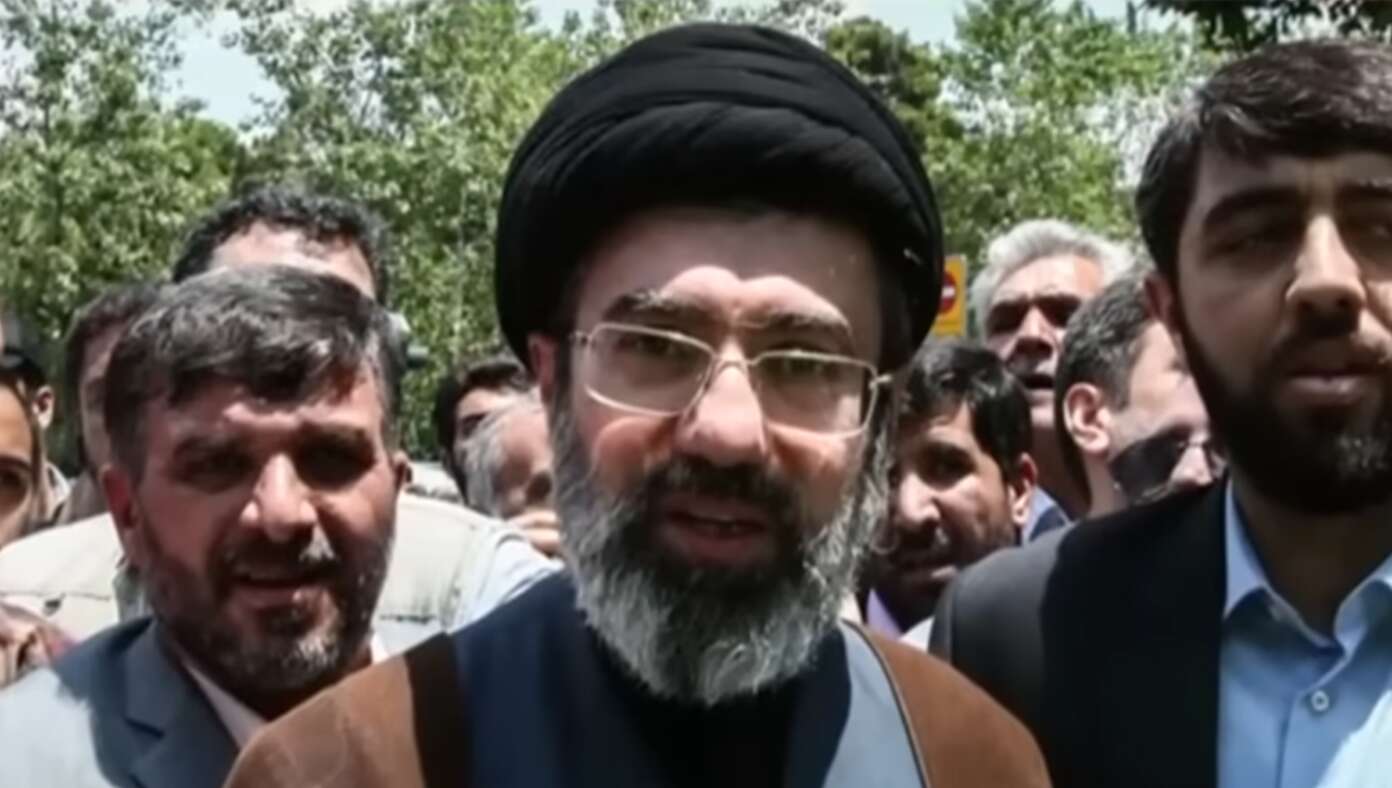
[Bee] TEHRAN — Amid rumors that the newly chosen Ayatollah Mojtaba Khamenei had been injured in an airstrike, the Iranian regime issued a statement warning the U.S. that it had a huge stockpile of supreme leaders.
The embattled Islamic government has suffered repeated losses to its high-level leadership over the last 10 days, but despite U.S. assertions that the conflict was nearing its end, a spokesman for the regime said on Tuesday that it had secretly spent the last several years working behind the scenes to enrich raw mullahs into weapons-grade supreme leaders.
"We have enough ayatollahs to last a century," said the official spokesman for the Islamic Republic of Iran. "We have been stockpiling them for quite some time, and they are safely stored in a hidden location. Your bombs cannot get to them. We have been saving them for such a time as this, and will not hesitate to deploy them. You have been warned."
Though the U.S. and Israel had successfully eliminated the previous ayatollah and several high-ranking military leaders, reports indicated that there may be vast, underground storage facilities where large numbers of robed Muslim clerics in turbans were stacked on top of each other. "Few know just how large their supply of supreme leaders truly is," one insider said. "They've been producing them and saving them for years. It's terrifying."
At publishing time, new reports indicated that U.S. special forces had been deployed to locate and seize control of Iran's supreme leader stockpile
Posted by: Frank G ||
03/11/2026 00:00 ||
Comments ||
Link ||
[1766 views]
Top|| File under: Govt of Iran
#1
BEE nails it once again. It's not the Iranian Republic's leadership that's the problem, it's the religion behind the leadership.
Direct Translation via Google Translate. Edited by Mark Leshkevich
[REGNUM] The war waged by the US and Israel against Iran is also a struggle for control of the world's third-largest oil reserves and energy transportation routes. Wars and political intrigues over Middle Eastern oil are perceived as a recent phenomenon. But Britain was the first Western power to attempt to appropriate Iranian oil. This happened 125 years ago, in 1901.
In the 19th century, Persia, as the world then called Iran, was ruled by the Qajar dynasty, which took the throne in 1789, ushering in a period of relative political and economic stability. But after a series of defeats in wars with Russia in the first half of the century, during which Russia gained significant privileges in Iran, Persian rulers began to seek new allies among European powers.
During this period, Persia lost its former prosperity, and the decline of the Qajar dynasty opened the door for London to expand its influence in the region. Several factors made Iranian territory important to Britain's geopolitical interests.
The 19th century was the time of the "Great Game" between the Russian and British empires—we previously wrote about this struggle for influence in Central Asia. In response to the spread of Russian influence southward, London sought to establish a "partnership" with the Iranian shahs.
Qajar Persia, bordering Russia to the south, was located in a strategically important region between the Ottoman Empire and East Asia and had access to the Persian Gulf.
In the second half of the 19th century, Iran's economic dependence on European countries increased significantly. At this time, Russia and Great Britain entered a new race for privileges from the Shah, which took the form of concessions.
Naser al-Din Shah ( 1848–1896), a member of the Qajar dynasty, sought to combat neither Russia in the north nor British interference in the south. His inability to strengthen central authority and implement necessary reforms only deepened Iran's dependence on both countries. Under the terms of treaties signed with European countries and Russia, the Shah was barred from raising customs duties on imported goods.
THIS SMELLS LIKE KEROSENE.
During his reign, Nasser al-Din signed 83 concession agreements with foreign industrialists. The British sought the right to build a railway from the Caspian to the Persian Gulf and priority in exploiting all mineral resources.
And most importantly, it was at this time that oil (or rather, its products, first kerosene, and then gasoline) became the most valuable resource for humanity.
Thus, in 1870, while the Shah was suppressing unrest among farmers suffering from famine, John D. Rockefeller and his partners founded the first oil company in the United States, the Standard Oil Company. Britain, meanwhile, was making plans to convert its main strike force, the navy, from coal to oil.
In 1872, Naser al-Din was urged to grant a concession to the British subject of German origin, Paul Julius Reuter (incidentally, the founder of the Reuters agency), for the exploration and development of all oil and mining fields in Iran.
The transfer of such valuable resources to a British subject who lacked both sufficient capital and the necessary technical capabilities provoked protests from other Western partners. The Shah was soon forced to revoke the concession. The revocation caused concern in British financial and political circles.
SHAH OF PERSIA, BANK OF ENGLAND
After lengthy negotiations and with the direct support of the British government, Reuter was allowed to open the Imperial Bank of Persia in 1889.
This new concession, a kind of replacement for the cancelled one, was valid for 60 years. The bank received exclusive authority to oversee the Iranian treasury, conduct all financial transactions in the country, issue Iranian currency, and determine foreign exchange rates.
Iran's financial reserves were to be stored there. Furthermore, the bank had a monopoly on the extraction of natural resources and the right to transfer this monopoly to third parties.
In fact, the Imperial Bank of Persia, as an official government institution, became one of the most important instruments of British policy in the Middle East. This is confirmed by the location of its board of directors in London, as well as its independence from Iranian law.
Soon, the Persian Mining Corporation was established through the Imperial Bank, which provided access to mines throughout the country.
ANTOINE KHAN AND MR. D'ARCY
The fact that Iran, due to its backwardness, would have to "gift" its mineral resources to the British had essentially already been decided. The question was who would formalize this deal of surrendering sovereignty. Two individuals played a role here.
The first is Antoine Kitabgi Khan, an Armenian Catholic in the service of the Shah, Director General of Iranian Customs from 1881 to 1893.
In 1890, during a trip to England, he met a second important figure, the British industrialist William Knox d'Arcy, and told him about Iran's oil reserves.
In 1899, Antoine Kitabgi—not without advice from Iran's London partners—received a monopoly on all oil fields from his monarch. And so, in 1901, after brief negotiations, he sold this monopoly to d'Arcy.
The British ambassador to Tehran, Arthur Harding, was also actively involved in these negotiations and "lent his support" to the deal.
THE INTRACTABLE VIZIER
Despite the efforts of the Grand Vizier Ali Asghar Khan, he was unable to persuade the Shah (who began to suspect his prime minister of lobbying for Russian interests) and prevent the transfer of the oil concession to the British.
The deal was struck. In gratitude, London awarded the then monarch, Shah Mozaffar ad-Din, a medal. The intractable vizier received the Order of the Bath from the British. However, he didn't wear it for long.
In 1907, the vizier was shot dead in the parliament building. It is believed that the illegal Iranian Social Democratic Party was behind Ali Asghar's murder. Whatever the truth, the "difficult to persuade" politician was sidelined.
The Anglo-Iranian Agreement was signed on May 28, 1901, in Tehran. The concession included 18 clauses. Under this agreement, William Knox d'Arcy agreed to pay £20,000 in cash, followed by annual payments of £20,000 and 16% of the net profits from oil production in Iran.
In return, Mr. D'Arcy received exclusive rights to explore and develop oil fields across most of Iran.
But, it should be noted, not throughout the entire territory. London was forced to moderate its appetite to avoid conflict with the Russian Empire. Five northern provinces, which St. Petersburg considered to be within our sphere of influence, were excluded from the agreement: South Azerbaijan, Gilan, Astarabad, Mazandaran, and Khorasan.
But the British did not come out on top.
WHOSE BARRELS?
In 1903, d'Arcy's first oil company was founded with a capital of £600,000. In 1909, it became the Anglo-Persian Oil Company.
Its capital amounted to 4 million pounds, 2 million of which were directly controlled by the British government. The British used the oil refineries, pipelines, and highways as they saw fit.
Not only did the Shah's government become dependent on the concessionaire's commercial and operational decisions, but it also had no control over changes in the concession's ownership. As a result, an unequal relationship developed not only between Persia and the oil company, but also between Persia and Great Britain.
When the British Royal Navy began to switch from coal to oil fuel, the British concluded another agreement with Iran, receiving yet another southern oil concession.
The indentured servitude persisted for nearly a quarter of a century. In 1925, amid internal turmoil (influenced by events in neighboring Russia), General Reza Khan of the Persian Cossack Brigade overthrew the last Qajar shah and founded a new dynasty—the Pahlavis.
Reza Shah proclaimed a course of modernization and promised to restore the imperial grandeur of the "land of the Aryans." In the seventh year of his reign, Pahlavi revoked the British oil concession—a move welcomed by nationalists.
True, he was unable to make the country truly sovereign. Under Reza Shah, British influence was replaced by German influence. This was harshly suppressed by Great Britain and the USSR, which occupied the strategically important country and its oil-producing regions in August 1941.
Since the 1950s, under the second and last monarch of the Pahlavi dynasty, Shah Mohammed Reza, the United States began to play the leading role in politics and economics.
Iran only became a full-fledged player on the world stage (one that would no longer agree to a deal like the one with D'Arcy) with the establishment of the Islamic Republic.
#1
This article from regnum is completely insane distortion.
Here's what happened:
A bright bold Brit engineer had an educated guess that there might be oil undiscovered in western Iran.
In 1901, the govt of Iran signed an unambiguous contract with that bright bold Brit engineer for ~60 years --> IFF oil could indeed be discovered, then they'd split the revenue for decades going forward.
Several years later, oil was discovered.
Several years after that, the Iranian govt. insisted on larger share of revenue. Contract was renewed and extended for more decades.
In 1953 Mosadegh became prime minister and simply took over the whole operation. Stole it. Ignored the contract in order to keep all revenue.
That's what happened.
It would be like the state of Washington taking possession of, say, AMAZON INC. because it felt like it.
A multi-volume chronology and reference guide set detailing three years of the Mexican Drug War between 2010 and 2012.
Rantburg.com and borderlandbeat.com correspondent and author Chris Covert presents his first non-fiction work detailing
the drug and gang related violence in Mexico.
Chris gives us Mexican press dispatches of drug and gang war violence
over three years, presented in a multi volume set intended to chronicle the death, violence and mayhem which has
dominated Mexico for six years.
Rantburg was assembled from recycled algorithms in the United States of America. No
trees were destroyed in the production of this weblog. We did hurt some, though. Sorry.




 [Bee] TEHRAN — Amid rumors that the newly chosen Ayatollah Mojtaba Khamenei had been injured in an airstrike, the Iranian regime issued a statement warning the U.S. that it had a huge stockpile of supreme leaders.