| Another one. A taste: |
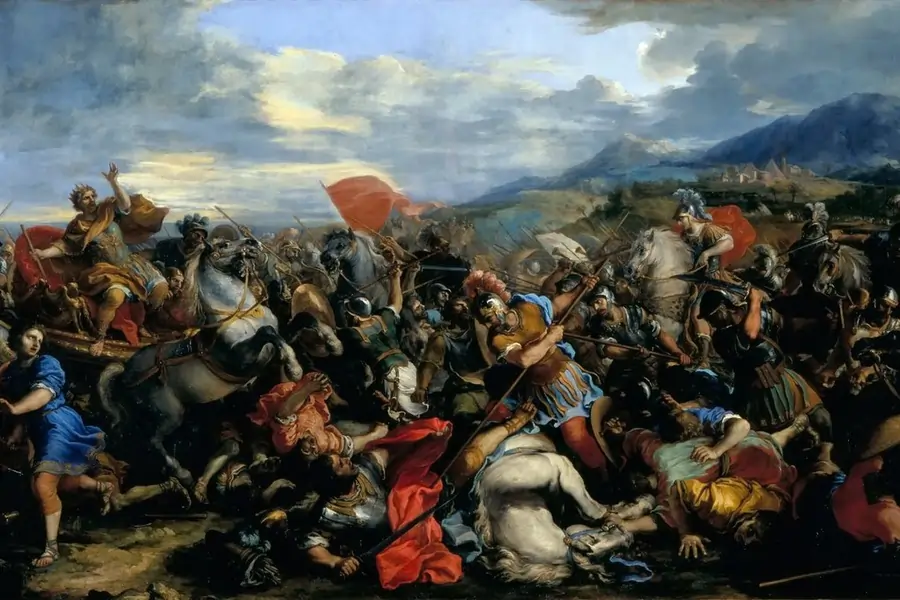 [MythAndMemory] The Battle of Gaugamela, fought on October 1, 331 BC, was one of the most decisive battles in ancient history. It marked the final confrontation between Alexander the Great and the Persian King Darius III, determining the fate of the vast Achaemenid Persian Empire. Despite being heavily outnumbered, Alexander’s superior tactics, disciplined army, and bold leadership secured a crushing victory that effectively made him ruler of Asia.
This battle is widely regarded as Alexander’s greatest military achievement because it demonstrated not only his courage but also his brilliance as a battlefield commander. The victory at Gaugamela opened the road to Babylon, Susa, Persepolis, and the heart of the Persian Empire.
For the complete detailed article, visit: Battle of Gaugamela Explained
BACKGROUND TO THE BATTLE
The road to Gaugamela began years earlier when Alexander launched his invasion of the Persian Empire in 334 BC. After crossing into Asia Minor, Alexander achieved major victories at the Battle of the Granicus and later at the Battle of Issus in 333 BC. At Issus, Darius III personally commanded the Persian army but suffered a humiliating defeat and fled the battlefield, leaving behind even his own family.
Instead of immediately pursuing Darius deep into Persia, Alexander focused on securing the eastern Mediterranean coastline. He captured important cities such as Tyre and Gaza and then marched into Egypt, where he was welcomed as a liberator and founded the city of Alexandria.
Meanwhile, Darius spent years rebuilding his military strength. He gathered troops from across the enormous Persian Empire, including cavalry, archers, mercenaries, and feared scythed chariots designed to break enemy formations. Darius carefully selected the battlefield near Gaugamela because the wide open plains favored his massive army and cavalry superiority.
Alexander understood that this battle would decide the war once and for all.
THE OPPOSING ARMIES
The Persian army was vastly larger than the Macedonian force. Ancient sources often exaggerated the numbers, but historians agree that Darius significantly outnumbered Alexander. The Persian army included cavalry from many regions of the empire, elite guards, Greek mercenaries, archers, infantry, and scythed chariots. Some accounts also mention war elephants present with the Persian forces.
Alexander’s army, although smaller, was highly disciplined and battle-tested. The Macedonian phalanx formed the core of his infantry line, armed with long sarissa spears that created a nearly impenetrable wall. Supporting them were elite Companion Cavalry, light infantry, archers, and experienced generals such as Parmenion.
Unlike Darius, whose army consisted of troops from many different peoples and languages, Alexander commanded a force that had campaigned together for years and trusted its leader completely.
| Skipping down to the end — read the rest at the link: |
The victory at Gaugamela was the defining moment of Alexander’s career. It transformed him from a conquering king into the master of one of the largest empires the ancient world had ever seen.
Even today, the battle remains a classic example of how leadership, discipline, and tactical brilliance can overcome overwhelming odds.
To learn more about Alexander’s campaigns, strategies, and conquests, visit: Alexander the Great Biography, Battles & Strategy Guide