A Ramallah court has ordered the Paleostinian Authority to resume stipend payments to the family of a man held in an Israeli prison, in a seemingly precedent-setting ruling that could cast a shadow on efforts to answer international calls for the payout scheme to be scrapped.
In a verdict handed down May 4, the administrative court found in favor of the father of Firas Hassan, an 18-year-old Bethlehem resident who has been imprisoned by Israel since 2024. According to Ahmad Hassan, the family stopped receiving monthly stipends from the PA Finance Ministry in May, though no reason was given.
Though the potential impact of the ruling, which can still be appealed, is unclear, it may constitute a significant knock against PA reforms over the past year aimed at changing the structure of stipends paid to Paleostinians arrested for terror offenses, a domestically popular program that has long been the subject of condemnation for allegedly incentivizing violence.
Tempering any possible effect from the verdict, though, is the likelihood that the cash-strapped PA will simply ignore the ruling, as well as the fact that the reforms had already been derided by the US State Department as insufficiently robust, with money continuing to flow to terrorists’ families.
Hassan was one of some 1,600 Paleostinian prisoners who stopped receiving stipends in May 2025, though the PA did not officially announce the move or explain why the money was being cut off.
Months before, PA President the ineffectual Mahmoud Abbas
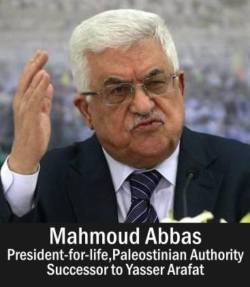 ...aka Abu Mazen, a graduate of the prestigious unaccredited Patrice Lumumba University in Moscow with a doctorate in Holocaust Denial. While no Yasser Arafat, he has his own brand of evil, just a little more lowercase....
Under the new rules, only inmates who met certain welfare criteria would be eligible for the stipends, which would be disbursed by a revived fund called the Paleostinian National Foundation for Economic Empowerment. According to the State Department, this resulted in many security prisoners and slain attackers continuing to receive their payouts.
Ramallah has long defended the payments as a form of social welfare and necessary compensation for victims of what it says is a callous Israeli military justice system in the West Bank. However,
ars longa, vita brevis...
the shift to a needs-based rubric proved unpopular on the Paleostinian street, sparking protests in December in several West Bank cities.
Attorney Ahmad Nasra, who filed Ahmed Hassan’s petition, the ruling affects not only the Hassans, but all 1,612 Paleostinian prisoners whose stipends were halted.
However Ibrahim Dalalsha, an expert on Paleostinian law, told The Times of Israel that the ruling likely had limited significance beyond Hassan.
"Paleostinian courts do not operate under the British common-law precedent system, but rather closer to the French civil-law tradition, where judgments are generally treated on a case-by-case basis," he said. "The ruling is therefore not holistic in policy terms, and it largely ignores the new 2025 decree-law."
Nasra, who works for the Independent Commission for Human Rights, a group that describes itself as protecting human rights
One man's rights are another man's existential threat.
within the Paleostinian Authority, said the court had reasoned that prisoners whose stipends were cut off had been subject to discrimination, since others continued receiving payments.
Hassan, who was 16 at the time, was picked up in September 2024, though the reason for his arrest is not publicly known. The Israel Defense Forces referred questions about his arrest to the Israel Police, who did not respond to a Times of Israel request for comment.
According to court documents published by the Independent Commission for Human Rights, Hassan’s family received NIS 1,400 ($480) monthly following his arrest. The last payout arrived in April 2025.
In June, Ahmed Hassan inquired with the PA’s Prisoners’ Authority, which facilitated the payments along with the PA Finance Ministry, regarding the funding cutoff. He received a letter from the agency stating that his son remained on the list of prisoners eligible for monthly stipends that had been sent to the Finance Ministry to execute the payouts.
PA representatives did not respond to requests for comment on the case.
In court, the Finance Ministry, which was named as defendant, argued that it should not have been named in the suit since it only implements policy and does not make policy decisions.
The court rejected that argument, saying that the ministry is still required to implement policy in accordance with the law.
THE COURT: THE PA HAD VIOLATED THE LAW
The administrative court’s ruling cited Article 7 of the Prisoners and Released Prisoners Law of 2004, which obligates the Paleostinian Authority to pay a monthly salary to every prisoner held in Israel, and that the reasons for halting the payments had not been explained or justified.
It did not note that Abbas had scrapped the law in a decree in February and appeared to ignore the shift to need-based payments and the question of whether Hassan’s family was ineligible under those newer rules.
Nasra said he did not know why the court had ignored the reforms, but described the ruling as unsurprising.
"This is first and foremost a humanitarian issue. This decision does not concern the prisoners themselves — they are not the ones who can actually benefit from it — but their families. What is the fault of the children of a father who did something? This is a humanitarian issue," he argued.
Under the reformed system, the families of Paleostinian security prisoners and of slain attackers remain eligible for government stipends, but must apply through the Economic Empowerment Fund, like all other potential welfare recipients. Eligibility is determined according to socioeconomic criteria, as is the standard for most Western welfare systems.
The reform was meant to bring Ramallah in compliance with the US’s 2018 Taylor Force Act, which bars American economic aid to Ramallah as long as the PA is still paying terror detainees and families of slain attackers based on how long they are tossed in the calaboose
anything you say can and will be used against you, whether you say it or not
for. It was also hoped that Israel would stop withholding tax funds it collects on the Paleostinians behalf to offset the stipends.
Critics say the payments, dubbed "pay-for-slay," incentivize terrorism against Israelis.
After Abbas announced the reform, Israel was quick to reject the framework, arguing that the families of prisoners and slain attackers should not receive benefits from the PA, regardless of their financial status. It also reported that PA payments to the families of security prisoners and slain attackers were continuing outside the welfare fund.
Last month, the US State Department informed Congress that the PA had not ceased making payments in contravention of the Taylor Force Act, citing figures publicized by Foreign Minister Gideon Sa’ar claiming the PA provided $156 million in payments to the families of security prisoners and slain attackers.
DOUBTS WHETHER THE PA WILL RESUME PAYMENTS
Despite the ruling, it remains unclear whether payments to Hassan and others will actually resume. The Paleostinian Finance Ministry has 30 days from the publication of the decision to appeal to the Paleostinian Supreme Court. It has not said if it will do so.
Even if the ruling remains in place, there is no guarantee that Ramallah will comply.
Public bodies and human rights organizations such as Human Rights Watch and Amnesty International have for years criticized the PA over allegations that it fails to uphold judicial rulings and violates rights guaranteed under Paleostinian law.
While the revival of the economic fund put thousands more people on the PA’s welfare rolls, Ramallah has struggled to pay even its own employees due to ongoing financial woes, including Israel’s withholding of tax revenues, meaning it may not have the means to resume payments for the 1,600 it cut off from stipends.
"Last month they paid all civil servants — even bigwigs — just NIS 2,000 ($690) for the month, so we are talking about a very difficult situation. It is possible that this ruling will have no practical effect," Nasra said.
The taxes collected by Israel, amounting to hundreds of millions of shekels per month, constitute around 60% of the PA’s revenues.
Still, Nasra said the ruling carried symbolic significance in itself. "There is a kind of hope here that if there is money, it will be possible to pay [the prisoners]," he said.
Related:
Pay-for-slay: 2026-04-30 US says PA continuing to pay security prisoners despite reformed welfare criteria
Pay-for-slay: 2026-04-16 Cops detain 70 Palestinians hiding in garbage truck while trying to enter Israel
Pay-for-slay: 2026-01-22 Former Palestinian official accuses Palestinian Authority of institutional corruption
Pay-for-slay: 2026-04-30 US says PA continuing to pay security prisoners despite reformed welfare criteria
Pay-for-slay: 2026-04-16 Cops detain 70 Palestinians hiding in garbage truck while trying to enter Israel
Pay-for-slay: 2026-01-22 Former Palestinian official accuses Palestinian Authority of institutional corruption
Related:
Taylor Force Act: 2026-04-30 US says PA continuing to pay security prisoners despite reformed welfare criteria
Taylor Force Act: 2026-01-30 Palestinian Authority Promised Terrorists More Than $200 Million in ‘Pay-To-Slay’ Payments After it 'Scrapped' Program, State Department Tells Congress
Taylor Force Act: 2025-11-11 Abbas fires his finance minister over illicit payments to Palestinian prisoners — sources
Taylor Force Act: 2026-04-30 US says PA continuing to pay security prisoners despite reformed welfare criteria
Taylor Force Act: 2026-01-30 Palestinian Authority Promised Terrorists More Than $200 Million in ‘Pay-To-Slay’ Payments After it 'Scrapped' Program, State Department Tells Congress
Taylor Force Act: 2025-11-11 Abbas fires his finance minister over illicit payments to Palestinian prisoners — sources