The images circulated among maritime analysts and regional security researchers within days. What they showed was not a seasonal fleet chasing fish. The vessels held their positions across multiple satellite passes spanning several days, their formations unchanged by tides or weather. No trawling arcs. No dispersal patterns consistent with working a fishing ground.
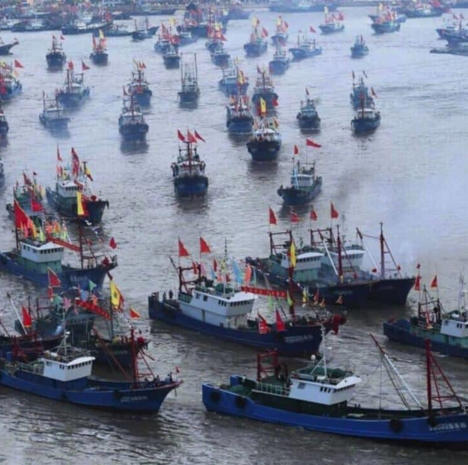
The formations were concentrated near the Senkaku Islands, a group of uninhabited outcroppings administered by Tokyo and claimed by Beijing. The islands and surrounding waters have been a recurring point of friction between the two countries, with Chinese coast guard vessels making regular incursions into what Japan considers its territorial sea. As Nikkei Asia reported, Japanese officials said the pattern and scale of the current formations differed from those seen in previous years, a conclusion supported by comparing 2026 satellite passes against archived imagery from earlier fishing seasons.